
Unique arts series venturing behind the scenes at the world famous museum of art, design and performance, the V&A.
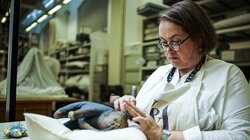
Inside every museum is a hidden world, and now, cameras have been allowed behind the scenes at the world-famous Victoria and Albert Museum in London. Only a small part of the two million wonders in the collection are on display to the public. But in this new series we go behind closed doors to explore all the treasures of art, design and performance the museum has to offer. We follow experts and conservators at work in this treasure trove of the nation's favourite objects, as they breathe new life into fragile marvels, uncover hidden stories, and battle to keep the past alive.In this week's episode we follow the charming story of a hand-made children's toy - Pumpie the elephant. Pumpie was made a hundred years ago by the Cattley family in west London. The children whose beloved stuffed toy he was made special outfits for him, painted his portrait, and took him with them on holiday. But Pumpie has suffered major moth damage over the years, and now needs urgent restoration. Curator Will takes the treasured toy to head textile conservator Jo, who dyes new felt to patch up Pumpie's moth-eaten trunk, darns his miniature admiral's outfit and restores his original brass buttons so that he's shipshape to go out on loan for a special exhibition. But before Pumpie packs his trunk, a relative of the family who once owned him is invited into the conservation workshop to meet him for the first time.Meanwhile curator Charlotte is on the case of a missing woman. The face of a beautiful 18th-century aristocrat has been meticulously painted in enamel on an ornate gold and enamel snuffbox. But nobody knows for certain who this mysterious woman might be. Charlotte is determined to get to the bottom of this question with a visit to historic Ham House. She compares large-scale portraits and other miniatures with the snuffbox to establish the identity of Lady Frances Carteret.Behind the scenes of the spectacular Christian Dior exhibition, we uncover the expert skill involved in creating bespoke mannequins to display the gowns. Each mannequin is sculpted by textile conservators Lillia and Lara to exactly fit the dimensions of each dress's original owners. Pamela Mann, the original owner of a spectacular raspberry-pink cocktail dress, comes in to the Museum to see the results of the team's labours, and tells us the story of how her husband - a former physician to the Royal Household - bought Pamela the dress from Harrods in the 1950s.In the performance galleries, rock and pop curator Vicky and conservator Susana take us inside Kylie Minogue's dressing room, which is on display as a time capsule of the star's 2007 tour. As they check the condition of the dresses, shoes and make-up, we discover the significance of the objects from this moment in Kylie's life - after her treatment for breast cancer. Finally, paper conservator Anne gets to grips with a colourful Victorian curiosity called a paper peep-show. This folding paper marvel was made as a souvenir of the Great Exhibition in 1851, and is made up of a series of hand-painted cardboard plates that magically open like an accordion. But the 170-year-old paper object is so delicate that it's in danger of falling apart. We follow the careful surgery required, using tiny pieces of Japanese paper and wheat starch to restore the beautiful piece so that visitors will be able to take a peep into the past and see the Great Exhibition for themselves.
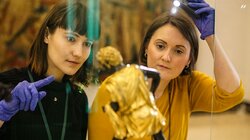
Behind the scenes at the Victoria and Albert Museum, priceless Raphael paintings give up their secrets. Keeper James gets hands-on with Beyonce's ring and Queen Victoria's coronet.

Inside every museum is a hidden world, and now, cameras have been allowed behind the scenes at the world-famous Victoria and Albert Museum in London.Only a small part of the two million wonders in the collection are on display to the public. But in this new series we go behind closed doors to explore all the treasures of art, design and performance the museum has to offer.We follow experts and conservators at work in this treasure trove of the nation's favourite objects, as they breathe new life into fragile marvels, uncover hidden stories, and battle to keep the past alive.This week, we join curators Steph and Jenny as they plan a major new exhibition celebrating the work of innovative British fashion designer Mary Quant. They want to illustrate how the designer shook up women's fashion in the 1960s with clothing that liberated women from decades of corsetry. Although the museum has a big archive of Quant dresses already, Steph has a critical gap in the collection. After an appeal to the public, a woman from Yorkshire comes forward with a dress that could be perfect to show how off exactly how Quant hiked hemlines higher than ever before.Jenny Fenwick was 17 years old when she bought her mustard-coloured Mary Quant mini-dress from the Sheffield branch of Topshop. But after years of hard partying, the dress will need all the love and skill that conservator Frances can muster in order to make it exhibition-ready.When the Quant exhibition opens, Jenny arrives to see her dress in pride of place - and is moved to think that these dresses meant freedom for her, and a whole generation of women.Meanwhile, curator Julius is delving deep into the stores to uncover some of the very first objects ever given to the museum. He tracks down a hand-painted writing case, made in Kashmir in the 1850s, that once belonged to Queen Victoria, who donated it to the museum. We'll see inside the beautiful handmade piece, including the original knife and scissors the Queen used to cut and sharpen her quill pens. The writing case will join a spectacular serving dish, or salver, made from fine silver and gold filigree, in a special display to mark 200 years since Victoria and Albert were born.The museum also receives donations today, just as it did when it first started. A woman from west London, Shalaleh, has offered the V&A her treasured family collection of rare saris, dating back to the 1930s. Shalaleh's grandmother was part of the Indian aristocracy in the days of the Raj, and travelled to Paris in order to buy fabrics from the top fashion houses of the day for her saris.These beautiful chiffons and silks are a welcome addition to curator Divia's collection. With no daughters to give the saris to, Shalaleh knows her grandmother would be delighted to see the saris join the museum for the public to enjoy.But modern-day objects are just as important as historic items to the museum's collection. We'll see Rapid Response curator Corinna hit the streets as she gather the most significant designs of today - that could become the treasures of tomorrow. The team have are hoping to acquire the flags and logo of climate change activists Extinction Rebellion. When they join the collection, these contemporary pieces will sit alongside other emblems of social change now - such as an umbrella from the Hong Kong protest movement, and a burqini.We'll also follow conservators as they prepare for the return of a huge Victorian masterpiece to the galleries. ‘The Pilgrim Outside the Garden of Idleness', by renowned Pre-Raphaelite artist Edward Burne-Jones, is from 1898. But the heavy and extremely valuable artwork is in its delicate original frame and calls for careful conservation to preserve the fragile gilt construction. For 100 years the museum has kept the painting safe, but it's now down to tech services Allen and a team specialists to manhandle the artwork up several flights of stairs to its original place on the gallery wall.
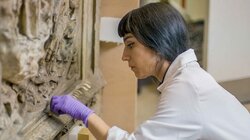
Inside every museum is a hidden world, and now, for the first time, cameras have been allowed behind the scenes at the world-famous Victoria and Albert Museum in London.Only a small part of the two million wonders in the collection are on display to the public. But in this new series we go behind closed doors to explore all the treasures of art, design and performance the museum has to offer.This week, we meet curators and conservators trying to preserve some of the finest examples of craftsmanship in the world.Deep in the museum stores, curator Keith is trying to breathe life into an object of extraordinary craftmanship – an original Stormtrooper costume from the Star Wars sequel The Empire Strikes Back, from 1980. He's hoping to exhibit the costume in a refresh of the V&A's Theatre and Performance Display. But when he and conservator Susana unpack the moulded-plastic body parts, a key piece is missing – the Stormtrooper's helmet.Unable to display the costume without the helmet, Keith contacts a group of prop-makers who specialise in making replicas of movie costumes. The prop-makers agree to make a replica of the original helmet, using the exact techniques pioneered by the Star Wars costume department in the 1970s. But the challenge for Keith's prop-makers is to turn this box-fresh helmet into an authentic match with the original decades-old costume.Meanwhile, two of the largest galleries in the museum, the Cast Courts, are undergoing a renovation. These galleries are home to one of the world's largest collections of 19th century hand-made casts - replicas of some of Europe's finest sculptures. As few people then could afford the luxury of travel, art works could be brought to them with these painstaking replicas. Now it's the job of senior sculpture conservator Victor to give these precious casts a facelift.The final part of the epic renovation is cleaning a piece representing the Assumption of the Virgin, made in 1890. This plaster cast depicts the Virgin Mary ascending to heaven surrounded by angels. It's a perfect plaster copy of one of a number of 14th-century sculptured panels made for the exterior of the Notre Dame cathedral in Paris. Now the plaster cast will be given its first deep clean since it was made 130 years ago.The importance of these fragile replicas is brought into sharp focus with news of a terrible fire at Notre Dame. Although many artefacts are destroyed there is relief that the original cast of the Assumption of Virgin has been spared.The news highlights the importance of preserving the V&A's delicate cast. But Victor and fellow conservator Adriana discover a crack in its structure, that could prove fatal. Over hours of careful conservation, the team work on supporting the fracture - but the real test will be when they try to hang it back on the gallery wall.In the Rock and Pop archive, curator Vicky is examining a photograph donated after the V&A's David Bowie Exhibition. It's a rare print, known as ‘David Bowie is watching you', taken in 1973 as part of a series of photos by photographer Brian Duffy to become the album cover for Aladdin Sane. The picture was donated by the photographer's son Chris. Vicky wants to know more about the print and invites Chris to the museum. Chris remembers visiting the photoshoot when he was a teenager, and meeting David Bowie.In paper conservation, senior preservations conservator Simon is dealing with a very different kind of photograph – a 65-metre-long Victorian photograph of the medieval Bayeux Tapestry. This unique photograph was commissioned by the British Government in 1871 and was one of the V&A's first interactive exhibits, displayed on a moving roller so audiences could spool through the panorama of the battle.The last time it was on display was over 100 years ago. But years of manhandling have taken their toll. Now, the rolled-up photograph has been summoned to be part of a new V&A exhibition, filled with new images by legendary fashion photographer Tim Walker, inspired by objects from the museum's collection. But first conservator Simon needs to assess if the fragile piece is robust enough to be displayed again.In the Rapid Response Department, curators Corinna and Johanna feel there is one important everyday object missing from their 20th-century collection. They have been offered a very British piece of graphic design – a road sign, made in 1961 by graphic designer Margaret Calvert. Before collecting the sign, they visit Margaret at her home, filled with familiar road signs…We also follow fashion curator Oriole, who alongside colleague Susan, is on a mission to acquire a piece representing the best of contemporary British craft. They visit fashion designers Justin Thornton and Thea Bregazzi, known as Preen, at their workshop. Oriole and Susan have the difficult task of choosing one single piece to represent the designers.

Inside every museum is a hidden world, and now, for the first time, cameras have been allowed behind the scenes at the world-famous Victoria and Albert Museum in London.Only a quarter of the museum's objects are on display to the public - the rest lie deep in the stores. Now, after decades at the same site, the museum's stores are being relocated to a brand new, high-tech home. It's the job of curator Jane to make sure the 3,000 costumes in the Theatre and Performance collection are fully catalogued before the move.First on her list is a costume specially designed by Bob Mackie for Elton John's Jump Up tour in 1982. She also unearths dresses worn by usherettes at the premiere of The Beatles' A Hard Day's Night in 1964.Meanwhile, hidden in the stores is one item that has been lying dormant for decades and that has now been summoned to star in a new sci-fi exhibition. Frankenstein's Monster is a rare survivor from one of early cinema's greatest movies – The Bride of Frankenstein. Curator Keith needs to find out if Frankenstein can be brought back to life. After a series of X-rays, it seems the 85-year-old monster is held together only by a few rusty nails. And Frankenstein's clothes - originally worn by actor Boris Karloff - have seen better days. After weeks in conservation trying to breathe life back into this six-foot monster, Frankenstein's future looks uncertain, and Keith is faced with a difficult decision.An unusual item has been spotted by curator Lucia – a vintage Louis Vuitton trunk that came to the museum merely as a container for a number of haute couture dresses and was then put aside. Lucia is curating a new exhibition called Bags: Inside Out and wants to unlock the trunk's secrets. She discovers that it was owned by one of America's most famous mistresses, a woman named Emily Grigsby, who spent millions of her lover's money on a lifetime of adventure. Curator Lucia believes the trunk deserves its rightful place in the V&A archive.The V&A holds over a million precious books, from illuminated manuscripts to first editions. Many of these are loaned out to exhibitions around the world, so every effort is made to keep them in pristine condition. One of the most important books in the collection is an original Shakespeare First Folio. It's been requested for a new exhibition elsewhere, but before it can leave the building, it's the job of paper conservator Ruth to ensure the tiny tears in the 17th-century paper are repaired.The museum's enormous stores contain many extraordinary collections, but one of its most prized is a treasure trove of early photographs. Curator Kate is interested in photographs taken by Lewis Carroll for a new exhibition about Alice in Wonderland. The Alice of the book was based on a real person, and now Kate has invited in her great granddaughter, Vanessa Tait, to help her chose photographs of her great-grandmother for the exhibition.
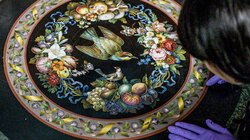
Inside every museum is a hidden world, and now, cameras have been allowed behind the scenes at the world-famous Victoria and Albert Museum in London.Only a small part of the two million wonders in the collection are on display to the public. But in this series, we go behind closed doors to explore all the treasures of art, design and performance the museum has to offer.We follow experts and conservators at work in this treasure trove of the nation's favourite objects, as they breathe new life into fragile marvels, uncover hidden stories and battle to keep the past alive.In this instalment, we join Catherine Sargent as she prepares a new exhibition devoted to cars. She must ensure these large objects are displayed at their best, but as with all the vehicles arriving on loan from around the world, it's imperative that each one is moved into the museum without a scratch.One of the largest and trickiest to transport is an extraordinary 1962 Chevy Impala, known as ‘Tipsy', arriving from Los Angeles. It's a unique car, that's been painstakingly customised to turn it into a ‘low-rider'.With its low-slung chassis, gleaming paintwork and personalised motifs, the car was a six-year labour of love for owner Tomas Vasquez. Seeing Tipsy up close before it's moved into the museum, Catherine has some concern that it will be a tight squeeze getting it into the exhibition space. And with the added pressure of the owner flying into the UK to give his pride and joy one last loving polish before the opening, she has to ensure the move runs without a hitch.Meanwhile, some of the finest of the V&A's one-off objects are in the Rosalinde and Arthur Gilbert collection, and curator Alice Minter is choosing a selection of her favourites to be displayed in an upcoming exhibition that will tour around the world.She's found one rare masterpiece in storage that she thinks is going to be the star of the tour. It's a tabletop decorated using a technique known as ‘micromosaic', in which thousands of individually coloured pieces of glass are set into a pattern producing an effect like a painting. The process of making a micromosaic is so intricate that this tabletop would have taken a craftsman years to finish.But Alice discovers that her beloved table is going to struggle to make the tour, as conservators have discovered cracks and swellings on the surface. X-rays reveal the full damage inside, with holes and corrosion making this object too vulnerable to move anywhere. Conservator Mariam makes the brave decision to conduct an experimental operation to save the tabletop from falling to pieces. She injects grout into the micromosaic, in the hope of gluing together its internal structure. Alice hopes this life-saving surgery will give this masterpiece a chance of going on display and being admired by the public.Other rare survivors are unearthed in the Rock and Pop archive, as curator Vicky picks out the latest acquisitions for the V&A's collection of objects relating to The Beatles. She's interested in some of the animation cels from the groundbreaking movie Yellow Submarine. One of the film's animators, Malcolm Draper, has been invited in to explain how they were made. It's important for Vicky to understand the whole story of these objects to help keep alive the craft of drawing animation cels by hand.Over in textiles conservation, a rare men's kimono is being repaired so it can be displayed in an upcoming exhibition. Worn by a samurai feudal lord in the late 18th century, Elizabeth-Anne Haldane has discovered rips in its fine inner silk lining near the waist that may have been made by a samurai sword. To have any chance of displaying the chequerboard-patterned kimono on a mannequin, she must delicately dye a patch and sew it into the torn areas.In the jewellery galleries, conservators and curators are excited to take delivery of a rare buried treasure – a medieval jewel discovered in a field in Northamptonshire by a metal detectorist. The extraordinarily rare ‘cluster brooch' is made of gold and set with diamonds and a reddish stone called a spinel.With only seven of its type ever found in the world, this is a special piece. Experienced conservator and gemologist Jo Whalley has the task of giving it a deep clean.Using a mixture of spit and polish (as saliva contains enzymes that help to degrade soil and dirt), Jo must delicately remove the earth embedded in the jewel to reveal once more the full beauty of this miniature treasure.

Inside every museum is a hidden world, and now cameras have been allowed back behind the scenes at the world-famous Victoria and Albert Museum in London. Although many of us have had to stay away over the last year, the work has continued in the V&A's workshops and storerooms to conserve some of the two million wonders in the museum's collection.In this episode, the museum sonservators work to preserve and maintain four unique objects. Theatre and Performance keeper Geoff and conservator Jo work to repair an eye-popping red lurex suit that belongs to Jim Lea, the bass player in one of biggest glam rock bands of the 1970s, Slade. Meanwhile, curator Peta and conservator Victoria are finally able to bring a 500-year-old wax modelled by Michelangelo out of cold storage, but it isn't long before they find something on one of the buttocks that takes them both by surprise.Curator Elania, while working on a display showing the prominence of watercolour painting during the Renaissance, disovers a series of unusual white dots on a piece by a Flemish master that hasn't been shown for over a century – Christ, St Paul and the Theological Virtues, by Jacob Jordaens. And finally, curator Josephine and keeper Anna aim to prepare a kimono, designed by the Cameroon-born designer Serge Mouangue, in order to add it to a touring exhibition celebrating the Japanese national dress.

As the V&A's Museum of Childhood in east London prepares to undergo a major refurbishment, its collection of over 30,000 toys and games must be packed away - including the museum's oldest teddy bear, the 111-year-old Little Tommy Tittlemouse. Curator Will must ensure its good condition before it can be put into storage.With the V&A preparing for a new exhibition on the art of Iran, curator Tim hopes to display some of the longest artworks ever unveiled at the museum: three ten-metre-long replicas of the painted interiors of mosque domes from central Iran, dating from the 1850s and created by local Iranian craftsmen. After more than a century in storage, these vast objects need extensive conservation, but conservator Nicola has only 16 weeks before the they are installed.In the Jewellery Gallery, curator Clare has two new pieces she is hoping to add to the collection. The first is known as the Vulcan ring, made by contemporary British designer Emefa Cole as part of a series inspired by the power and majesty of volcanoes, while the second is the Peony Brooch by Taiwanese designer Cindy Chao, fashioned from 105 large oval rubies held in purple titanium.In the British Galleries, curator Simon has found the perfect object for the Laughing Matters display, which celebrates the history of Britain through comedy: the costume worn by Andrew Sachs in Fawlty Towers. The outfit is being donated to the museum by Sachs's daughter Kate, who recalls memories of visiting her father on set and reflects on how her father's own immigrant background escaping from Nazi Germany in 1938 would have informed his portrayal of Barcelonian waiter Manuel.
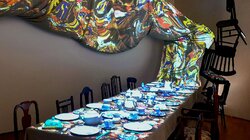
Curator Kate from the Theatre and Performance Department embarks on one of the museum's most ambitious exhibitions to date. Celebrating Lewis Carroll's Alice in Wonderland, Kate wants to take visitors on a trip down the rabbit hole and into the imaginative world of Alice. At the heart of the exhibition, Kate hopes to recreate the famous Mad Hatter's tea party, as seen in the famous 1966 film. To help pull off her bold plans, Kate has enlisted world-renowned theatre designer Tom Piper – but turning a scene from a film into an immersive installation proves more difficult than they had bargained for.Meanwhile, for print curator Gill, it's a dream come true when they acquire a rare set of prints from Lucian Freud. In order to discover more about them, Gill meets Freud's former assistant David Dawson, who explains how Freud created his etchings and worked with his printer, and Freud's daughter Bella, who shares rare personal insights into how her father worked.The V&A's fashion curator Oriole is always on the lookout for fabulous pieces to add to the museum's collection. This time, she manages to acquire not one but two standout pieces: one of the signature dresses by famed designer Molly Goddard and a men's colour-block cardigan designed by JW Anderson, which sparked an unlikely worldwide crocheting craze on social media after the influential pop star Harry Styles was seen wearing it.Over in the Textile Gallery, roof repairs mean that one of the museum's greatest treasures must be moved. The Devonshire Hunting Tapestries are almost 600 years old and masterworks of the weaver's art. Their enormous size means they are hardly ever moved, but now conservator Frances needs to take them off the wall safely. But before they can be taken down, she has to check every inch to make sure they are stable enough to travel on loan back to their former home, Chatsworth House.
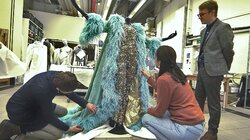
Conservator Susan is at the centre of an epic conservation project that will take 20 years to complete: conserving a unique set of Chinese paintings called The Ten Kings of Purgatory. These rare works have been in the V&A's stores for 150 years, but before they can go on display for the first time, each King of Purgatory must undergo extensive conservation. Susan has already worked on two of the kings, having learnt from a master craftsman at Nanjing Museum how to conserve them using traditional Chinese techniques.Now she is deploying her new-found skills in conserving king number eight, which will involve dousing the watercolour and ink paintings with very hot water and applying new lining paper made with yasha, a traditional Japanese dye created from cones of the alder tree. It is not a process for the faint-hearted, and as Susan manoeuvres almost two metres of soggy painting on to a special upright board to dry, there is a chance that the delicate paper may tear.Meanwhile, the Theatre and Performance department has just acquired one of the favourite outfits of legendary pop diva Dame Shirley Bassey. Curator Simon is keen to get the spectacular skin-tight catsuit on display, but the costume, encrusted with sequins, crystals and beads, needs some serious conservation first. Made in 1969 by British couturier Douglas Darnell, the body-hugging sheer silk chiffon outfit was worn by Shirley Bassey on and off for 30 years; first on the album cover of her famous Bond title song Diamonds are Forever, then through a number of stage performances, culminating in her 60th birthday concert. Getting it ready for display will take hours of careful stitching, with specially adapted needles and sheer threads kept in perfect tension, to ensure it is ready for its new starring role.Finally, the glittering catsuit is dressed on a specially made fibreglass Bassey mannequin. Here it can be reunited with a gold lame cape trimmed with turquoise-blue ostrich feathers, made to accompany the outfit, before its debut in the gallery.Over in the cafe area, a major refit provides an opportunity for a flamboyant Victorian majolica vase, dedicated to the god of wine Bacchus, to shine for the first time. The colourful vase, decorated with goat-like satyrs sticking their tongues out, was made in 1883 by the innovative Minton factory in Staffordshire. Minton also decorated the museum's Gamble Room, part of the world's first-ever museum cafe.Minton became one of the most important ceramics manufacturers of the Victorian era after developing a new technology that could produce majolica, a type of colourful ceramic, by firing many-coloured glazes all at once at low temperatures. When Queen Victoria ordered some of Minton's majolica for Buckingham Palace, the colourful objects became the must-have decor of the Victorian era. But the Minton vase must undergo a deep clean before it is ready to take its place in the newly refurbished cafe.The museum collects objects both old and new. Over in the sculpture department a new acquisition by contemporary sculptor Eleanor Lakelin, Echoes of Amphora, is joining the collection. Eleanor's unusual sculpture looks like it is made from clay or pottery but is in fact carved from an ancient tree that had to be cut down. Using furniture-making techniques, Eleanor turns the wood on a lathe to create a huge vessel that she then scorches to reveal the burrs or scars of the ancient tree in all its beauty. When she visits the V&A to see her finished work on show, alongside the museum's most celebrated sculptures in the Cast Courts, it is an honour that most artists can only dream of.

Behind the scenes at the V&A, Winston Churchill's despatch box needs attention, it's removal day for a 350-year-old doll's house, and a famouspainting by Constable is on the move.

At the V&A, a Buddhist painting is a mystery, children's art goes on show, and Josiah Wedgwood's masterpiece - the Portland Vase - is brought into the 21st century.
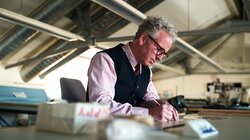
Inside every museum is a hidden world, and now cameras are returning to the V&A, going behind the scenes to parts of the Victoria and Albert Museum never seen before.Curator Annemarie prepares a major new exhibition on Beatrix Potter. The V&A holds the world's largest collection of the author's sketches, illustrations and writings, and now Annemarie is hoping the exhibition will highlight Potter's special relationship with the natural world.Curator Simon has also been scouring the stores – looking for special props and costumes from stage and screen to loan out to a new museum of showbusiness history, called Showtown, due to open in Blackpool in 2023. He's found an original magic trick prop used many times by much-loved magician and comedian Tommy Cooper.Meanwhile curator Catherine is taking delivery of one of the museum's newest acquisitions – an eight foot tall painting by African-American artist Kehinde Wiley. The painting is a portrait of a 35-year-old woman from Dalston in east London, Melissa Thompson. Wiley has painted sitters from Spike Lee to Barack Obama, but his new work sees ordinary people captured in poses of power and majesty. Catherine goes to meet Melissa at Ridley Road market in Dalston to learn what it was like to be painted by Wiley.
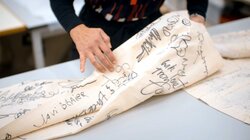
Inside every museum is a hidden world, and now cameras are returning to the V&A, going behind the scenes to parts of the Victoria and Albert Museum never seen before.Only a small fraction of the museum's enormous collection is on display. But in this series, we'll go behind closed doors, discovering the painstaking work of the V&A's experts as they breathe new life into fragile marvels, uncover hidden stories and preserve the best of past and present.This year, the V&A is being transformed – with new museums on the way, and more of its treasures than ever travelling to every part of the UK. In this series, we'll find out how the V&A puts the biggest object it has ever acquired on display, hear the surprising tales of some of its Scottish collection and unearth the human stories behind the objects in their blockbuster shows, from Beatrix Potter's original drawings to 21st-century fashion. We'll see rare works by artists from Donatello to Constable, uncover the secrets of Tommy Cooper's magic tricks and meet the woman painted by renowned contemporary artist Kehinde Wiley.This week, curator Katharine wants to celebrate a famous artist's less well-known works. She has unearthed a series of landscape prints made by John Constable. Although he is now world renowned for rural scenes like The Hay Wain, during his lifetime Constable's landscapes didn't sell well, and he was forced to earn a living painting society portraits. To gain greater recognition for his landscapes, he embarked on a collaboration with printer David Lucas to create a series of prints from his own oil sketches of the countryside in Suffolk, using the mezzotint technique.To understand the mezzotint process better, Katharine visits contemporary artist Sarah Gillespie in her studio. Sarah can spend days laboriously engraving a copper plate to hold ink, before printing an image from the metal sheet. Sarah comes in to the V&A and is moved to see Constable's original prints.Meanwhile, theatre and performance curator Kate has travelled to Dungeness on the Kent coast to meet multi Oscar-winning costume designer Sandy Powell. But Kate's not here to receive a costume from a movie. In 2020, Sandy turned herself into a living autograph book, wearing a plain white suit to awards ceremonies and asking stars to sign her outfit. She then auctioned off the suit to raise money for a cause close to her heart – the preservation of the late artist and filmmaker Derek Jarman's cottage on the shingle at Dungeness.Jarman gave Sandy her first job in the film industry, and now Sandy wants to keep his memory alive by turning his former home into a creative space for artists. After the autographed suit was sold, the new owner, Edwina Dunn, donated it to the V&A. But before it can join the collection, conservator Susana must clean the suit carefully, making sure she doesn't erase the autographs of Leonardo DiCaprio, Brad Pitt, Robert De Niro and many others.The V&A is also preparing a new exhibition examining the less familiar work of a household name – the world-famous goldsmith Carl Fabergé. He is best known for his bejewelled Easter eggs, and the new exhibition will bring to light Fabergé's work for British clients – including many pieces designed for the royal family. Fabergé opened a London shop in 1911, designing pieces for aristocrats, celebrities and royalty. The Royal Collection Trust has almost 600 pieces by Fabergé, and the Queen is lending 70 of them to the new exhibition.Going on show will be a hidden gem, rarely seen in public, that tells the story of a royal love affair. It's a beautiful gold cigarette case covered in blue enamel and set with diamonds in the pattern of a snake biting its tail. It was given to King Edward VII by his mistress, Alice Keppel, as a memento of their 12-year-long relationship. The unusual snake motif is said to represent infinity – while also hinting at forbidden love.Curator Kieran is also taking delivery of 15 Fabergé eggs. The eggs are synonymous with Fabergé, but few people realise that Carl Faberge didn't make them himself. The Cradle with Garlands egg, which Kieran examines for imperfections under ultraviolet light, was actually made by Finnish goldsmith Henrik Wigstrom, head workmaster at Fabergé.In V&A Dundee, a famous face is making way for a less familiar figure. Original artwork of Beano star Dennis the Menace has adorned the walls of the museum since it opened in 2018, but now curator Meredith is taking down Dennis and replacing him with new artwork of Minnie the Minx, loaned by local publishers DC Thomson. As the first female artist in the Beano's 80-year history, Minnie's illustrator Laura Howell is able to give Meredith a unique insight into this icon of girl power. "If someone told me there was any job that I shouldn't do because I'm a woman, I would laugh in their face I think! Maybe there's a little bit of Minnie's rebelliousness that's rubbed off on me," says Laura.
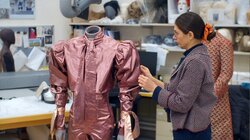
Inside every museum is a hidden world, and now cameras are returning to the V&A, going behind the scenes to parts of the Victoria and Albert Museum never seen before.Only a small fraction of the museum's enormous collection is on display. But in this series, we'll go behind closed doors, discovering the painstaking work of the V&A's experts as they breathe new life into fragile marvels, uncover hidden stories and preserve the best of past and present.This year, the V&A is being transformed – with new museums on the way, and more of its treasures than ever travelling to every part of the UK. In this series, we'll find out how the V&A puts the biggest object it has ever acquired on display, hear the surprising tales of some of its Scottish collection and unearth the human stories behind the objects in their blockbuster shows, from Beatrix Potter's original drawings to 21st-century fashion. We'll see rare works by artists from Donatello to Constable, uncover the secrets of Tommy Cooper's magic tricks and meet the woman painted by renowned contemporary artist Kehinde Wiley.This week, extraordinary new works of cutting-edge design are arriving at the museum. The V&A is planning its biggest-ever menswear exhibition, and curator Rosalind has just taken delivery of a new ensemble for the show. It's a shiny pink lamé two-piece, made in 2017 by acclaimed young fashion designer Harris Reed, that comes complete with a cigarette burn from its past life as a party outfit.For the new show, Rosalind is planning to pair Harris's outfit and others with historic works of art that together will reveal how menswear has reflected changing ideas about gender down the ages. Harris Reed is a designer interested in gender fluidity, and his outfit – made to measure for himself - is in shocking pink, not a colour much associated with men in recent years. But in the past, pink was a badge of wealth and success for both sexes. Rosalind invites Harris to the National Gallery in London, where they come face to face with Jacques Cazotte, an 18th-century French colonial administrator who sat for his portrait wearing a pink silk outfit bearing striking similarities to Harris's 2017 ensemble.In east London, a giant new outpost of the V&A is under construction. When V&A East Storehouse opens in 2024, visitors will be able to walk amongst some of the V&A's treasures previously hidden away in storage. But the building will also house new pieces. The museum has recently acquired its biggest-ever object, and now the team wants to display it in the middle of the Storehouse.The new acquisition is a giant ten-tonne slice of a tower block from an east London council estate known as Robin Hood Gardens. This monolith of modernism was designed by the famous husband-and-wife architects Peter and Alison Smithson and completed in 1972. Robin Hood Gardens is being demolished, but the V&A stepped in to acquire several large chunks of the façade. Now they hope to reassemble these giant concrete components inside the new Storehouse and hang the entire edifice 15 metres in the air. If the hugely ambitious plan is a success, visitors will be able to get a sense of the estate's most famous feature – the ‘streets in the sky', which the Smithsons hoped would replicate the terraced streets of the old East End.The V&A's old Museum of Childhood is also undergoing a major revamp – it's being transformed into a new museum to be known as Young V&A. But even while the site is closed for its makeover, curators are still acquiring new pieces, with many embodying cutting-edge design. Curators Kristian and Trish have just acquired a bionic arm, a robotic prosthesis made from 3D-printed plastic and designed to help children and young people with disabilities. The Hero Arm, as it's known, was created with input from young people themselves. Trish goes to meet 16-year-old social media influencer Tilly to find out how she's contributed to the bionic arm's special features.At the V&A's Wedgwood Collection in Stoke-on-Trent, archivist Lucy and curator Catrin are taking delivery of a mid-century treasure that shows off the Wedgwood company's tradition of working with the most cutting-edge artists of their day. Eric Ravilious's travel tea set, which went into production in the early 1950s, celebrates planes, trains and hot-air balloons, amongst other forms of transport. Ravilious designed the set in 1938, but production was put on hold when the Second World War broke out. Ravilious himself became a war artist during the conflict, but in 1942 he failed to return from an RAF mission over Iceland.Today, Ravilious's granddaughter Ella, who herself works as a curator for the V&A, is writing a new book about her grandfather, whose reputation has grown and grown in recent years. Ella travels to Stoke to see the Wedgwood factory's closely guarded pattern books, which reveal the top-secret process by which Ravilious's designs became a mass-produced tea set.

The curators are searching for untold stories in the museum's objects. Curator Christine is working on a major new exhibition highlighting African fashion, spanning couture, photography and design. But she's also looking for objects with more personal stories. A family has come forward offering their kente cloth to the exhibition. Traditionally made from woven strips of silk and cotton, kente has been produced in west Africa since the 17th century.77-year-old grandmother Gladys tells Christine that she bought her kente in Ghana in 1960, ready for the christening of her daughter Doris. The family are keen to see the precious family heirloom go on display at the V&A.Christine has also taken delivery of a new object for the forthcoming show – a colour photograph by London-based Ghanaian photographer James Barnor. The print, from a photograph taken in 1971, is of a well-dressed woman carrying brightly-coloured bottles, and was used as a guide for the correct reproduction of colour. Barnor established the first colour processing lab in Ghana, but he also documented life in the country as it was becoming independent, as well as capturing the swinging 60s in London. Christine and co-curator Hana invite 92-year-old Barnor in to the V&A.Some of the objects in the V&A's collection are still shrouded in mystery. Curator Nick has recently made a puzzling discovery – an object he's never seen before. Acquired by the V&A in 1855, the large wooden dish or tray was given the attribution ‘Ancient Persian, 17th century', but Nick suspects that may be incorrect. He has a hunch that the highly-decorated tray may be a rare example of a ‘barniz de Pasto' object.There are no more than 20 known barniz de Pasto objects in Europe, and the V&A holds five. Nick wants to find out if they have a sixth.Barniz de Pasto refers to a style of decoration applied to a range of wooden objects made from the 17th century onwards in the Spanish colonies of Latin America. It's distinguished by a particular kind of varnish applied to the objects, known as mopa mopa.To find out if his tray is indeed varnished with mopa mopa, Nick asks senior conservator Dana to take a small sample from the surface, which is analysed to find out if the molecular signature of mopa mopa is present.Even objects on permanent display have little-known stories to tell. Among the V&A's most celebrated collections are 24 sculptures by Auguste Rodin, on show at the museum since 1914. They include Inner Voice, a bronze statue depicting a young woman lost in her thoughts. Attacked by many critics when it was first unveiled for its daring new approach to the human form, Inner Voice is now considered a masterpiece. The statue is being sent on loan to Switzerland, but before it leaves, curator Melanie wants to uncover the strange story of how so many Rodin works ended up in the museum a century ago.She tracks down correspondence between Rodin and the V&A, and discovers that the artist offered his works to the museum after the First World War broke out. The director of the V&A at the time, Cecil Smith, admitted that he personally detested Rodin's work, and yet he believed the sculptor would in time be recognised for his huge contribution to modern art.In Dundee, curators are turning the page on one of their biggest objects – literally. It's a giant pop-up book made by artist John Byrne, used as a backdrop for a touring stage production of the play The Cheviot, the Stag and the Black, Black Oil, which made a huge impact on audiences across Scotland during the 1970s. The book is on long-term loan from the National Library of Scotland. To protect it from too much light exposure, a team from the National Library and V&A Dundee have devised a plan to carefully turn the page of the huge but fragile pop-up book, revealing a new scene.
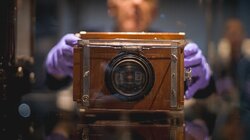
The spotlight falls on objects representing industry and design.Curator Martin is preparing for a new exhibition showcasing a leading postwar photographer, Maurice Broomfield. Broomfield captured British factories, steelworks, laboratories and plants in their heyday, when manufacturing was booming in the 1950s and 60s. Before his death in 2010, Maurice donated his entire life's work of 30,000 prints to the V&A. Martin is choosing the best to put on display. But some of the prints are now 60 years old and need painstaking conservation before they can go on show.Martin travels to meet Maurice's son, documentary filmmaker Nick Broomfield, to learn more about his father's fascination with machines and mechanical marvels – including an array of cameras that were the tools of Maurice's trade.Another new donation gives an insight into a postwar success story – the much-loved fashion brand Biba. Collector Danuta Laughton is donating a range of outfits made by Biba in the 60s and 70s, but curator Jenny is amazed to learn that Danuta also wants to donate a rare survival that reveals how Biba operated. It's a production file, containing orders and instructions to a factory for making 120 different garments. The file shows how very short production runs of garments was one of the keys to Biba's success. Jenny describes the production file as ‘one of the most exciting things I have ever seen' – especially when she learns that the file was saved for posterity from a skip.Biba's founder, Barbara Hulanicki, flies in from Miami to see the production file and to meet Danuta and Jenny. Barbara was born in Poland but grew up in Britain and founded Biba in 1963. Biba was to revolutionise high street retail, offering not just clothing but a whole way of life to its loyal customers.The V&A doesn't just celebrate works of Western design and manufacture. Curator Avalon wants to display a work acquired by the museum in 1852 but never exhibited. It's a jamdani stole, a fabric of exquisite and painstaking design made in what is now Dhaka, Bangladesh. Dhaka was home to a whole industry of textile weavers famous for their intricate decorative work. Their fabrics were so fine they were almost transparent, earning them names meaning ‘running water', or ‘woven air'.But before this unseen textile can go on show, conservator Elizabeth-Anne must remove decades of dust and grime. Despite three hours of handwashing in a custom-made bath using museum-grade detergents, the stole is still looking less than perfect. So Elizabeth-Anne deploys her secret weapon – an ultrasonic wand that releases tiny bubbles to dislodge the stubborn stains.In Stoke-on-Trent, curators Catrin and Rebecca at the V&A Wedgwood Collection are celebrating the experiments and trial runs of pioneering potter and industrialist Josiah Wedgwood. Wedgwood transformed English pottery from a cottage craft to a world-beating industry in the late 18th century, and his trial runs show how he did it. Catrin and Rebecca are handing over 500 individual trial pieces to ceramic artist Neil Brownsword, who wants to display them in an exhibition nearby. These small fragments reveal Wedgwood's rigorous approach to making the perfect pottery as he experimented with different glazes and firing temperatures to produce the affordable and robust creamware for which he became famous.
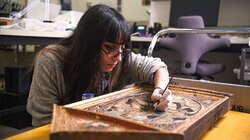
Conservator Adriana is cleaning a beautiful sculpture thought to have been designed by the Renaissance master Donatello and produced in his workshop, almost 600 years ago. Virgin and Child with Saints and Angels is a work known as a relief, in which three-dimensional elements stand out against a flat base. Once a layer dirt is lifted, Adriana discovers ancient varnish, which she must remove without damaging the paint surface below. And as she cleans, she makes a discovery about the piece which helps to explain how it was originally used.Theatre and Performance curator Simon has just taken delivery of a costume from the 2013 stage play The Audience, in which Helen Mirren played the Queen across six decades of her reign. The dress, a regal outfit inspired by a 1950s gown from royal couturier Sir Norman Hartnell, has a secret that explains how Mirren was able to undertake up to 10 quick changes each night during the show – it zips up at the back like an enormous coat. After conservator Gesa makes a mannequin in the shape of Helen Mirren on which to display the dress, Simon invites its designer, renowned theatrical designer Bob Crowley, to the V&A for a reunion with his royal creation.In Devon, archivist Christopher is meeting up with a 91-year-old master of his craft, a man whose creations have made all our lives easier. Sir Kenneth Grange designed the Kenwood Chef, the parking meter, the famous blue-and-yellow Intercity 125 train, Parker pens, and a breakthrough Kodak camera – as well as hundreds of other products – in a career as a designer spanning 60 years. Now, he's donating the archive of his life's work to the V&A, and Christopher faces the daunting task of selecting just a few key pieces for a display in the new V&A East Storehouse. Sir Kenneth is also donating his sketchbooks to the museum, containing a day-by-day record of his thinking as he set about creating products that many of us have used for decades.At V&A Dundee, the team have recruited contemporary artist and designer Yinka Ilori to help them fill the enormous entrance hall at the museum, one of the largest exhibition spaces in Scotland. Yinka, a designer famous for filling public spaces with giant and very colourful works of art, is proposing building a 170 sq metre technicolour maze, for children of all ages, filled with zip-up panels to allow you to slip through from one section to another. But will the result meet with the approval of a focus group of local children?
Complete episode guide for Secrets of the Museum with detailed information about every season and episode including air dates, summaries, ratings, and streaming availability in United States.
This episode guide is organized by seasons, making it easy to track your viewing progress or find specific episodes. Use the episode information to plan your binge-watching sessions or catch up on missed episodes.