
How the Universe Works is the greatest story ever told, the creation of everything us. The programme investigates how the Universe came into existence out of nothing, and how it grew from a miniscule point, smaller than an atomic particle, to the vast cosmos we see today.
This is the greatest story ever told, the creation of everything us. The programme investigates how the Universe came into existence out of nothing, and how it grew from a miniscule point, smaller than an atomic particle, to the vast cosmos we see today.
Black Holes,the most powerful destroyers in the Universe, the most mysterious phenomena in the heavens. For years they were only speculation, now modern astronomy is proving them frighteningly real and showing that they may well shape everything we see.
Galaxies, home to stars, planets and us, come in all shapes and sizes. Witnesses the evolution of galaxies; from clouds of cold gas floating in the voids of space 13 billion years ago, to the magnificent spirals that fill our night sky.
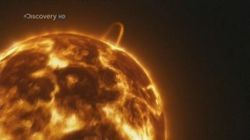
The story of how stars were made by the universe and how stars went on to engineer everything else in that universe.
Stars are not eternal; they die in unimaginably large explosions called supernovas. Second only to the Big Bang, these explosions are where creation and destruction meet. We have just begun to understand these wonders in our sky.
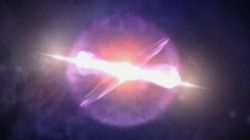
There are just eight planets in our solar system, but there could be a hundred billion planets in our Milky Way galaxy alone. This show follows the journey of planets as they grow from grains of dust to the magnificently diverse worlds we see today.
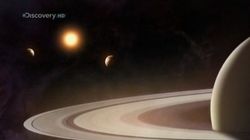
Is our solar system unique? Since the first discovery of a planet orbiting another star, some 280 alien solar systems have been identified. It's only by looking at solar systems far beyond our own, that we can understand how remarkable our universe is.
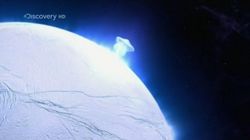
Moons come in every possible shape and size. Home to incredible natural phenomena like gigantic geysers and colossal volcanoes, moons also offer perhaps the best chance of finding alien life in the Universe - and they probably exist in the billions.

Scientists are discovering volcanoes on worlds we once thought dead. From our nearest planetary neighbor to tiny moons billions of miles away, today, we are discovering volcanoes on alien worlds. Are these worlds where, tomorrow, we might find life?
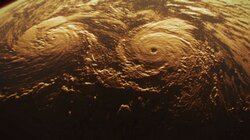
Examining chaotic weather to help determine whether we are alone in the universe.
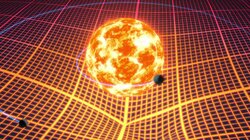
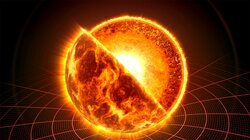
How does light escape from the sun? We take a journey from the centre of the sun, following the path of light. We witness its fiery birth from in the core, its 430,000 mile battle against gravity and magnetism, and its escape from the solar surface.
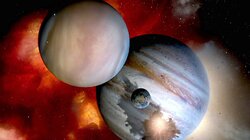
Examining the ways the unvierse could come to an end.
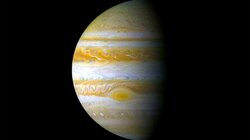
The history of the Universe lies beneath the hood of your car. The iron in your chassis, the gold in your stereo and the copper in your electronics all owe their existence to violent cosmic events that took place billions of years ago.

There is a hellish planet in our solar system covered in thick, dense clouds and roasted by colossal temperatures. Incredibly this is a vision of Earth's future. To understand how our world will be destroyed, we need to look at Earth's evil twin Venus.

Scientists have discovered a mysterious ninth planet ten times the size of Earth on the very edge of our solar system; this strange world could have moons with extraterrestrial life.
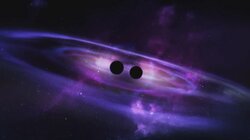
Recent evidence could explain how supermassive black holes grow so big; neither dark matter nor cannibalism can fully explain these beasts, but the latest science may finally provide an answer.
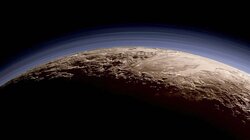
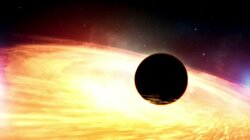
New discoveries are challenging everything we know about black holes -- astronomers are beginning to question if they even exist. The latest science tries to explain how they work & what they look like, despite the fact we've never actually seen one.
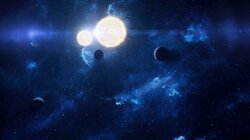
Planets that orbit two suns instead of one might be deadly hell worlds, but new discoveries reveal that sci-fi star systems with binary stars might be optimal places for alien life.
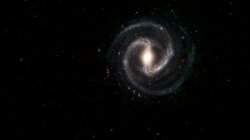

Neutron stars are strange and violent phenomena that defy the laws of physics, and new discoveries reveal that these bizarre nightmares are far more deadly than we ever thought, with the power to destroy planets and even other stars.
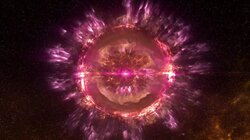
Supernovas are the violent death of giant stars, and new discoveries reveal that these cataclysmic events create the elements that are essential to all life in the universe.
If a massive asteroid collides with earth, it could end life on our planet as we know it; new discoveries and cutting-edge tech reveal just how close we are to apocalypse and what it would take for the world's leading space agencies to stop it.

NASA is on a mission to send humans to Mars within just 15 years. Still, to reach this next frontier of space exploration, experts must discover brand-new technology and cutting-edge science that protects astronauts from the Red Planet's deadliest killers.
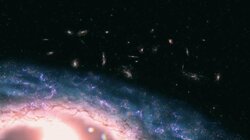
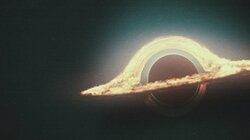
Journey to the heart of the M87 supermassive black hole, the first and only black hole ever photographed, and explore the mystery of how it grew so large, what lies inside, and how it controls the entire galaxy.

The Rosetta mission with its lander, Philae, is a groundbreaking expedition to land on a comet (Comet 67P) for the very first time; special access reveals what this cutting-edge journey discovers and how these mysterious objects help create life on Earth.
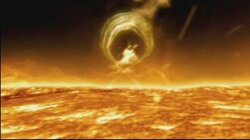
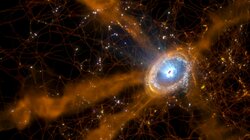
New astronomical research is beginning to reveal an invisible scaffold of dark matter known as the Cosmic Web. This intergalactic network transformed the universe from a chaotic Big Bang into the structured beauty of the present-day cosmos.
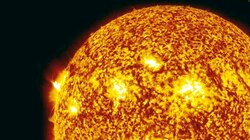
Cosmic rays capable of destroying human DNA are hurtling through outer space like subatomic bullets, causing space crews radiation damage.
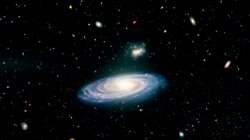
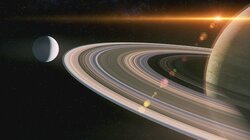
Discover how Saturn's moons could rewrite the rules of the Solar System.
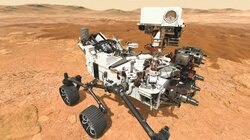
Mars is infested with robots, orbiting the planet and roaming the Martian surface on a mission to uncover its secrets; now, Perseverance joins this dedicated group of machines to uncover if there is, or was ever, life on the Red Planet.
Complete episode guide for How the Universe Works with detailed information about every season and episode including air dates, summaries, ratings, and streaming availability in United States.
This episode guide is organized by seasons, making it easy to track your viewing progress or find specific episodes. Use the episode information to plan your binge-watching sessions or catch up on missed episodes.
Discovering an extraordinary zoo of planetary nightmares outside our own planet.
The Universe is a magnetic minefield. Spinning star systems crackle and explode, magnetic monsters rip worlds apart, star-quakes shoot beams of devastating energy, and galactic flamethrowers fire gamma-rays halfway across the Universe. Could the earth be in the line of fire from the dangerous megaflares from the sun?
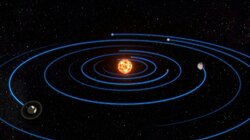
Orbits are a creative force and construct the fabric of the Universe.
Following the journey of a comet from its beginning as cosmic detritus floating around the outer limits of the solar system to the outgassing process as the comet approaches the sun. Watch the movement of a comet as it evolves from a chunk of ice and rock into an active nucleus engulfed in a gaseous haze.
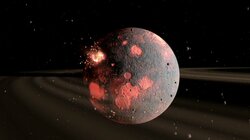
Asteroids shaped our past and promise much in the future; revealing the mysteries behind giant asteroids that influence the creation and destruction of life on Earth.
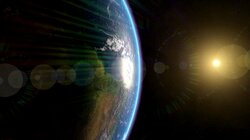
The Earth was formed by a series of cosmic cataclysms, including the most powerful blast in the universe. Could the same chain of events have created other earths elsewhere, inhabited by creatures like us?
Beneath Jupiter's clouds lie the solar system's deepest secrets.

The first second of the Universe, the creation of everything when space, time, matter and energy burst into existence. It is the most important second in history, which seals the Universe's fate and defines everything that comes after - including us.
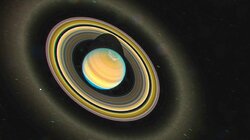
Scientists are looking for life on Saturn's moons and they may have found it on Titan.
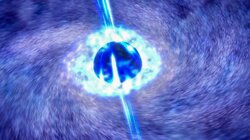
Asteroids strike, planets collide, black holes blast out death rays, volcanoes erupt, and ice engulfs the planet. These are the universe's weapons of extinction. They've happened before, wiping out entire species, and they will happen again.
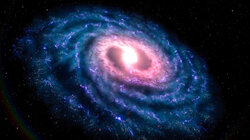
Research suggests that a super massive black hole might be the creator of the Milky Way.

Scientists are working on new propulsion systems that would allow travel to distant worlds.
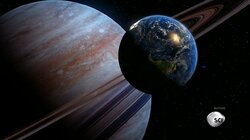
Astronomers search for evidence of another Earth. Is there another Earth out there with liquid oceans, rocky continents and life like us? Astronomers seek the answer with spectroscopy, direct imaging and telescopes. They hope to find evidence of atmospheres, magnetospheres and signs of life.
A look inside the supermassive black hole in the center of the Milky Way to discover terrifying secrets about parallel universes, wormholes, and space-time.
Huge magnetic bubbles millions of miles wide; strange invisible matter, and a death star tearing through bands of icy comets, flinging them into violent orbits.

Discovering how life on Earth came to be; the possibility that life on Earth came from another planet.
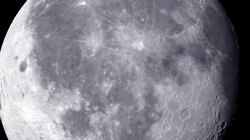
Our Moon is stranger than you think, and we reveal its incredible secrets. Can we thank the Moon for life on Earth? What explains the mysterious tunnels beneath its surface? Is a lunar base the key to humanity's future in space? The incredible secrets of the moon are revealed; the moon might be responsible for life on Earth.

For years, scientists suspected that the oceans came from molecules delivered to Earth from distant stars by asteroids, but a new discovery suggests that their true origins may be more exotic.
Scientists attempt to understand how this strange force of magnetism works.
First close-up images of Pluto revealed the unimaginable secrets of this mysterious frozen world. Now, scientists investigate if Pluto is home to a warm ocean of liquid water beneath its surface, and whether this underground ocean could harbor life.
Exploring the real-life Death Stars in the cosmos that could snuff out Earth without much effort; the science of the destructive power behind six of the deadliest stars; vampire stars; supernovas; rogue stars.
The universe is a dangerous place, explore the deadliest spots in the cosmos; between earth and the edge of the universe, there are a million ways to die, and our crash test dummy is on a mission to reveal the worst.

Life once existed on Mars, but a series of devastating mass extinctions have made present-day life nearly impossible. The latest science shows how Martian life keeps bouncing back as it transforms from a watery world like Earth into a desert planet.
Dark matter is the biggest mystery of the cosmos. Scientists know that it has been vital to our universe since its birth, and new discoveries reveal that it could create black holes, cause mass extinctions, and might even shape life on Earth itself.
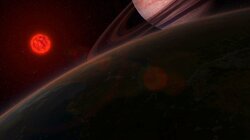
Discoveries of new planets have revealed countless worlds much stranger than Earth. Some of these strange worlds don't have stars, others are made out of diamonds. Will we ever find a planet like Earth, or are these distant worlds stranger than fiction?
Our solar system hides a dark and violent past, and new discoveries reveal that Earth and the planets were formed from the destruction of strange alien worlds that came before us.
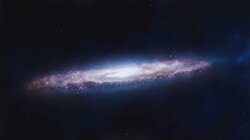
Experts utilize the latest science and discoveries to investigate the cause of the Milky Way galaxy's gradual death.

Uranus and Neptune are mysterious, icy worlds at the edge of the solar system; new discoveries reveal that these strange planets may have helped start life on Earth.
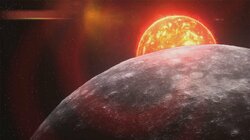
Mercury is a deadly world, facing attacks from the Sun, comets, and other planets; even though it's the smallest planet in the solar system, Mercury has a dangerous secret that may one day threaten life on Earth.
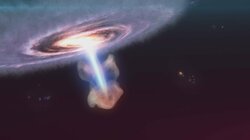
Quasars are the brightest and most powerful objects in the universe, and though they have shaped the cosmos, they might ultimately destroy everything that exists.
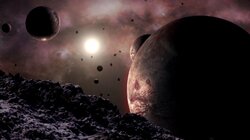
Our solar system is home to hundreds of strange, tiny worlds called dwarf planets, and new discoveries reveal the secrets of these mysterious places.
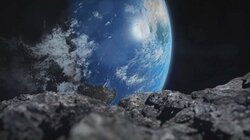
Scientists are using cutting-edge technology to stop an asteroid apocalypse, and for the first time, mankind is closer than ever to keeping Earth safe from these killer space rocks.
Spacetime is the secret structure that controls our universe, and this strange four-dimensional substance controls time, light, and energy; it will also determine how our universe will end.
Interstellar space is the space between the universe's stars and new discoveries reveal that it's not empty and unremarkable as previously thought, but filled with weird objects and strange phenomena that might hold the darkest secrets of our cosmos.
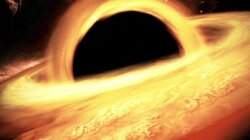
Black holes aren't the violent monsters we think they are, and new discoveries reveal that they might have been essential to creating stars, giving light, and building the universe itself.
Nebulas are the strange structures of cosmic gas and dust where stars are born and die, and new discoveries reveal the secrets of these mysterious places.
New discoveries are causing astronomers to question if the Big Bang really happened, and using the latest science, they investigate if it wasn't just the start of our universe but many mysterious multiverses.
Dark matter and dark energy are locked in an epic battle for control of the cosmos, and the winner will determine the fate of the universe. New discoveries might reveal which force will emerge victorious.

The latest discoveries suggest that we might be on the verge of discovering life beyond our planet, and scientists are investigating if earth's life began elsewhere in the universe, and whether we need to evolve to know for sure.
New discoveries have revealed thousands of exoplanets beyond our solar system, and some resemble earth enough that one could be a new home for humanity. But even with cutting-edge technology, finding the perfect one is the scientific challenge of the age.
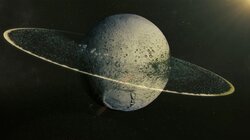
For twenty years, NASA's Cassini spacecraft revealed the strange secrets of Saturn until it vaporized in its atmosphere in a blaze of glory. But today its legacy lives on, as fresh data from the probe helps scientists make brand-new discoveries.
The discovery of extraterrestrial life might face an impossible challenge: the physics of the universe itself; but using cutting-edge tech, experts might be on the verge of a groundbreaking find -- and the evidence could already be in hand.

Our universe's stars are dying off faster than new ones are born, and using the latest technology, experts investigate the secrets of the last stars of the cosmos and what this stellar apocalypse means for life on earth.

Time travel might be more possible than we ever imagined, and today, cutting-edge technology and the latest research into black holes and wormholes are helping experts get steps closer to discovering how to travel through time.

NASA's Juno spacecraft is part of a cutting-edge mission to explore the mysteries of Jupiter, and as this mighty probe is pummeled with deadly radiation, it gathers new data that could change everything we know about the solar system's biggest planet.

We don't yet know where the edge of the universe is or what happens there. Still, thanks to cutting-edge technology and new discoveries, experts might finally reveal the secrets of the phenomena that can be found in the deepest reaches of the cosmos.

The center of the Milky Way is home to strange and deadly phenomena that we don't yet understand, but using the latest science, experts are revealing how the supermassive black hole our galaxy's core shapes life on Earth.

Earth's journey through the universe is a perilous one, and new discoveries reveal that our planet is heading toward a mysterious area of the cosmos that could eject us out of the Milky Way and into oblivion.
A brand-new NASA mission to the sun reveals cutting-edge discoveries about Earth's star; as the Parker Solar Probe dives through the sun's atmosphere, its findings challenge everything known about this strange place.

The hidden kingdom of microscopic alien organisms shapes the universe as much as galaxies, stars, and planets; new discoveries reveal how bacteria, viruses, and other micro-organisms built life on Earth and influence humanity's future in the cosmos.

White dwarfs are small, dead stars with a dangerous side, capable of exploding into supernovas and destroying planets; new research suggests these mysterious phenomena may be the key to understanding the universe itself.
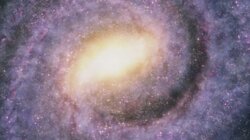
Galaxies are locked in continual combat across the universe, and our own Milky Way will face its biggest opponent ever, the Andromeda Galaxy, in a titanic and deadly struggle that could create a new and unrecognizable super galaxy.
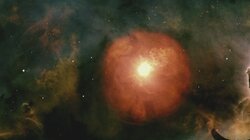
Our galaxy is full of stars ready to explode into supernovas, a stellar detonation powerful enough to destroy all life on Earth; it's an event that hasn't occurred in 400 years, and the search is on to locate which star may be next.
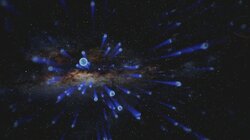
Neutrinos are the most mysterious particles in the universe, and they power some of the most explosive events in the cosmos; new discoveries reveal how these ghosts pass through objects undetected and why they could be the reason we exist.

New discoveries reveal an astonishing supermassive black hole that was born during the earliest days of the cosmos, and finding out how this giant grew so large so quickly may help to explain the very formation of the universe itself.
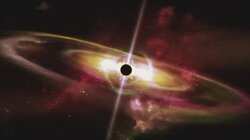
Gravitational waves are helping scientists explore the cosmos in revolutionary, new ways, and the discoveries they make are revealing the universe's greatest mysteries.

An explosion in the discovery of exoplanets is challenging everything we know about our universe; experts use cutting-edge astronomy to investigate these mysterious alien worlds and how they defy the laws of physics.
Dark Matter is thought to be the cosmic glue that holds the universe together, yet the search for it continues to elude scientists today.
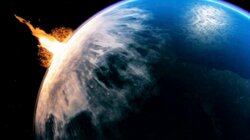
Earth's history is marked by one cosmic disaster after another, forging the path of human evolution; now, experts explore how the Earth has teetered on the verge of destruction.
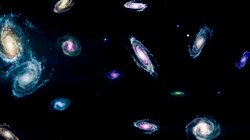
Determining the age of the universe continues to be an elusive endeavor for scientists as their results are conflicting. Without a definitive answer, everything known about the cosmos could be completely wrong.
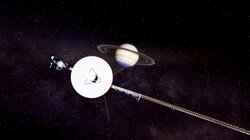
The two Voyager spacecraft have traveled farther than any human-made object in history. As they reach interstellar space, experts explore their most astonishing discoveries and how their extended operation has transformed into the ultimate mission.
The collision of two supermassive black holes is the most violent event that can occur in the universe. Experts explore where a black hole's energy originates and what really happens when the two most powerful objects in the cosmos clash.
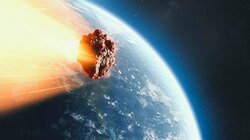
In a fictional scenario set in 2029, an asteroid hurtling towards Earth at 40,000 mph will reduce New York to ashes; examining the hypothetical, experts weigh in to determine what could happen and how it might be stopped.
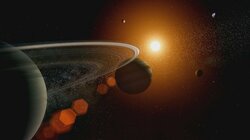
Exploring new discoveries that rewrite the history of the Solar System, revealing a complex and violent story that begins with the birth of the Sun from the debris of a massive galactic collision to its eventual fate as a lone zombie star.