No streaming information available for this title in United States.
Try selecting a different country or check back later for updates.
No subscription streaming options found in United States.




Curated for United States: Recommendations prioritize shared main cast, directors, and creators. Quality picks based on ratings and genre similarity.
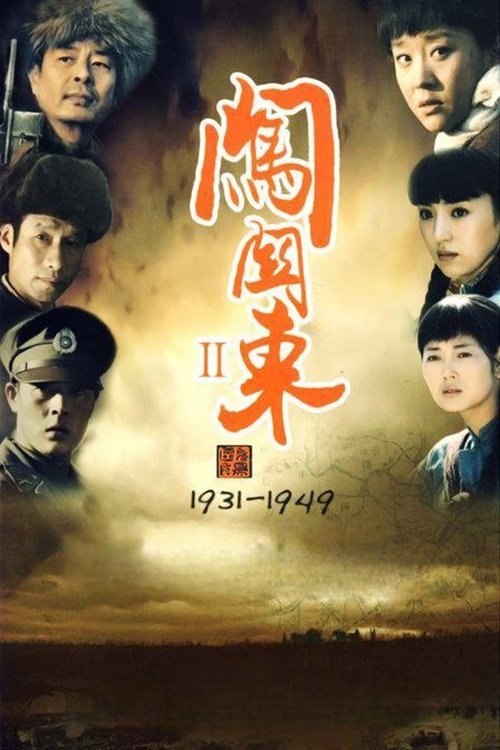
The period from 1931 to 1949 was an extremely important period in China's modern history: for the first time in more than a hundred years, the Chinese nation defeated foreign invaders, gained national independence, and achieved national liberation; the Chinese people completely buried the dark and decadent semi-feudal and semi-colonial social system, established New China, and achieved the liberation of the entire society. The TV series "Crossing the Guandong" (Part 2) tells the story of the perseverance and heroic struggle of the people who entered the Guandong during this historical period. The eldest sister Song Tianhao, who was just in her early twenties, brought her two younger sisters and younger brother from Shandong to Shenyang to look for her father. However, the artillery fire of "September 18th" shattered their dream of family reunion, and the establishment of the puppet Manchukuo turned them into slaves of subjugation. His father, Song Chengzu, rose up to resist the Japanese but died unfortunately; his younger brother was abducted and wandered to the vast grasslands of human and earth; the second sister went into the murderous mountains and forests in search of his younger brother; the eldest sister Song Tianhao and her third sister fled to Dalian. The four siblings lived and died several times and went through many hardships. After the "July 7" incident, they met again in Xiushui Tun, deep in the Changbai Mountains. In the face of the bloody rule of Japanese imperialism, they were unwilling to be slaves to the subjugation of their country. They straightened the backbone of the Chinese people and survived stoically, fighting the invaders, the traitors, and the arrogant Japanese pioneers. They used their own blood and tears and the awe-inspiring righteousness of the Chinese nation to write a magnificent anti-Japanese chapter for the Guandong people. With the victory of the Anti-Japanese War and the war between the Kuomintang and the Communist Party, where will China go? Faced with such a severe choice, the four siblings, first or later, straight or crooked, even at the cost of their blood and lives, finally embarked on the bright road of fighting for the establishment of an independent, democratic, free and prosperous new China. When the five-star red flag was raised high on the Tiananmen Gate Tower, they laughed for the new life of the motherland! When they looked back on the road they had traveled, they shed tears for the suffering and struggle they and their nation had experienced. . . . . . .
Overview
The period from 1931 to 1949 was an extremely important period in China's modern history: for the first time in more than a hundred years, the Chinese nation defeated foreign invaders, gained national independence, and achieved national liberation; the Chinese people completely buried the dark and decadent semi-feudal and semi-colonial social system, established New China, and achieved the liberation of the entire society. The TV series "Crossing the Guandong" (Part 2) tells the story of the perseverance and heroic struggle of the people who entered the Guandong during this historical period. The eldest sister Song Tianhao, who was just in her early twenties, brought her two younger sisters and younger brother from Shandong to Shenyang to look for her father. However, the artillery fire of "September 18th" shattered their dream of family reunion, and the establishment of the puppet Manchukuo turned them into slaves of subjugation. His father, Song Chengzu, rose up to resist the Japanese but died unfortunately; his younger brother was abducted and wandered to the vast grasslands of human and earth; the second sister went into the murderous mountains and forests in search of his younger brother; the eldest sister Song Tianhao and her third sister fled to Dalian. The four siblings lived and died several times and went through many hardships. After the "July 7" incident, they met again in Xiushui Tun, deep in the Changbai Mountains. In the face of the bloody rule of Japanese imperialism, they were unwilling to be slaves to the subjugation of their country. They straightened the backbone of the Chinese people and survived stoically, fighting the invaders, the traitors, and the arrogant Japanese pioneers. They used their own blood and tears and the awe-inspiring righteousness of the Chinese nation to write a magnificent anti-Japanese chapter for the Guandong people. With the victory of the Anti-Japanese War and the war between the Kuomintang and the Communist Party, where will China go? Faced with such a severe choice, the four siblings, first or later, straight or crooked, even at the cost of their blood and lives, finally embarked on the bright road of fighting for the establishment of an independent, democratic, free and prosperous new China. When the five-star red flag was raised high on the Tiananmen Gate Tower, they laughed for the new life of the motherland! When they looked back on the road they had traveled, they shed tears for the suffering and struggle they and their nation had experienced. . . . . . .

You can watch 闯关东中篇 in United States through the following streaming services: .
You can watch 闯关东中篇 in United States through the following streaming services: .
Popular movies currently available in your region. Updated daily.