
Each year a renowned name in the world of education leads a series of televised lectures all around one topic.
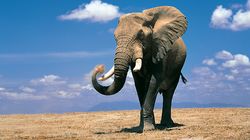
Dr. Mark Miodownik explains how scientists have pieced together some of the physical rules that govern the strength, lifespan and dance moves of animals.

Mark Miodownik zooms into the microscopic world beneath our fingertips and reveals how this world can make objects behave like magic.

Mark Miodownik investigates the world of the very big and very tall. He reveals that, at this scale, everything is governed by a battle with gravity.
Why does the brain look like a giant walnut, how does it fit in enough wiring to stretch four times around the equator, and why could a magnet on the head stop someone mid-sentence? In the first of this year's Christmas Lectures, Professor Bruce Hood gets inside the human head to explore how the brain works. He measures the brain's nerve cells in action, reads someone's mind from 100 miles away, and reveals how the brain ultimately creates its own version of reality.
The brain is constantly being bombarded with information, so how does it decide what to trust and what to ignore, without the person even being aware of it? Professor Bruce Hood gives the second of this year's Christmas Lectures - testing the limits of the memory, finding out how humans learn, how the brain takes shortcuts and why multitasking can be dangerous. Bruce makes people say the wrong thing and fail to see what is right in front of them. Can one really believe one's eyes? Possibly not.
Have you ever seen a face in a piece of burnt toast, or given your car a name? Why do you feel pain when someone else is hurt? Why are people so obsessed with other people? In the last of this year's Christmas Lectures, Professor Bruce Hood investigates how our brains are built to read other people's minds. With a little help from a baby, a robot and a magician, Bruce uncovers what makes us truly human.
Peter Wothers explores what alchemists knew about air and reveals how our knowledge can be used to control fire, defy gravity and harness lightning's power.
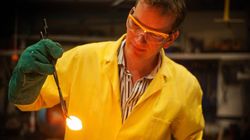
Peter Wothers finds out if the elements lurking in the water can restore his youth and discovers how exploding balloons could solve the energy crisis.
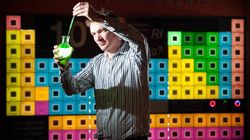
Dr. Peter Wothers explores the elements within the earth and discovers just difficult it is for chemists to extract the planet's greatest treasures.
Alison Woollard reveals how the transformation from a single cell into a walking, talking, multi-trillion-celled organism we call the human body takes place.
Dr. Alison Woollard unravels the mystery of why evolution by natural selection has given such stunning diversity on our planet - the answer being by genetic mutation.
Dr. Alison Woollard looks at why we die and how 'cell death' enables the development and survival of most multi-celled organisms from hedgehogs to humans.
Danielle George looks at the light bulb to show how to hack, adapt and transform technologies found in the home to have fun and make a difference to the world.
Danielle George looks at the telephone to show how to hack, adapt and transform technologies found in the home to have fun and make a difference to the world.
Danielle George looks at the simple motor to show how to hack, adapt and transform technologies found in the home to have fun and make a difference to the world.
In the first lecture, Kevin Fong explores and probes what it takes to lift off into space. What keeps astronauts safe and on track as they are propelled into orbit?
In the second lecture, Kevin Fong explores life in orbit on board the International Space Station. Tim Peake sends reports about living and working in space.
In the final lecture, Kevin Fong investigates how the next generation of astronauts will be propelled across the vast chasm of space to Mars and beyond.
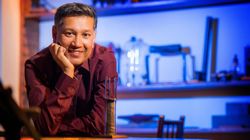
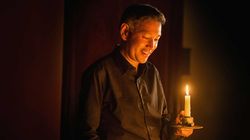
Celebrating 80 years since the Royal Institution Christmas Lectures were first televised, chemist Professor Saiful Islam explores one of humankind's biggest challenges - how to generate and store energy, with guest appearances from Christmas Lecturers past. In his first lecture, Saiful investigates how to generate energy without destroying the planet in the process. Saiful begins his lecture by being plunged into darkness. Armed initially with nothing but a single candle, his challenge is to go back to first principles and bring back the power in the energy-hungry lecture theatre. Along the way he explains what energy is, how we can transform it from one form to another, and how we harness it to power the modern world. A fascinating and stimulating celebration of the stuff that quite literally makes the universe tick - the weird and wonderful world of energy.
Celebrating 80 years since the Royal Institution Christmas Lectures were first televised, chemist Professor Saiful Islam explores one of humankind's biggest challenges - how to generate and store energy, with guest appearances from Christmas Lecturers past. In his second lecture, Saiful investigates how humans as living pulsing machines actually use energy, asking whether it's possible to 'supercharge' the human body and increase its performance. Live experiments explore everything from the explosive potential of everyday foods, to what we put into our bodies (and what comes out!), as well as how we measure up to the machines we use every day. Saiful even experiments on himself, showing images captured inside his own stomach. Every single one of us is an incredibly sophisticated energy conversion machine, finely tuned over millions of years of evolution. So will we ever be able to improve the human body's performance? Can we ever do more with less energy?
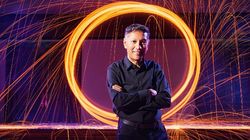
Celebrating 80 years since the Royal Institution Christmas Lectures were first televised, chemist Professor Saiful Islam explores one of humankind's biggest challenges - how to generate and store energy, with guest appearances from Christmas Lecturers past. In the final lecture, Saiful explores one of the most important issues facing the modern world - how to store energy. He tackles his toughest challenge yet - trying to work out how to store enough energy to power a mobile phone for a whole year and still fit it in his pocket!

From musical mosquitoes to rumbling elephants, Say It with Sound explores how humans and other animals use noises to communicate.Sophie Scott, a professor of neuroscience at University College London, is joined in the theatre by a chorus of chirping crickets, hissing cockroaches and groaning deer to reveal the very different ways that animals have adapted their bodies to send audible messages that are vital to their species. She also explores how and why the human voice evolved to become the most versatile sound producer in the natural world. In a dramatic experiment Professor Scott reveals how our vocal cords can open and close more than a thousand times a second and how we can use our throats for breathing, eating and communicating.Professor Scott demonstrates what sound actually is and how it travels, not just through air, but water and solid materials. Unpacking the power behind sound, she uses it to shatter glass and reveal how the human body can resonate in a way that amplifies our voices to send our messages further. She also explores how different species use very different frequencies to communicate and why humans can only hear a fraction of these animal messages.Professor Scott investigates why our voices all sound very different, to the degree that we all have unique vocal prints. She also looks at how computers are learning to recognise these. She further shows how we have developed the biological functions that enable us to create such incredible noises - from the arias of an opera singer to the complex sounds of a beatboxer.

In this second lecture, Professor Sophie Scott explores the world of silent communication in the animal kingdom and the human world - showing how much we can actually say without ever opening our mouths or making a noise.

One skill in particular seems to give humans an advantage over all other animals - our superior talent for language. We have the power to express exactly what's on our minds through speech and writing. This final lecture asks where our incredible linguistic ability comes from and whether any other animals use language in any form at all.
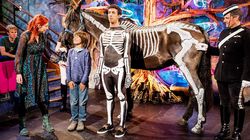
In lecture one we explore our animal family, meeting our distant cousins – from fish to fruit flies – unearthing clues to our evolutionary past and revealing surprising similarities as we discover our true place in the tree of life
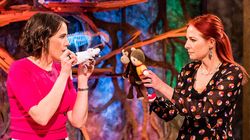
Lecture two covers the story of our recent evolution from early two-legged hominins to modern humans – revealing how a humble African ape became a successful global species. Alice and Aoife uncover the story of our journey out of Africa as we spread across the globe, and ask what sets us apart from the other, now extinct, hominin species.
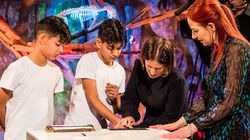
Lecture three, we see how the interplay between genetic variation and the environment makes us all different – even identical twins. We'll interrogate emerging genetic technologies – from fixing gene errors to personalised medicine – and ask how far we should go with genetic testing.
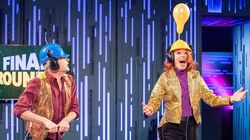
Dr Hannah Fry, through a host of live experiments, uncovers the secrets of luck to discover what really controls our destiny, from dodging erupting volcanoes to pulling Christmas crackers.
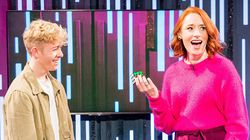
Dr Hannah Fry reveals how data-gobbling algorithms have taken over our lives and now control almost everything we do, without us even realising.
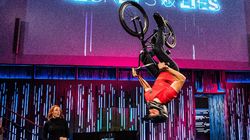
Dr Hannah Fry tests the limits of our control, from gravity-defying stunts to human-sized drones, and delves into the world of fake news to separate the truth from the lies.
Professor Chris Jackson reveals how, for billions of years, volcanic activity drove climate change on planet Earth. Now, it is humans.
Dr Helen Czerski explains why the ocean is so vital to life on earth and what we need to know to be good citizens of our ocean planet.
Dr Tara Shine takes a deep breath and explores the gases that make up the air we breath. One of them might provide the answer for heating and transport in the future.
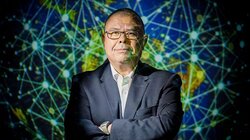
Professor Jonathan Van-Tam is joined by leading experts to explore viruses, the immune system and modern testing technology.
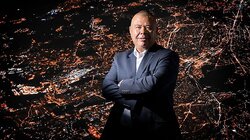
Professor Jonathan Van-Tam is joined by leading experts to reveal the secrets of contagion and the mathematics of disease.
Professor Jonathan Van-Tam is joined by leading experts to unlock the science of vaccines, variants and viral genetic codes.

Professor Sue Black has been dubbed the ‘corpse whisperer' for her role in deciphering the messages hidden within a dead body. In this first lecture in the Royal Institution's 2022 Christmas series, she is joined by Silent Witness's Emilia Fox to reveal the secrets of forensic science. Sue shows how the stories of our lives are hidden in the very fabric of our bodies by examining an archaeological skeleton, using techniques she uses in modern-day forensic investigations. She gradually builds up its identity until a pile of old bones once again becomes a real person. She explains how extraordinary clues in our bones can reveal everything from our age and our sex to our diets and our ancestry – there's even a bone in our ear that can reveal where our mother lived while she was pregnant. Professor Black's investigations into the trauma marks visible in the 1,000-year-old skeleton's bones reveal where this person died, and how they died. In the process, she tells this individual's extraordinary life story and sheds light on one of the darkest days in English history.
Professor Sue Black investigates a Christmas murder mystery to show how serious crimes are solved when there isn't a body. Sue is joined by an expert team including leading police specialists, forensic scientists and an award-winning dog. Assisting them, the audience help to unravel the mystery, using the latest forensic cameras, fingerprint techniques and DNA analysis. Remarkable soil analysis shows how a suspicious pair of muddy boots can be traced back to the most precise location. With insights into real serious crime investigations, Sue and her team draw on all their experience to solve the mysterious case.
The final lecture in the series begins with a ‘heist'. A jewel thief steals a precious man-made diamond from the Royal Institution's collection. Can forensic evidence conclusively identify and convict the criminal responsible? To find out, the Royal Institution's lecture theatre is transformed into a courtroom and the audience acts as jury on the case, with a special guest king's counsel invited to defend the suspect. Forensic evidence is based on probability; it can never be 100 per cent certain. So, how convincing does the evidence need to be for the court of the Royal Institution's own jury to reach a guilty verdict? Includes insights from real criminal investigations.

Professor Mike Wooldridge explores the nature of artificial intelligence. By using experiments and demonstrations he investigates how AI learns and what it can do.

Professor Mike Wooldridge reveals the huge role AI already plays in our daily lives, sometimes without us even realising what it is doing.
Professor Mike Wooldridge is joined by leading experts to grapple with the future of AI. What promises and dangers lie ahead as AI continues to evolve?

Dr Chris van Tulleken is joined by leading experts, including his twin brother Xand, to explore the incredible journey food takes through our bodies.

Using some explosive experiments, Dr Chris van Tulleken reveals how our food not only provides us with energy, but also the construction we need to constantly rebuild our bodies.
Dr Chris van Tulleken investigates how we have hacked our food system to create an amazing array of things to eat, but also some serious problems to solve.
Complete episode guide for Royal Institution Christmas Lectures with detailed information about every season and episode including air dates, summaries, ratings, and streaming availability in United States.
This episode guide is organized by seasons, making it easy to track your viewing progress or find specific episodes. Use the episode information to plan your binge-watching sessions or catch up on missed episodes.