

Four Corners is Australia's premier television current affairs program. It has been part of the national story since August 1961, exposing scandals, triggering inquiries, firing debate, confronting taboos and interpreting fads, trends and sub-cultures. Its consistently high standards of journalism and film-making have earned international recognition and an array of Walkleys, Logies and other national awards.
As we head into the third week of the election campaign, Four Corners examines how money and influence operates in the shadowy world of political donations.
With an increasing number of women turning to fertility treatments to help them conceive a baby, Four Corners investigates, are women being sold false hope by the IVF industry?
The scams, fraud and incompetence leaving remote communities exploited and betrayed. Linton Besser journeys almost 5000km across Australia in search of who's to blame.
We meet the people of the small Syrian town who defeated ISIS and are determined to rebuild their lives in the rubble.
The Deputy and the Dark Horse: Barnaby Joyce vs. Tony Windsor in the contest that could bring down the Deputy Prime Minister.
With the election only days away, Gold Walkley and Logie Award-winning reporter Sarah Ferguson interviews Malcolm Turnbull and Bill Shorten. What will she ask?
Going undercover with an ISIS terror cell. For six months this intrepid reporter infiltrated and secretly filmed a terrorist cell as they made plans for an attack.
Why Australia is being left in the dark.
The second in this two-part special investigation into the Lindt Cafe siege.
How's China's Communist Party is infiltrating Australia.
The brave few who blew the whistle on Australia's most corrupt police force.
They are the hidden workforce kept behind closed doors.Domestic workers, in Australia, living in slave like conditions and made to work around the clock.This powerful Four Corners reveals disturbing cases of extreme overwork and underpayment and explains why those responsible are getting away with it.
Secret parties, sly booze and slinky cocktail dresses are a long way from the conservative images usually associated with the Islamic Republic of Iran.For decades the Republic's morals police have enforced strict rules that seem to cover just about everything, from dog ownership, which is banned, to clothing.Drinking alcohol is punishable with 40 lashes. Repeat offenders can face the death penalty.Despite the rules, many young people in Iran are rebelling. They're taking their lives in their hands and defying the regime to party in secret.
Across Australia, farmers, small businesses, government planners and major corporations have stopped waiting for politicians to decide whether climate change is real. They're acting now.Mounting evidence suggests our changing climate is having an impact on everything - from what we grow, eat and drink, to house prices and the cost of insurance.Four Corners has travelled from coast to coast to chart how Australians are adapting to the new weather challenges.
Australia's population is growing fast, we've added almost 400,000 people in the last year, and we're feeling the strain. Ben Knight investigates what a Big Australia means and the difficult choices that will have to be made.
The sex scandal that has engulfed American film producer Harvey Weinstein triggered headlines around the world and prompted a searing discussion about the treatment of women.Much of the attention has focussed on the actresses who say they were preyed upon by the movie mogul.Behind the scenes, there were other women, work colleagues and employees, who allege that Harvey Weinstein used his power to abuse them.They kept their experiences secret for decades, fearing legal action and reprisal. Now they are speaking out.
The Australia Taxation Office is a formidable enforcer with extraordinary powers.It can raid your home or business without a warrant, it can compel you to answer questions and treat you as guilty until proven innocent.While there's strong public support for a crackdown on major multinational corporations to force them to pay their fair share, there is growing concern that the Tax Office is targeting people a long way from the big end of town.In a major joint Four Corners/Fairfax investigation, reporter Adele Ferguson puts the actions of the Tax Office under the microscope, examining how it uses its extensive powers.
"I was instrumental. I was at the heart of it." Chris Wylie, former Cambridge Analytica director of researchFour Corners brings you the undercover investigation that has left social media giant Facebook reeling through the unmasking of the secretive political consulting firm Cambridge Analytica.Four months in the making, this ITN investigation for Channel 4 in Britain used hidden cameras to reveal the tactics used by the UK firm Cambridge Anayltica to influence elections and undermine the democratic process in several countries.
There are millions being made in the Australian marijuana business but these entrepreneurs and investors aren't risking jail to make their fortunes.They're betting big on the home grown medicinal marijuana industry and riding the "pot stock" boom.But with patients struggling to access cannabis products, Four Corners investigates who is making money out of the marijuana boom.Four Corners charts the rise of this industry which has grown from nowhere in just a few years.https://tv.press.abc.net.au/green-rush-four-corners
Today, 60% of Australian adults are classified as overweight or obese. By 2025 that figure is expected to rise to 80%.Many point the finger at sugar - which we're consuming in enormous amounts - and the food and drink industry that makes and sells the products fuelled by it.Despite doctors' calls for urgent action, there's been fierce resistance by the industry to measures aimed at changing what we eat and drink, like the proposed introduction of a sugar tax.On Monday night Four Corners investigates the power of Big Sugar and its influence on public policy.
I am that girl: The case that put sexual consent on trial.On Monday night, the young woman at the centre of one of Australia's most controversial rape trials talks to Four Corners."The 18-year old in the story is me. Those awful things happened to me. I am that girl."She was a teenage virgin on her first night out in Sydney's King Cross. He was the son of a wealthy night club owner. They met on the dance floor. Minutes later, he ushered her out into a laneway. What happened next has had devastating consequences for both of them."Was a sick night. Took a chick's virginity, lol." Text message sent by the young manThe young man had sex with the teenager, without her consent, but the court found it wasn't rape. "Whether or not she consented is but one matter. Whether or not the accused knew that she was not consenting is another." Judge The man's acquittal, on the grounds that he didn't know the teenager had not consented, shocked many and provoked troubling questions about how the law interprets consent in rape cases. The young woman says she's still haunted by the ordeal."It got to be over for everybody else. There's no other avenues. Everyone's done, everyone goes home, and then it's just me. And I'm still here…I'm still living it." Under the law, the young woman's identity has been kept secret. Now she has chosen to speak to Four Corners in the hope that others will learn from her experience."I've spent far too long feeling embarrassed and ashamed." In a searing interview, she talks of how the incident and the years of legal action have impacted on her life."No-one dreams of their first time being in an alleyway with someone whose name they can't even remember." This shocking account serves as a serious warning about the need to understand what consent is and the consequences of getting it wrong."The criminal law is a blunt and brutal method of social education...You shouldn't have to rely on the criminal law as the key mechanism for doing that." BarristerOne of those responsible for drafting those laws is now calling for change. "There has to be some way to ensure that this ‘reasonable belief' as to consent concept is a bit more foolproof." Law professor
This episode of Four Corners is a French TV report, "Banksters" by Jerome Fritel & Marc Roche, on the scandalous conduct of HSBC."You have to ask: if you don't prosecute these people, who the hell are you going to prosecute?" Former US Senate investigatorHSBC is one of the world's largest and most powerful financial institutions with offices on five continents, including in Australia. It likes to spruik its financial might and global reach. Behind the corporate gloss, it has a far less attractive reputation. The bank has been at the centre of several of the biggest financial scandals uncovered this century."Affiliates of drug cartels were literally walking into bank branches with hundreds of thousands, sometimes millions of US cash…that didn't happen once, it didn't happen twice, it happened systematically over the course of about a decade." Former US Deputy Federal ProsecutorHSBC, or the Hong Kong & Shanghai Banking Corporation has been implicated in a raft of illegal activities, from money laundering for the mafia, to enabling tax evasion and currency manipulation."No matter where you live, no matter what kind of business you are in, if you wish to enter the offshore system, HSBC is likely to be your bank." Investigative journalistIn this global investigation, the role of HSBC in these scandals is laid bare."There is simultaneously drug money, money from terrorism, money from Belgian diamond dealers, money of the French dental surgeons, money of the elite and the world of showbiz, of French and European aristocracy... it was a national sport, hiding money in Switzerland and at HSBC." ReporterDespite the revelations, the bank has flourished, leaving investigators frustrated."How many billions of dollars do you have to launder for drug lords before somebody says, ‘We're shutting you down'?" US SenatorThe film raises disturbing questions about who is in charge of regulating the banks in an increasingly globalised financial world."Who has jurisdiction over an institution that operates in a hundred countries? Who has the responsibility for taking on that kind of criminal undertaking?" Former US Senate investigatorRegulators stand accused of failing to adequately punish the bank and impose penalties that hold HSBC to account."Are we capable of regulating the banks properly? Of course we are. Do we want to, is really the probably important question." UK MPWith the rise of China, HSBC is positioning itself as the bank of choice to drive China's global economic ambitions, which makes investigators uneasy."As you have firms of the stature and the size of HSBC marrying up with rising Chinese banks that are now so huge, it's a recipe for potential disaster." Former undercover agent, Royal Canadian Mounted Police
This episode of Four Corners screens a shortened version of the 2017 human rights documentary Complicit, directed by Heather White & Lynn Zhang.Filmed over 3 years it investigates the Chinese workers paying the price for our mobile phone obsession."There were iPhone screens and Nokia screens…I held the phone screen in my left hand, and a piece of cloth in my right hand… Wiping was the only thing I did besides eating and sleeping." Teenage workerMobile phones, smartphones and tablets have revolutionised the way we communicate but the technology we are addicted to has had toxic consequences."I knew we worked with chemicals, but I had no idea that it's poison." Young workerChina produces approximately 90% of the world's consumer electronics. The factories making the components for these electronic goods are filled with young workers. Some have been exposed to poisonous chemicals, with devastating results."Many co-workers developed the exact same symptoms. When I walked, it looked like I had uneven legs. It would take 10 minutes to take a two-minute walk. My legs felt too heavy to move." WorkerThis investigation, filmed secretly over four years, exposed the use of harmful chemicals in the factories producing the products many of us use. Hidden cameras captured the working conditions inside the factories churning out these products."It was the cleaning solution he used, which contained benzene, when he was working at the electronics factory that caused his disease." Father of sick workerThe film charts the growing realisation amongst the workers that their illnesses stem from their work and follows their fight for compensation."After we discovered so many workers with leukemia…more media reports followed up and showed that these workers were chemically poisoned." Worker activistThe landmark investigation led Apple to ban the use of benzene, a known carcinogen, and n-hexane, a chemical that damages the nervous system.But the ban does not apply to subcontractors who make up two-thirds of Apple's supply chain. And around 500 other chemicals are still used to produce electronics, mostly in the developing world, where there are few or no regulations to protect the workers who make them."Many of the workers that I've helped got occupational diseases due to exposure to toxic chemicals. Many are from the electronics industry. They made cell phones, computers, semiconductors etc." Worker activist
On Four Corners, our investigation tells the story of your out of pocket medical expenses."You go for years paying premium fees into a fund. You call on it once and you're out of pocket. It sort of doesn't add up to me!" PatientWe've put you, the patient, at the centre of this investigation. Nine weeks ago we placed a call out, across ABC programs and social media, asking you to send us your bills. Hundreds of people across the country responded. "The results are shocking and certainly show how out of pocket expenses are undermining the Australian private health care system." Dr Norman SwanIn this joint Four Corners investigation with Dr Norman Swan from RN's Health Report, the program examines what's driving these out of pocket expenses."As doctors we frequently make decisions based on what we think our patients need and can afford." Doctors' representativeMillions of Australians fork out big money for private health insurance believing it will give them their choice of specialist and Rolls Royce service. Yet many, at a time of great personal crisis, are saddled with bills for treatment, leaving them thousands of dollars out of pocket and wondering why they bothered paying for insurance at all. "You live in this world where you have Medicare, a universal health fund, and you've got a private health fund, you're paying into that substantial fees, and low and behold, you're $18,000 out of pocket when you have one operation." PatientMany blame Medicare and the private health funds, but often the cause of out of pocket expenses lies elsewhere and this eye-opening program reveals some hard truths for patients."Where you live can have an influence on whether you're charged a gap and also the treatment that you're trying to access." Health insurance industry spokespersonFor patients to get the best quality care for the money they pay, they need to rethink what high charging specialists actually deliver. "Some people out in the community feel that someone who's got very lush premises as their rooms, who charge high fees are clearly much better than other surgeons. There is no evidence that's the case. I think that's very important the public understands that." Surgeons' representative
It's the story of the century: The US President and his connections to Russia.In a Four Corners special series, award winning investigative reporter Sarah Ferguson follows the spies and the money trail from Washington, to London, to Moscow.Months in the making, filmed across the United States, the United Kingdom and Russia, Sarah Ferguson charts the extraordinary allegations, interrogating the evidence and interviewing central characters in this unfolding story that could be lifted from the pages of a blockbuster spy novel.In this three-part series, Four Corners delivers a riveting account of the allegations and evidence from the characters central to the drama that has gripped the world.Part 1: Follow the Money: Four Corners follows the money trail from New York to Moscow, tracking the ties between Trump, his business empire and Russia.
It's the story of the century: The US President and his connections to Russia.In a Four Corners special series, award winning investigative reporter Sarah Ferguson follows the spies and the money trail from Washington, to London, to Moscow.Months in the making, filmed across the United States, the United Kingdom and Russia, Sarah Ferguson charts the extraordinary allegations, interrogating the evidence and interviewing central characters in this unfolding story that could be lifted from the pages of a blockbuster spy novel.In this three-part series, Four Corners delivers a riveting account of the allegations and evidence from the characters central to the drama that has gripped the world.Part 2: Secrets, spies and useful idiots: Four Corners speaks to key protagonists at the centre of the unfolding drama over members of the Trump team accused of being compromised by Russia.
It's the story of the century: The US President and his connections to Russia.In a Four Corners special series, award winning investigative reporter Sarah Ferguson follows the spies and the money trail from Washington, to London, to Moscow.Months in the making, filmed across the United States, the United Kingdom and Russia, Sarah Ferguson charts the extraordinary allegations, interrogating the evidence and interviewing central characters in this unfolding story that could be lifted from the pages of a blockbuster spy novel.In this three-part series, Four Corners delivers a riveting account of the allegations and evidence from the characters central to the drama that has gripped the world.Part 3: Moscow Rules: Four Corners investigates the central allegations that members of the Trump team, including possibly the President himself, actively colluded with Russia to subvert American democracy.
Monday's Four Corners story "Second Chance Kids" is produced by PBS Frontline and looks at US teen criminals sentenced to life in jail."How much punishment is enough?" LawyerBeing tough on crime has become a popular mantra for political parties. Law and order debates are frequently fuelled by tabloid headlines calling for a crackdown on crime. The result is often harsher sentencing. In the United States it's led to thousands of prisoners facing mandatory life sentences for crimes they committed as teenagers."A super-predator is a young juvenile criminal who is so impulsive, so remorseless that he can kill, rape, maim without giving it a second thought." Forensic psychologistNow there's debate over whether these prisoners should be given a second chance at life."To say to any child of 13 that you're only fit to die in prison is cruel." US LawyerIn this compelling documentary, the film makers follow the cases of two of these now adult prisoners who expected to spend their entire lives behind bars."I was a bad kid. I was an angry kid. But I don't think I was so to the point where OK now you're going to be a kid that dies in prison." PrisonerWith exclusive access, the film closely documents their legal bid for freedom following a landmark court case."I've changed and I'm not the same individual. But I feel ashamed of what I did." PrisonerWe witness the confrontation between the perpetrators, guilty of murder, and the families of their victims in emotionally charged parole hearings."He was my only son and I'll never forgive him, ever!" Victim's motherAs juvenile offenders across the US await their potential re-sentencing, Second Chance Kids asks tough questions about crime and punishment."There are some people who should never be released…there are some crimes, in my opinion, that are so deleterious to our community that individuals deserve to go to jail for life." ProsecutorFor the two prisoners, their chance of a new life presents them with the challenge of how to live after decades behind bars.
This episode of Four Corners, reported by Linton Besser and presented by Michael Brissenden, investigates some of the worst biosecurity breaches in Australian history, uncovering sophisticated smuggling operations, inadequate enforcement and corruption."The department has a problem. There is a vast number of containers coming in…They're struggling to maintain the barrier." InvestigatorLast year a devastating exotic disease wiped out much of Queensland's prawn industry, threatening a lucrative trade based on our "clean" reputation and undermining faith in Australia's supposedly fortress-like borders."It's the canary in the coal mine… there are some problems with our border security that obviously need to be addressed to make sure this doesn't happen again." ScientistOfficial inquiries narrowed in on contaminated seafood illegally imported from Asia."These are low-grade prawns, you don't want them inspected by anybody. They probably glow in the dark." Biosecurity officialNow a Four Corners investigation will reveal how Australia's biosecurity measures were defeated by sophisticated smugglers."A substantial number…were deliberately and cold-bloodedly gaming the department. The profits to be made from getting a container past the department were huge." InvestigatorThe program pieces together the dramatic fight to contain the outbreak and uncover the cause."I'll never forget that day because I was out in my boat in the morning just working on reefs and I got this phone call saying, ‘Can you keep a secret?'" Marine scientistInsiders talk about the cut-throat nature of the industry and the huge profits to be made by those breaking the law."We had to choose whether we were going to follow their lead, or we were going to say no and act properly." ImporterInvestigators warn that Australia's biosecurity regime can be easily exploited."Would you put a burglar in charge of a bank? That's what self-regulation is about. There is no incentive for an importer to do the right thing." InvestigatorThe concern goes well beyond the seafood industry, with the program set to detail another significant breach that threatened a multi-billion-dollar industry."It was like a rotten onion. We were peeling away a layer to find a more rotten layer underneath. So, everywhere we turned, everywhere we looked things were getting worse." Executive
Michael Brissenden examines the secrets and scandals in Australia's horse racing industry.On the surface, Australia's racing industry has never been better. With a prize pool that's grown to more than $600 million it's one of the biggest industries in the country, employing more than 50,000 people. But away from the glamour all is not well in the sport of kings."People are leaving this sport in droves." Horse TrainerDie-hard racing identities are worried."We all love our horses. But we seem to get knocked from pillar to post, one scandal after another." Thoroughbred Owner"A scandal like this certainly does rank right up there. This is a big one." Racing commentatorIn 2017 an astonishingly audacious doping conspiracy was uncovered. Five trainers and three stable hands were found guilty of taking part in Victoria's Aquanita doping scandal, but questions remain."How anyone could look at this situation and say, well that's it, all done, we've got the guilty people, and move on, just has you shaking your head." Racing Industry analystIn the wake of the scandal, described as one of the darkest and longest chapters in the history of the sport, high profile racing figures are questioning how the sport is being policed."How did this happen for so long, what processes were in place that failed the racing industry, failed punters, failed the horses?" Racing form analystThe damage done by the Aquanita doping conspiracy isn't the only problem facing the industry. The loss of high profile sponsors, the difficulty in attracting racegoers and concerns about animal cruelty have the racing fraternity on edge."Once punters lose confidence in the sport the whole system breaks down because without punters racing doesn't exist, without owners who put on the show racing doesn't exist." Racing Commentator.
Four Corners Mark Willacy is on the ground in Thailand to report on the extraordinary rescue mission to save the Wild Boars football team.The story of a brave young soccer team gripped the world.The extraordinary international effort to find and rescue 12 boys and their coach from a remote cave in northern Thailand was watched closely by millions.On Monday Four Corners documents this wonderful and tragic tale from the day the boys first disappeared until the joyous moment the last person left the cave.Reporter Mark Willacy is in northern Thailand for this special report.Out Of The Dark, reported by Mark Willacy and presented by Sarah Ferguson.
AMP was once a trusted blue chip Australian company but its reputation is now in tatters following evidence before the Financial Services Royal Commission that it charged customers fees for no service and repeatedly lied about it to the corporate regulator. On Monday Four Corners investigates how AMP ripped off its customers and details the extraordinary measures it took to conceal its actions.In a revealing interview a former financial planner gives an insider's account of the tactics used by AMP to cheat customers out of their own money.
On Four Corners on Monday night, Sophie McNeill reports how Australia is accused of failing to stand up for democracy in Cambodia, as it descends into dictatorship."You don't drink champagne with the dictators." Opposition LeaderFor more than three decades Cambodia has been ruled by one man, Prime Minister Hun Sen, who came to power in the country's first democratic elections after the horror years of the Khmer Rouge. Australia played a key role in the peace deal that ended the bloody civil war, but the once bright hopes for democracy have long since faded."We were tremendously successful in bringing peace to Cambodia, but we weren't at all successful in bringing democracy and human rights." Former Australian Foreign Minister Gareth EvansAhead of this weekend's elections, the Hun Sen regime launched a ruthless crackdown on the political opposition and free press. On Monday, in her first story for Four Corners, reporter Sophie McNeill travels to Cambodia to confront the man whose political opponents have been imprisoned and assassinated in mysterious circumstances.Sophie McNeil: The world says this is not a democracy…Hun Sen: No, no, no. No this is not (right).While steadily cementing their grip on power, Hun Sen and his family and cronies are accused of amassing enormous wealth through a corrupt and nepotistic system."There's nothing that happens there that they don't control, and that is corruption in its most egregious form. That's what it's like in Cambodia. It is a Mafia state." Patrick Alley, Director Global WitnessFour Corners has uncovered evidence of how the regime's wealth has been used to buy properties and businesses in Australia, where some of Hun Sen's relatives have established a base for building support, sometimes through threats and intimidation."They allow this foreign government to intimidate our people, Australian citizens, and those who come here to study. This is not right." Hong Lim, Victorian MPSince 2014, Australia has granted the regime $40 million in additional aid, in return for taking some of Australia's unwanted refugees, and the Turnbull government upgraded ties with Cambodia last year. While the US has begun moves to sanction the regime by freezing assets and blocking visas, international observers accuse the Australian government of cosying up to Hun Sen."I would like to see Australia take a strong stance, (to) come out openly and condemn the Hun Sen regime. They're not doing that." US CongressmanWhile hopes for democracy have disintegrated, China has moved to dramatically expand its presence and power in the country."Cambodia has the coast, Cambodia has minerals, Cambodia has forest, Cambodia has a dictator. You can buy it all." Opposition LeaderAs Hun Sen prepares to tighten his grip on power after this weekend's elections, Cambodia's democracy campaigners say they feel abandoned."Cambodia look up at the people of Australia. We envy you. You live in a world of democracy, but your government is disappointing. Very disappointing." Opposition Leader
Facebook says it's on a mission to be the place where people connect and "bring the world closer together". More than a billion people are on the social networking site every day, posting their thoughts, pictures, and videos.But alongside the family photos and FOMO inducing holiday videos is content that is truly disturbing.This British investigation has exposed the inner workings of the social media giant to reveal how and why content moderation decisions are made.
"Hi guys! So this is my boob job vlog, I'm sooo excited! This is how you choose your breast size!" YouTube starWelcome to the new world of enhanced "beauty" where there's nothing natural about the faces and bodies created by cosmetic procedures.Fuelled by social media influencers on Instagram, YouTube and Snapchat, cosmetic surgery has entered the mainstream."What I'm finding is, instead of hiding it, like they would have a few years ago, most people are kind of flaunting it...I've had my lips done, I've had my cheeks done. I've had a little bit in my jaw." Social media influencerThe "Insta Effect" of social media has seen growing numbers of young women choosing to alter their appearance, as though it's as simple as buying a new set of clothes."The problem I get is that people perceive a cosmetic procedure to have limited or no risk and only upside, and that's not the case." SurgeonDoctors offering cosmetic surgery are becoming social media stars in their own right and it's redefining the meaning of their doctor/patient relations."They write to you... 'Look, here's my Insta page, I've got this many loyal followers. If you perform surgery for me, I will promote you on my page.'" SurgeonFrom dermal fillers and Botox, to butt lifts and breast implants, women are undergoing treatments that could change their lives forever, and not in the ways they were expecting."It looked deformed. It was sitting way higher than the other one. It was very out of shape." PatientReporter Louise Milligan has uncovered cases of women left disfigured and in pain, struggling to find the money to afford corrective surgery to give them back their dignity.Underpinning the growth in the industry is a business model targeting women who can barely afford the procedures by selling the dream of a dream of a "new you"."It was all about accessible surgery, advertising price point, that you can change your life for a coffee a day. You know, someone who has low self-esteem, who has low confidence, especially after going through a divorce or being on a single parenting pension."As this investigation shows, when things go wrong, the physical and financial costs are devastating."I couldn't sleep, I couldn't eat. I couldn't do anything but sit there and cry in agony because it got to the point where it was so bad." PatientDoctors left to pick up the pieces are warning that the booming industry is creating a dangerous legacy."It scares me. This is a big problem. And it's going to get bigger." SurgeonBeauty's New Normal, reported by Louise Milligan and presented by Sarah Ferguson.
Having a child is supposed to be the most natural thing in the world, but knowing how to raise one can be another thing entirely. Even in the most loving families, parenthood can be incredibly daunting.On Monday, Four Corners brings you the story of three mothers determined to learn how to change the way they raise their children.With extensive access to the pioneering Safecare program for parents whose children are at risk of neglect or harm, Four Corners follows these families, and the social workers teaching them, as they learn back to basic skills.
How the Liberal Party tore itself apart.This Four Corners investigation takes you inside a political catastrophe.We chart the rise and fall of Malcolm Turnbull and the enemies that stalked him from within.
Steve Bannon's new world disorder."This revolution is global. It's coming to Australia." Steve BannonAs the Liberal Party tries to piece itself back together after the chaos of last week, Four Corners brings you an interview with the man hoping to overthrow the entire political class."I think that Australia is going to be a hotbed of populism."Steve Bannon put Donald Trump in the White House and rewrote the rules of modern politics along the way. Described as the most dangerous political operative in America, the strategist, renegade Republican and professional provocateur channelled the anger and disappointment of those who felt left behind by globalism to install Donald Trump as president."There's a lot of anger out there and I think that this anger can be harnessed."Now, he's taking his cause to the world in a crusade to "save" western civilisation, as the leader of a global populist-nationalist movement. He calls it a revolution."Populism is about getting decision making away from a set of kind of global elites...and get it back to working class people."In an age of upheaval, he sees opportunity. After playing a key role in Britain's Brexit campaign, he's been forging links with right wing nationalist groups across Europe, including the French National Front.Australia is next on his radar. He's identified Australia as ripe for his brand of revolution and plans to bring it here."Australia is at the tip of the spear on this."In an interview with Sarah Ferguson, Bannon outlines his manifesto for change and why it resonates with people around the world."It doesn't matter how many liberal journalists come in here and say 'Oh this is a bunch of fascists, this is a bunch of Nazis, this is a bunch of racists.' This... is not going to stop." Steve Bannon
Tonight Four Corners screens the BBC report, "Manchester Bomb: Our Story" on the teenage survivors rebuilding their lives from May 2017."My main present for Christmas last year was my Ariana Grande ticket…I'd never been to a concert before, so we were absolutely buzzing!" CaitlinThey were young girls and teenagers, on a night out to see their favourite pop star. Many were attending a concert, without their parents for the first time."Everything was just really exciting, really, it was new." IzzyAs the show ended, a terrorist detonated a home-made bomb packed with shrapnel."There was, like, music playing while we got up and I was just making my way out onto the stairs and then we heard, like, a boom sound." Niamh22 people were killed, more than 250 injured and countless lives were impacted."We ran, and we were running for our lives. We didn't know what the hell was going to happen next." CharlotteFilmed over many months, this program tells the story of several young survivors as they, and their families try to reclaim their lives."She wears a mask that to the outside world, she's fine. She's really not fine…People see this bright, bubbly, carefree girl, and I just think she wears this mask so well that sometimes she fools herself." Erin's mumSome are able to return to their old routines, but in the privacy of their bedrooms, the girls reveal their struggles."It's times when you kind of let your guard down a little bit and you try and enjoy yourself and then you feel guilty for feeling that way and you feel guilty for getting on with your life when other people can't." NiamhDespite their darker days, some are trying to find inspiration for the future."It's kind of made me realise like life is short and I want to do stuff and I want to get out there." Amelia
Who Cares? "They're all someone's mum, someone's dad."A special two-part investigation of the failings in aged care."They're all someone's mum, someone's dad, someone's brother, someone's sister. They were all young once and they're just forgotten." Senior aged care consultant, NSWOn Monday Four Corners launches the first of a two-part special investigation into the treatment of the elderly in aged care homes."I was a personal carer in an aged care facility and I'm speaking out because people need to know what it's really like in a nursing home." Aged care worker, NSWIn the ABC's biggest crowd sourced investigation, we asked our audience to share with us their experiences of the aged care industry. More than 4,000 responded."I'm speaking up today for people that don't have a voice." Senior aged care consultant, VictoriaMany of those who have come forward are professionals who have extensive experience in the industry and are concerned by what they have seen."I believe our elderly deserve to have better care." Senior aged care consultant, NSWIn part one of this investigation, Four Corners examines the business of aged care and what that means for the vulnerable residents left in its care."When they go into have a look at a facility, they do see the glamour. They might see a sing along or a coffee club or something like that. They see the glitzy pictures and they don't know about the ground level care." Diversional therapist, VictoriaFamilies have also decided to speak out, with disturbing accounts of overworked staff and neglected residents. "Within three weeks, she was no longer the person that she had been. Nan would never want to complain about things and when I was there I would verbally bring up things with the staff. No resolution was ever evident. And so I started filming it." GranddaughterWith families and aged care workers from around the country, Four Corners reveals the shameful lack of care and dignity experienced by many elderly Australians.Reported by Anne Connolly and presented by Sarah Ferguson.
Part Two of the Four Corners special investigation into the failings in aged care.On Monday Four Corners will detail shocking cases of abuse and premature deaths in our nursing homes."If this was happening to our children, we would be in there and we would be fixing it and solving it." Son, NSW"You could see the hand bruising from her being picked up." Son, WA"Mum had bruises on her wrists and black eyes, and whenever I said something to the staff, they said she had had a fall." Son, NSWIn part two of this Four Corners investigation, the program will reveal the abject failure of government regulation to protect the elderly."Her comment was, 'Will an apology do?' And I said, 'No, an apology will not do. You have to do your job, and you have to find out what happened, and make sure that this doesn't happen again.'" Daughter, NSWCarers and families from across the country have come forward to tell their stories and demand change."I believe there are a lot of incidents like this that we don't know about. Families do not have a way of finding out the truth. He was a loving man, he cared for his family, he worked hard all his life. And he didn't deserve this ending." Daughter, NSWFacing concerted efforts to cover up abuse and mistreatment, families are taking matters into their own hands to hold nursing homes to account."I wanted to know what really happened...The fact is that the right things hadn't been done, were not done for him, at his hour of need. And, these were merely just total lies." Daughter, NSWSome families have resorted to installing hidden cameras to capture evidence."To make life easy, why don't we just put a camera in? You know, a little camera, clock camera? And we'll just see what's happening." Son, WAThey say that for too long the industry has been able to avoid rigorous public scrutiny."You can sit on the internet and book yourself a hotel, or a car, or a flight, and you can compare very easily, but in aged care it's not so easy." Former assessorAs this program will clearly show, there is much more to be done if our vulnerable elderly Australians are to be given the care and protection they deserve."To simply say that staff members have been educated and this won't happen again, doesn't give the family of the deceased any comfort at all, because it shouldn't have happened in the first place." Former assessorWho Cares? reported by Anne Connolly and presented by Sarah Ferguson.
Proud Country: A portrait of a community surviving the drought."You may be on a bed of roses today, but the thorns always prick. So you just got to pull yourself together. Everyone pull together." Country Women's Association Branch SecretaryOn Monday night, Four Corners brings you a story from the heart of the drought, a portrait of the land and its people, where the lack of rain is biting hard."I'd be joking to say that it's not tiring and I'm bit too old for this sort of stuff, but anyway, that's how it is." FarmerIt's pushing some to breaking point, but many in this proud country community are doing all they can to give others the strength to carry on."Yesterday was very emotional. A little old lady rings me up and she said to me ‘I'm 92 I'm going to give you $2000' and I thought ‘oh my godfather!'" Country Women's Association Branch SecretaryThe people of Quirindi live and work on rich black soil country that they like to boast is the best in the land. Except when it hasn't rained properly for more than a year."I can remember looking at the cows and thinking, ‘Bloody hell, what are we going to do?'" FarmerThey opened their homes and their lives to reporter Michael Brissenden. Along the way, he encountered characters so large, they could have walked from the pages of Banjo Paterson story."Drought has no respect for a person, whether you're rich or poor." Country Women's Association Branch SecretaryFrom the thriving hub of the Country Women's Association, to an unexpected local victory on the dusty rugby field, he found people trying to find a sense of purpose and some joy under the relentless sun."It's a tough time at the moment so it's just good for the town to have something to rally around." Captain of the Quirindi Lions Some are finding practical ways to make life that little more bearable with the donation of a haircut or a new pair of jeans."If we can make a few people feel a little bit better about themselves and know that there are people out there that care, I think that's just some small little gesture that we can do." HairdresserDespite their best efforts, you can sense the quiet desperation sitting just below the surface."Every week it's getting worse. You wouldn't think it could get worse, but it is. It's just got that real bad feel about it." Grain supplierThe parched landscape, exquisitely captured by Four Corners' cameras, reveals the profound impact this drought has had. And with winter slipping away, there are fears for what summer may bring."We're going into the hottest time of the year… the days are hotter, people haven't got water and there's no feed. So, time will tell." ContractorProud Country, reported by Michael Brissenden and presented by Sarah Ferguson.
Hidden cameras behind bars."We have live footage, no bullshit, live as it's unfolding." Prison riot mobile phone footageA prison on fire, 600 inmates on the loose from their cells, and a band of prison officers desperately trying to contain a full-blown riot, all while footage of the violence is streamed live on social media."Who's got the keys man, who's got the keys blood?""Outta control mate, outta control." Rioting prisonersThis was not the scene from an action film blockbuster, it was frighteningly real."You could see staff were genuinely scared. You could see the fear in the face from everybody. Because the potential now for you to lose the jail was as real as it was going to get." Prison officerThe astonishing footage revealed a prison system at breaking point."They were filming to put it on social media so that they make the public aware - the way they were being treated in the prison, because nobody else is hearing them." Former prisonerThe riot, at a major prison in Britain, highlighted problems facing governments around the world, including in Australia: how to manage soaring prison populations driven by law and order debates and public demands for tougher sentencing."Prisons are in crisis. Violence continues to increase, but with so much violence, particularly assaults on staff, prisons are not under proper control and the risk of further riots must be substantial." Former head of the UK Prison ServiceUsing footage filmed by prisoners themselves in correctional facilities across the UK, the program reveals a system rife with drug use, violence and squalid living conditions."Cells were filthy. They were damp, they were dark, lavatories were blocked. There were rats, there were cockroaches." Chief prison inspectorThe UK crisis has focused debate on the growing role of private companies in running prisons, among them global companies like G4S, which also operates in Australia."People just get lawless you know? Especially when there's not much staff around." Former prisonerThis revealing documentary opens a rare window into life behind bars and the pressures on those keeping watch."The government doesn't have a grip on the system and there's a cost in blood being paid." Former chief prison inspectorPrisons Uncovered, from Clover Films for ITV and presented by Sarah Ferguson.
How a cashed up gun industry has Australia's firearms laws in its sights."This is the gun industry lobby redux. They're back. And they're ready to spend." Gun law researcherThey're the new force in Australian politics - a lobby group funded and directed by major firearms sellers and manufacturers and they're taking aim at Australia's politicians."We're looking to enter a new era of engagement...We want governments to be held accountable for the decisions they make." Gun industry spokespersonTheir campaign represents a newly emboldened firearms industry set on changing Australia's gun laws."You've got an industry which is prepared to leap in. And they've got a lot of money." Gun law researcherOn Monday Four Corners investigates how the gun movement in Australia is reawakening and examines the new tactics they're employing to make their presence felt on the political scene."The campaign they were running had nothing to do with guns. The idea I think was to inspire people to move their vote to protest vote with minor parties." Campaign managerThe industry openly declares it wants to influence how governments are formed and the policies they enact."We were aiming for a government which couldn't be formed by majority." Gun industry spokespersonFour Corners investigates the industry's political allegiances and how these connections are being used to chip away at gun laws around the country."There's been a lot of whittling away around the edges, trying to water down the effect of the law, to do anything possible to reduce the effect of the law for the convenience of shooters and the benefit of the arms industry." Gun law researcherSome political allies say that gun ownership is not simply a matter of convenience, it's a national security issue."I want more firearms sold because I want more firearms, you know? I want more people involved in protecting our country." PoliticianThose who delivered the national agreement to limit firearms after the Port Arthur massacre say Australians need to sit up and take notice."There is a muscling up by those making money out of a trade of guns into this country, and we need to watch that very closely." Gun control advocateBig Guns, reported by Sean Nicholls and presented by Sarah Ferguson.
The sophisticated corporate campaign to future-proof the Crown."What you get now is a very packaged royalty...It is a very professional operation in spin management, media management, media operations." AuthorFor almost two weeks Australia has felt the full force of a royal charm offensive. The visit by the newly minted Duke and Duchess of Sussex, Prince Harry and Meghan Markle, has been a triumph for the Royal couple and the House of Windsor brand."I think the marriage...has injected a real shot of adrenaline into people's interest in the Royal Family." Tabloid royal correspondentIt's a world away from the scandalous 1990s when the Royal family was embroiled in a rolling series of crises, indiscretions and PR disasters leaving them out of fashion and out of step with the times. Some were even talking about the end of the monarchy itself."All bets were off with the Royals in the nineties. Spectacular own goals, things that 50 years earlier would have had discreet veils drawn over them: Camillagate, Squidgygate, Tampaxgate, all those terrible, terrible, gruesome little scandals." AuthorOn Monday Four Corners charts how the Royals have rebuilt their reputation and changed the way they manage "The Firm"."From those ashes, a lot of lessons have been learned. There's obviously had to be more deliberate management about how people behave, what they're saying, what they're wearing." Global advertising consultant"It was the Royal family accepting that things needed to change if they were to survive. Survival is the name of the game for the Royal family." AuthorThe program reveals a highly controlled operation with spin doctors and media management at the forefront."You don't see it but... what we see and read about the Royal family is pretty much controlled by them." Former Private Secretary to the Royal householdThe Royals are increasingly bypassing traditional media and finding new ways to get their message out by joining the ranks of social media "influencers". Those combined efforts have resulted in one of the most spectacular rebranding exercises in modern times."In many ways, they've brought innovation. They're brand innovators to the Royal family." Global advertising consultantThis new image has helped divert attention away from questions over the funding and financial interests of the Royal household."We don't know where the money is invested. We don't know where it's spent. We don't know what the income is. We only know what they tell us." Former UK MPAs the palace prepares for the next generation to take the throne, Four Corners examines the very corporate campaign to future-proof the Crown.Windsor Inc, reported by Louise Milligan and presented by Sarah Ferguson.
Fear and race on the streets of Melbourne."They're portraying us right now like we're demons." Young Sudanese manFor more than two years, the media has been reporting that Melbourne is in the grip of a crimewave, overrun by African street gangs responsible for a wave of violence and theft."We need to call it for what it is, of course this is African gang violence... people are scared to go out to restaurants of a night-time because they're followed home by these gangs." Peter Dutton, Federal Home Affairs MinisterImages of brawling Sudanese teens and hooded armed robbers have spread terror and stoked a growing anger towards those "of African appearance"."You get stared at. Imagine someone's looking through you or looking ... someone's eyes are just burning into the side of your head. That's what it feels like." Young Sudanese manSome residents say they are living in fear, the Sudanese community feels under siege and police are being accused of political correctness and inaction."They do all these criminal acts and you see on the news that they get away with it. Why do they get away with it?" ResidentAmongst the claims and counter claims, Four Corners reporter Sophie McNeill has spent weeks on the ground to get to the truth about "African" crime."We're seeing headlines and reporting that exacerbates the problem. Reporting on things that we're not necessarily seeing." Senior Victoria Police officerWith unprecedented access to the police and the state's chief Judge, the program separates perception from reality."I think it's really important that the public be properly informed about what we're doing. It's their right to be properly informed." Chief JudgeCrime and Panic, reported by Sophie McNeill and presented by Sarah Ferguson.
The inside story of the ABC's corporate meltdown.On Monday, Four Corners investigates the corporate crisis that engulfed the ABC and brought down both the Managing Director and the Chair in the space of one brutal week.Reporter Sarah Ferguson, in interviews with the two key individuals at the centre of this tumultuous episode, investigates the tensions and allegations that have rocked the national broadcaster - from the appointment of a "change agent" to reinvent the corporation, to the assertion of political interference at the highest levels.Former MD, Michelle Guthrie speaks for the first time about her sacking and the breakdown of her relationship with the ABC Board. Former Chair Justin Milne gives a frank account of the power struggle behind the scenes.In the seven weeks since the ABC's corporate meltdown there has been plenty of speculation but little detail about the events that unfolded behind closed doors at the national broadcaster.Now Four Corners tells the inside story of the crisis that shocked the organisation and left the public confused and concerned.Bitter End, reported and presented by Sarah Ferguson. (Season Final)

The women who make it and the ones who don't."My name is Rahaf Mohammed. I'm 18 years old... They have my passport and tomorrow they will force me to go back...Please help me. They will kill me." Rahaf Al Qunun.It was a voice of desperation, an urgent SOS to the world. A Saudi teenager, trapped in transit, on the run from her family and the Saudi state, hoping to make it to Australia."I planned my escape...I planned it at dawn, paid for my tickets, left in the morning while my family slept and arrived at the airport." Rahaf Al Qunun.Within hours #saverahaf lit up social media and set off global headlines."There was no going back for Rahaf now...I couldn't live with myself if this was a real person and I didn't do what I could to help her." Author.Four Corners reporter Sophie McNeill flew to Bangkok, slipped past security and joined Rahaf Al Qunun as the young woman barricaded herself inside the room."An official...has just knocked on the door and tried to get Rahaf to leave, she's refused... they've tried all sorts of ways of enticing her out of the room." Sophie McNeill, reporter.On Monday Four Corners reveals how the extraordinary events unfolded, using exclusive previously unseen video recorded by both Sophie McNeill and Rahaf herself. The program captures moments of high tension, despair and eventual jubilation when Rahaf is offered asylum in Canada.Rahaf is one of the lucky ones; not every woman gains her freedom. In this dramatic investigation, Four Corners reveals how Australia has become a hotspot for women attempting to escape the oppressive Saudi regime. Not everyone makes it."They beat her. They taped her mouth shut. They bound her arms and legs together, and dragged her onto a plane kicking and screaming, and nobody did anything. This is a grown woman." Author.The program shows the tactics used and the pressure applied to try to stop these young women."The Saudi state is active in exerting its diplomatic influence to try to interdict them." Human rights investigator.Those lucky enough to make it to Australia say they are still at risk. The investigation has uncovered multiple cases of Saudi women here in Australia, living in fear, telling reporter Sophie McNeill of the attempts to intimidate or trick them into returning them home."They are trying to reach the girls and speak to them to convince them to return back to Saudi." Saudi woman in Australia.Escape from Saudi, reported by Sophie McNeill and presented by Sarah Ferguson.

The cyber criminals breaking hearts and stealing billions."The criminals involved in this are definitely masters of manipulation. This is their job and they're very good at it, and they're very proud of being good at it." Cyber scam expert.Their voices are persuasive, their emails insistent and they have proven to be remarkably successful at conning countless people into handing over their money."When you have an appreciation for how big and sophisticated it is, this machine that's behind it that's targeting them, that's where it sorts of tends to awaken one." Police officer.Internet scamming began in the early days of email with appeals from Nigerian 'princes' asking for help to regain their missing money. From those amateurish beginnings, the scammers watched, learned and refined their techniques. What started out as a simple scam from West Africa has now morphed into a global enterprise, conning people on an industrial scale."West African cybercrime is the biggest threat that we see on the internet today. It eclipses all the other threats that we've seen that are financially motivated." Cyber security investigator.On Monday Four Corners investigates how these scams operate, uncovering an online marketplace where fake identities and criminal skills are bought and sold."They offer Facebook profiles for sale, they offer pictures of uniformed servicemen for sale, they offer the backstory and kind of how you get started." Retired US army colonel.Reporter Sean Rubinsztein-Dunlop travelled to Ghana to meet the scammers and watch them at work."The best targets are people who are divorced or widowed." Scammer.At the heart of their business is the 'romance scam', where criminals, often posing as lovelorn US soldiers, convince their victims to send them money."Over the course of the last two years, I've reported over 3,000 accounts to Facebook of scammers using my pictures to steal money from women." Retired US army colonel.For some, the romance scam is just the start of the nightmare, with victims used to launder money or conned into trafficking drugs, with devastating consequences."When they opened it and tested it and told me what it was, I was in complete shock, complete shock." Drug mule.And there's growing evidence that the scammers are not only targeting Australian victims, they're also setting up operations right here.Meet the scammers, reported by Sean Rubinsztein-Dunlop.
"I'm a hired gun to help either large corporates or governments to get back what is rightfully theirs." Asset recovery agent.As China has transformed itself into an economic powerhouse, billions of dollars have been illegally spirited out of the country. A large amount has made its way here to Australia."I think it's been well understood for a number years that Australia has been a target location for hot money... We've seen that activity increase exponentially over the last number of years." Financial crimes investigator.Chinese authorities want the money back, and they've sent a clear message to anyone who has broken their rules - we will find you and your money."It seems as if there's more than enough evidence that at least in jurisdictions like...Australia, the US and America, coercive tactics were used to force people back to China." Transnational crime expert.Now China has opened up a new front in its war on those accused of financial crimes. On Monday Four Corners will reveal the new tactics being used by Chinese authorities to take back money they believe has been stashed illegally in Australia."The mission is a recovery of funds that have been filtered from China to Australia." Private investigator.A new breed of financial bounty hunters is on the case, and their target is Australian real estate."There's what we're referring to as a cluster of properties... Most of them, or all of them waterfront, luxuriously appointed." Security consultant.With exclusive access to these investigators, reporter Mark Willacy sees first hand the extraordinary lengths they are going to."We can sell it and return the money back to China. Everyone's happy...it's a legal plan. There's no drama." Private investigator.With questions being asked about the legality of their actions and the reach of the Chinese state, it's a high risk operation."I think they have to tread carefully. One of the challenges they've got is that they need to walk a very, very narrow line." Financial crimes investigator.For the recovery agents themselves, they believe they are onto a financial winner."There's a huge opportunity to develop and exploit this business channel, especially when it comes to Chinese money of dubious origin that has parked itself in Australia." Asset recovery agent.
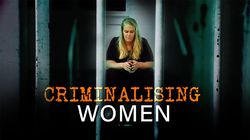
"We're criminalising more women than ever before." Prisoner rights activist."I have been to prison five times... I have been to prison for break and enter, driving while disqualified, driving under the influence of ice and escape police custody." Bekki.Bekki has just walked out of prison after serving a six-month jail sentence. The cameras are rolling as she takes her first steps."It's great to be out...I've got some underwear, some papers and $50 and that's it." Bekki.She's part of a fast growing group of criminals sentenced to jail in Australia. Across the nation, there are now more women in prison than ever before. And once they're out they're very likely to re-offend and end up back inside."I've been to prison four times. I was in prison for drug dealing. The hardest thing about staying out of prison is dealing with the isolation, the judgements, the stigma." Fran.On Monday Four Corners investigates why so many women are going to jail by meeting three women who know exactly what it's like."Women's prisons are filled with stories of people like me." Bekki.Filmed over three months, Bekki, Fran and Donna give raw and compelling accounts of their lives as they begin again on the outside."I need a job and I need a job fast. I am willing to do anything, you know, clean toilets if I have to. I don't care." Fran.Each one must overcome their own demons while convincing the world around them that they are worth another chance."I have been to prison more than 30 times...The hardest thing for me to stay out of prison is being judged for my criminal history." Donna.The vast majority of women who land in prison have been physically or sexually abused. Many have turned to drugs, and then a life of crime. Their chances of rehabilitation are made harder as they often struggle to find work, housing and support on the outside."No one wants to employ you when there's 100 other applicants that don't have criminal records. So why would they want to employ you? Sometimes I feel like I'm just beating my head against a brick wall." Fran.The camera captures the highs and lows as they search for accommodation and a job."It would be lovely to be able to help her, she's a person that is in housing need. It's really sad and you know you want to help everybody [but] you can't." Emergency Housing coordinator.Despite their troubled histories, Bekki, Fran and Donna make progress. Their experiences give real insight into how to break the cycle."It's a whole new chapter in my life absolutely. Only good things come from here. I've got such a good feeling. I've got such a good feeling, there's hope, it's given me hope." Fran.Criminalising Women, produced by Janine Cohen.
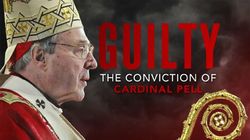
On Monday, Four Corners reveals how Australia's highest ranking Catholic, Cardinal George Pell, was brought to justice."He was a man that was so high up in the hierarchy that you, he believed, he was untouchable." Former choirboyThe conviction of the Cardinal for sexual offences against two teenage boys was suppressed by the court. Now the story of what happened to them can be told."I'm just disgusted. I'm just disgusted in the whole, I'm disgusted in the Catholic Church." FatherThose central to the case are speaking out for the first time to reporter Louise Milligan."It's let people down. It let my son down." FatherGuilty - The conviction of Cardinal Pell, reported by Louise Milligan.
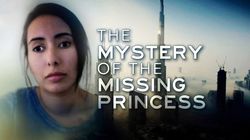
Most Australians had probably never heard of Sheikh Mohammed bin Rashid Al Maktoum till his horse Cross Counter won the Melbourne Cup last year after a two-decade campaign. Now he's in the headlines again, for a very different reason.Last year, his daughter, the Princess Latifa, then aged 32, ran away to escape a life of regal confinement in the hyper wealthy financial hub and tourist destination of Dubai.After fleeing first by car and then jetski, Latifa was dramatically re-captured on a boat in international waters by armed men.In heart stopping interviews, those on-board recount how the events unfolded.

Uber is one of the most recognisable brands in the world. It's embedded itself in our language and revolutionised the way we think about transport.Since emerging nine years ago on the streets of San Francisco, the edgy digital disruptor has upended an entire industry business model and made ride sharing cool.But Uber's ride to success has been far from smooth. Behind the slick marketing an aggressive corporate culture has been at work.On Monday Four Corners investigates how Uber has been outfoxing regulators and outmuscling its competitors in Australia and around the world.
The Christchurch massacre and the rise of right-wing extremism."Grafton is a monochrome, traditional, beautiful little country town. We now have... the distinction of having given the world a gentleman who's turned out to be Australia's worst mass murderer." Grafton resident.The terror attack in the New Zealand city of Christchurch appalled the world. The indiscriminate shooting of 50 Muslim worshippers during Friday prayers was calculated to spread fear and a message of right-wing terror."My feeling is that he chose New Zealand because it was a soft target in terms of security and perhaps, he chose it to illustrate that even a relatively tolerant quiet society on the very edge of the world was not immune to terrorism." Far-right extremism researcher.On Monday, Four Corners investigates how the Australian born accused killer was able to operate under the radar."They go to these forums where they can talk about this stuff safely. No-one knows who they are... They can talk about that far right violent extremism there, where they can talk about hating and, and killing." Former right-wing extremist.The plot was intricately planned, harnessing the tools and the power of the internet, to amplify the terror to a global audience."He's made it clear by his own recording that he was driven by hatred of Muslims and by racist ideas, and he identifies as a white supremacist, although he may not be able to spell those words, but they're the kind of cultural values that he's tied himself." Grafton resident.The attack brought to light the violent and disturbing right-wing extremist movement that is flourishing on the internet and finding a home in both New Zealand and Australia."I guess people don't realise, there's all these far-right groups out there." Former right-wing extremist.The program investigates whether authorities have been so focused on Islamic extremism that they've failed to grasp another deadly threat, the rise of far-right white supremacists."I'm aware that intelligence agencies have been monitoring these groups, but my concern is that what they've done is that they've tended to focus on Islamic terrorism at the expense of really paying enough attention to the extreme right." Extremist researcher.Under the radar, reported by Sean Rubinsztein-Dunlop.
Climate of Change, reported by Stephanie March.The struggle to reduce Australia's greenhouse gas emissions.Climate change policy has been one of the most divisive issues in modern Australian political history. It has brought down governments and toppled political leaders.At times the debate has become so polarised that the average Australian could be forgiven for tuning out.With a Federal election looming, Four Corners brings the debate back to what is actually happening in the nation right now.So much focus has been placed on energy policy, electricity prices and the role of coal, but this is only one part of the picture.Four Corners walks you through key areas of everyday life and industrial production which fuel our carbon emissions - from the cars we drive, the animals we breed to gas we export.The program investigates whether Australia is on track to deliver on the targets the nation has pledged to fulfil, and what effect the policies of successive governments have had on our emissions.

Interference, reported by Nick McKenzie.New evidence of China's covert political influence campaign in Australia."We've had multiple briefings at the top-secret level from ASIO and other agencies that foreign interference is being conducted in Australia at an unprecedented level." Federal Intelligence and Security Committee member.In 2017, Four Corners, in a joint investigation with The Age and Sydney Morning Herald, revealed the lengths the Chinese Communist Party was going to, to influence Australia's politicians. In response, the federal government passed new laws to ban foreign interference."Political systems and parties just took what they could for as long as they could get away with it." Former prime ministerial adviser.Now, in a new investigation, the joint reporting team can reveal fresh and compelling evidence of covert Beijing-backed political activity taking place in Australia."Chinese foreign policy is now following a much more assertive and, in some cases, aggressive approach." China analyst.The investigation has uncovered secret information gathering operations targeting sensitive Australian intelligence analysis. And despite the new laws, there is evidence that Australian politicians have not listened to the warnings issued by Australia's own intelligence agencies."The Chinese Communist Party has sought to use all sorts of vehicles to have non-transparent mechanisms, means of influencing the politics in Australia and elsewhere." Former prime ministerial adviser.Politicians are not the only ones receiving Beijing's attention. The investigation will reveal how Chinese authorities are stifling dissenting voices by targeting members of the Chinese-Australian community who fail to toe the party line."There is always a red line that everyone is actually quite afraid of crossing...because of repercussions from the Chinese consulate or the Chinese government." Newspaper publisher.
Four Corners exclusively brings you the story of the Sharrouf children and their grandmother's epic fight to find them and bring them home to Australia.If there was one family that represented the alarming tide of Australians flocking to the black flag of Islamic State, it was the Sharroufs.Reporter Dylan Welch and producer Suzanne Dredge have documented the family's experience for four years, travelling with the children's grandmother as she tries to convince the authorities in Syria and Australia to release the family into her care and allow them to return home.
The idea that anyone would willingly confess to a crime they didn't commit sounds unbelievable, particularly when the punishment may be life in prison or even the death penalty.But a series of high-profile cases across America has revealed a slew of wrongful convictions based on false confessions and placed the spotlight on a widely used police interrogation technique designed to make people confess.
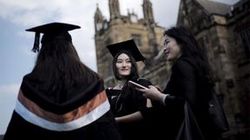
Across Australia the university business is booming. Higher education institutions that only a few years ago were cash strapped are now flush with billions of dollars brought in from fee paying international students.But there are growing concerns about the consequences of the overseas student boom.Four Corners investigates how Australia's higher education system is being undermined by a growing reliance on foreign fee-paying students.
It's almost three years since Four Corners exposed shocking revelations of mistreatment in the Northern Territory's Don Dale youth detention centre in Australia's Shame, sparking a Royal Commission.Now the program is set to reveal a new child detention crisis in another part of Australia, where children as young as 10 have been held alongside adult criminals in maximum security facilities.With exclusive access, the program goes behind the locked cell doors to reveal how young people, most of whom have not yet been convicted of a crime, are being held, sometimes for weeks at a time.
What was previously titled as "The Fight of His Life" is now "Abbott's End: How Tony Abbott Lost the Fight of His Political Life."Here are both press releases, before and after election results.BEFORE:"This is the fight of my life, and I think I'm up for it." Tony AbbottTony Abbott has been many things; a Rhodes scholar, an MP, a brutally effective Opposition leader and a triumphant Prime Minister, only to be deposed by his colleagues. He is seen as one of the most combative figures in politics and a warrior for conservative voices. Now, after 25 years in federal parliament, the Liberal MP for Warringah says he is in the fight of his political life."I think that Tony Abbott's time in politics has come, and gone." Peter Fitzsimons, columnist"I think it's all just to oust Tony Abbott and I just think it's nasty." Warringah voterAhead of Saturday's vote, Four Corners has been documenting the unfolding campaign. On Monday the program will examine how the seat was won and lost and what that means for the future of the Liberal Party."It is a very seminal moment in the history of the Liberal Party." Alan Jones, broadcasterThe program examines how an insurgency from within the seat of Warringah began and shows the forces that have shaped it.Mr Abbott's challenger is the independent candidate, Zali Steggall, who has sought to turn the vote into a virtual referendum on climate change, transforming the issue that's made him a hero of the right, into potential political poison on home soil."I'm their worst nightmare." Zali Steggall, independent candidateThe contest has also been defined by the involvement of powerful political activist organisations like GetUp and Advance Australia, leading many political watchers to say we are now operating in a new realm of politics."The more effective we are the more they'll fight back." Paul Oosting, GetUp"GetUp are… the most powerful political organisation outside the union movement." Gerard Benedet, Advance AustraliaThe result will have powerful ramifications far beyond the seat of Warringah, with many believing the result will determine the future of the Liberal Party.AFTER:Abbott's End: How Tony Abbott lost the fight of his political life"If I had to lose, so be it. I'd rather be a loser than a quitter." Tony Abbott.On Saturday night, the former Prime Minister Tony Abbott lost the fight of his political life. His 25-year career as the member for Warringah was ended by the independent candidate Zali Steggall.On Monday, Four Corners brings you the inside story of how the battle for Warringah was lost and won. Over the course of the campaign, reporter Sean Nicholls has been documenting the hardest fought contest of the election. In interviews with key players, the program reveals the strategy behind the Steggall campaign, the roots of the insurgency within the seat of Warringah and the roles played by the key activist groups, GetUp and Advance Australia.With Tony Abbott's political career at an end, all eyes will be on the Liberal Party to see if the divisions that roiled the last two governments are at an end.
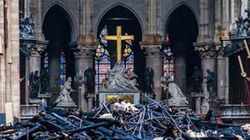
On the 15th of April, the world watched on in horror as one of France's most famous landmarks, Notre-Dame Cathedral caught alight.The Cathedral had stood for more than 800 years, through revolutions and world wars, but as the flames took hold, the architectural icon was in peril.What took place over the next nine hours was an epic battle by some 400 firefighters to save the building. In this dramatic film, those leading the operation explain how events unfolded.
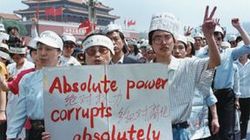
Thirty years ago, in the centre of China's communist capital, millions of students and citizens staged weeks of protests calling for democracy.The students and their fellow protesters stared down their government in the full gaze of the world's media, demanding an end to totalitarian rule.Then, the People's Liberation Army turned its guns, and its tanks, on its own people.Three decades on, Four Corners vividly brings the story of these momentous times to life, drawing upon a trove of vision and audio captured by ABC reporters and crews in that astonishing spring of 1989.
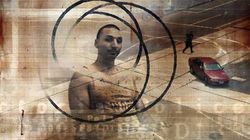
James Gargasoulas was a 26-year-old heavy drug user with an extensive criminal record when he drove a car at high speed through central Melbourne killing six people, including a baby boy and a 10-year-old girl.He was sentenced to life in prison earlier this year for the January 2017 attack. Despite a guilty verdict there are still outstanding questions about why James Gargasoulas was able to carry out such a crime.Four Corners investigates how James Gargasoulas was out roaming the suburbs of Melbourne despite facing serious criminal charges and clear warning signs that he presented a grave danger to others.
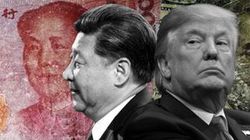
US President Donald Trump has ignited a massive trade war with China, slapping billions of dollars worth of tariffs on Chinese goods. In doing so, he says he's delivering on his promise to Make America Great Again.Despite the rhetoric, questions are being asked about who has the most to lose from the conflict.On Monday Four Corners examines the forces behind the conflict, on both sides.
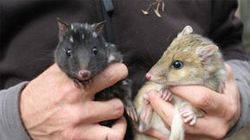
Australia boasts a stunning array of unique wildlife. They feature on our coat of arms and they're placed front and centre in our tourism campaigns. But the reality is, many of our native animals are in danger.Australia has one of the worst extinction rates on the planet and the problem is growing. There are currently more than 500 animal species under threat.Four Corners investigates how Australia has found itself in the midst of an extinction crisis.
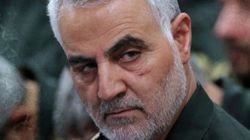
In increasingly alarming scenes, the United States and Iran are facing off in the Middle East. Tensions have been escalating steadily for the last two months, driven by concerns over the Islamic Republic's nuclear capabilities.There are concerns that the two nations are headed towards military conflict.The key figure in Iran's strategic manoeuvring, and one of the most powerful military figures in the Middle East, is a shadowy figure in Iran's feared Revolutionary Guard.In this timely program from the BBC, a portrait of Iran's military ambitions, and the man masterminding them emerges.
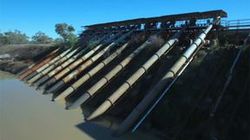
Two years on from the Four Corners investigation into water theft in the Murray-Darling Basin that sparked a royal commission, the program returns to the river system to investigate new concerns about how the plan to rescue it is being carried out.The river system is the lifeblood of Australian agriculture but right now it's in crisis. It's experiencing one of the worst droughts on record, and with mass fish deaths capturing the headlines and farmers struggling to survive, many are saying the scheme is failing to deliver.Four Corners investigates whether the contentious Murray-Darling Basin plan has become a colossal waste of taxpayers' money.
It's a remote corner of the world, but what is taking place there is nothing short of breathtaking.Xinjiang province is a vast area of deserts and mountains where the ancient Silk Road once ran. Today its Uyghur population is being systematically rounded up with estimates of as many as a million citizens being held in detention.In this investigation by reporter Sophie McNeill, Four Corners uncovers disturbing evidence of how China is effectively operating the world's largest prison.
Julian Assange is one of the most influential figures of our time. The Australian born founder of WikiLeaks harnessed technology to champion free speech and the right to know. But is he a hero or villain?Now Julian Assange is in the fight of his life. In April this year he was dragged, protesting, from the Ecuadorian Embassy in London, nearly seven years after seeking diplomatic protection.

Three years ago, Britain had a new Prime Minister and a promise to take the United Kingdom out of the European Union by delivering on the people's vote for "Brexit".What had been presented as a simple proposition - for the UK to leave - has turned into a political nightmare, dividing former allies, British political parties and the people of an increasingly dis-United Kingdom.Now Britain's new PM, Boris Johnson, is making bold promises to "leave".In this revealing account, key negotiators and politicians on both sides of the Channel tell the inside story of the Brexit debacle.

The elevation of Boris Johnson to the Prime Ministership of Great Britain has been greeted with elation in some quarters, with undisguised horror in others.Elected by members of his own party, not by the people, Britain's 77th Prime Minister has ridden into office on the back of the big bold promise to deliver Brexit come hell or highwater and the stakes couldn't be higher.The ABC's chief foreign correspondent and former long-time Europe correspondent, Philip Williams, reports on the rise of Boris Johnson.
For 20 years the nation's city skylines have been changing with the building of more than 650,000 apartments across the country.Glossy advertising has wooed buyers away from the traditional Aussie dream of a house with promises of sophisticated apartment living and high-end finishes. But the shine has well and truly come off the apartment property boom.On Monday Four Corners investigates Australia's apartment building crisis, from shoddy workmanship to lax laws, leaving owners out of pocket and in some cases out of a home altogether.
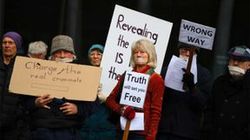
National security versus the public's right to know. The extraordinary steps Australia's government took to prosecute a former spy and his lawyer for conspiring to reveal secret intelligence operations aimed at a foreign government.
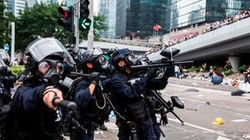
For 12 weeks Hong Kong has been convulsed by turmoil as pro-democracy flash mob protestors rise up against mainland Chinese rule. We go on the frontline to witness the escalating violence and chaos with extraordinary footage.
How your postcode can determine the quality of care you get. Medical staff speak out about the standard of hospital care after a series of catastrophic incidents resulting in preventable death, injury or permanent disability.
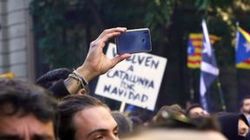
Social media has transformed how we communicate and share thoughts. But it has morphed into the perfect platform for orchestrated disinformation campaigns, making it increasingly difficult to distinguish real from fake info.
Dying is an expensive business with the billion-dollar funeral industry virtually unregulated. We reveal the dubious tactics of some in the industry, from price gouging, unethical conduct and questionable treatment of bodies.
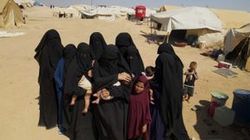
For the first time former brides of Islamic State tell their stories of life in the caliphate. Tracing their journeys from quiet Australian suburbia to the streets of the Middle East, they beg to be allowed home to Australia.
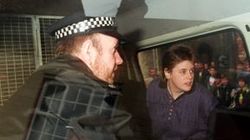
Sir Trevor McDonald investigates the extraordinary case of one of Britain's worst serial killers: Beverly Allitt, a young female nurse who murdered and attacked children in her care.

Australia's universities are embroiled in a growing geopolitical storm amid rising concerns over expanding Chinese power abroad. Is Australian technology and know-how being used to help strengthen China's repressive regime?
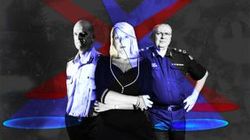
The scandalous case of Lawyer X and the underbelly murder investigations. Prominent figures reveal the story of cops, criminals, murder and betrayal, and how the actions of Victoria Police have undermined the justice system.

It's sold as a dream job - an 'influencer' lifestyle where you can work flexible hours from home and earn a commission. But social media marketing and selling schemes are accused of using illegal pyramid selling practices.
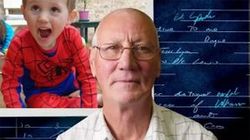
The man wrongly accused in the William Tyrrell child abduction investigation, Bill Spedding, speaks publicly for the first time. How did a single-minded approach by police lead to a raft of mistakes and missed opportunities.

There's no more precious resource in Australia than our children. Equipping them with the reading and writing skills to face the future is vital, not only for their own success but for the nation's prosperity. Alarmingly, a number of test results and international benchmarks indicate some of our children are slipping behind in the key area of literacy.Why are too many young Australians are struggling with literacy in the digital age. Louise Milligan examines the way reading and writing is being taught in our schools to find out what is going wrong. (Final for 2019)

They are the videos that stunned the world - images from the firegrounds capturing the ferocity of the bushfires that have raged across Australia. We bring you the people and the stories behind the heart-stopping footage.
A criminal scandal stretching from the White House to Australia. Stephanie March investigates the insider trading scandal that engulfed a US Congressman and his Sydney-based investment, posing major questions for regulators.

Private school privilege and a culture of cover up. Schools promise academic excellence and pledge to turn out fine young men and women, but has a desire to protect reputation at all costs allowed a toxic culture to flourish.
The deadly epidemic that sparked a global emergency. We chart the Coronavirus outbreak from Wuhan, whether a cover up by Chinese authorities allowed the virus to spread and how scientists are racing to develop a vaccine.
Growing up without a gender. Young Australians who do not identify as male or female explain how they negotiate the world and the judgement of others. Their parents talk about what it's like to raise a gender neutral child.
The Jeffrey Epstein scandal continues even after his death. Through interviews with key players, including Prince Andrew, we piece together sordid details of Epstein's offending and the allegations made against Prince Andrew.
Exposing killings and cover ups by Australian special forces in Afghanistan. Four Corners details explosive revelations about the conduct of Australia's elite special forces during the war in Afghanistan. Mark Willacy investigates.
On the frontline to preserve the world's largest tropical rainforest. Brazil is allowing the Amazon to be felled at an alarming rate, but Indigenous tribes, scientists and activists are fighting back. Sophie McNeill reports.
The fight to contain corona virus. Have critical mistakes left Australia and our frontline medical workers dangerously exposed? Doctors, patients and health practitioners talk about confronting the virus for the first time.

Amazon is a corporate colossus that dominates the global retail landscape, but it also collects a staggering amount of personal data about its customers. Former high-level insiders reveal how the company achieved its success.

The coronavirus outbreak created a public health emergency that unleashed a financial wrecking ball through our economy. Capturing history in the making David Speers follows the political scramble, with access to key players.
How the cruise of a lifetime turned into a deadly nightmare. Passengers and day trippers were trapped when NZ's most active volcano erupted. Were tourists warned of the danger and could more have been done to prevent tragedy?
The healthcare workers on the frontlines of the fight against coronavirus. Four Corners has captured video diaries, interviews and footage with deeply personal accounts from staff in hospitals and GP clinics across Australia.

As the shocking death toll continues to rise, President Trump's calls for states to reopen could have catastrophic consequences. We track the halting federal response, early warnings, missed opportunities and mixed messages.

How brutal politics derailed climate policy in Australia. Several former senior public servants speak about flawed decision making and squandered opportunities by parties on all sides of the political spectrum over a decade.
How the Ruby Princess became an incubator for infection, leaving passengers and staff dangerously exposed. An alarming picture emerges of crucial decisions by the cruise operator and the actions of Australian authorities.
One of the world's poorest countries, North Korea use breathtaking tricks to circumvent UN sanctions and outwit the west. Money laundering, arms smuggling, insurance fraud and human trafficking finance its nuclear arsenal.
An in-depth look at the hunt for a COVID-19 vaccine. From extraordinary scientific hurdles to extreme moral and ethical dilemmas, Australian scientists have had to overcome missed opportunities and a lack of preparedness.
AI enables machines to 'think' at a speed and depth far beyond human capacity, unleashing incredible possibilities but also the potential for harm. Will we see a new cold war as China and the US battle for tech supremacy?
How coronavirus spread among our most vulnerable elderly residents. We examine Australia's second most deadly coronavirus cluster, Newmarch House aged care facility, where 34 staff and 37 residents were infected and 19 died.
Australia's aviation crisis and the future of flying. Aviation is a high profile casualty of the coronavirus pandemic, our second major carrier Virgin was on the brink of collapse. What went wrong and is the industry viable?
The long road to recovery after the Black Summer bushfires. Despite millions in donations and promises of government assistance, communities such as Cobargo still live in terrible conditions and fear they have been forgotten.
In a searing and deeply personal story, Stan Grant gives voice to the frustration and hurt that has defined the life experience of so many Indigenous Australians and explores why George Floyd's death resonates so profoundly.

Witness the daily struggles of doctors and hospital staff in Cremona as they battle to keep coronavirus patients alive. Medical staff fight off emotion, fatigue and fear as numbers continued to climb in the north of Italy.
The financial scandal and human cost of Australia's workers compensation schemes. Some injured workers say their lives have been ruined by insurers hell-bent on avoiding payouts. We examine the methods used to assess claims.
Four Corners investigates the claims of a worldwide protest movement against wireless 5G technology, exploring how it works and the scientific studies undertaken into whether the technology is actually a threat to our health.

We reveal how 'big plastic' used clever marketing campaigns to persuade consumers and environmental groups to carry the burden by recycling rather than reducing the amount of plastic manufactured, allowing exponential growth.
The second wave: what went so wrong in Victoria. How did COVID-19 escape into the community, wreaking havoc and putting the nation in peril. We examine failures by the authorities who were supposed to keep the community safe.
Violent crime and the mentally ill: how the mental health system is failing to protect the community and the patients themselves. Families reveal a disturbing picture of inadequate healthcare with devastating consequences.

The race to colonise outer space. We examine the extraordinary opportunities and challenges of the new space age as billionaire entrepreneurs make travel beyond our own planet possible, while nation states stake their claims.

How bribes, sex and money fuelled America's opioid epidemic. The aggressive marketing of dangerously potent and addictive opioids by pharmaceutical companies has driven an alarming rise in global drug addiction and death.
The Australian mercenaries selling paramilitary services to warlords and despots abroad. Four Corners investigates this murky world as conflicts are being fought by private military contractors operating as guns for hire.
The investigation that exposed a predatory network of human traffickers. With exclusive access to police and the court case, see how they brought down the family crime group behind the UK's biggest human slavery operation.
Australia is in a deep economic downturn, decades of growth halted by the coronavirus pandemic. After the closure of our borders and extensive restrictions, we investigate the financial fallout and what the future may hold.
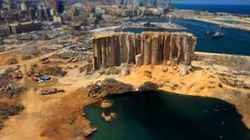
On a hot summer evening two months ago in the Lebanese capital of Beirut, a catastrophic explosion ripped through the city. It looked like a scene from a disaster movie, but it was very real.Four Corners pieces together the story of the explosion, tracking down many of the people who filmed the blast as well as those who were dramatically shown on screen.Using previously unseen footage, the program tracks the final minutes of the emergency responders who had no idea what they were walking into.In this city with so many connections to Australia, the pain and grief is immense, as is their anger.

How digital dating became a predators' playground. In a joint investigation for Four Corners and triple j Hack, Avani Dias uncovers a deeply troubling pattern of sexual assault and rape facilitated by the use of Tinder.

Breaking the silence about sexual abuse in sport. Around the world sporting codes have been engulfed in scandal with revelations about the sexual abuse of young athletes by coaches, and administrators accused of covering up.
With just over a week before polling day, can Donald Trump again defy the polls and his critics and secure a second presidential term? Michael Brissenden examines key states and voting blocs in this fierce political dogfight.
In first hand accounts the class of 2020 reflect on how the global pandemic upended their final year of school. Students from across Australia discuss the uncertainty and disruption of lockdown and their plans for the future.
Parliament House in Canberra is a hotbed of political intrigue and high tension - but what happens after hours? Louise Milligan investigates the conduct of some of the most senior politicians in the nation. (Final for 2020)

A gripping account of the insurrection as it unfolded, told by those who were there. In her return to Four Corners, Sarah Ferguson confronts some of those who answered Donald Trump's call to overturn the election result.
A personal portrait of the man now leading America charting Joe Biden's rise from a hardscrabble childhood where he faced bullying and discrimination based on a severe stutter, to personal tragedies and political missteps.
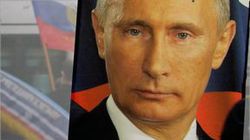
Self-described defenders of Russia are determined to shut down anti-Putin sentiment in Australia, establishing pro-Moscow chapters as part of a propaganda war to remind the world that Russia is a force to the reckoned with.
Four Corners investigates accusations of mismanagement and neglect which have fuelled a bitter dispute between Kakadu's traditional owners and the authority that runs the World Heritage Listed site.
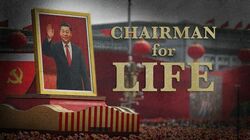
China's President Xi Jinping and his quest for world power. An insightful look at his rise to power, how he consolidated his leadership through economic strength, populism and iron fist control, and what is his agenda?
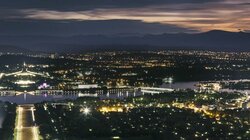
Tonight on Four Corners Louise Milligan reports on "Bursting the Canberra Bubble".Four Corners examines the historical rape allegation made against Federal Attorney General Christian Porter, which he strenuously denies."I have been subject to the most wild, intense, unrestrained series of accusations that I can remember in modern Australian politics." Federal Attorney General Christian Porter"The only thing that I'm ever going to be able to say, and it's the truth — and that is that nothing in the allegations that have been printed ever happened." Federal Attorney General Christian Porter"I would have thought if there was an inquiry by a competent person without a political agenda, that that would be a way of stopping this trial by media." Friend of the complainant.
In a shocking investigation, Four Corners reveals how a sex slave cult has been operating in plain sight here in Australia.
When former coalition staffer Brittany Higgins came forward to allege that she had been raped in a ministerial office in Parliament House, it horrified the country. Four Corners examines who knew what, and when.
Four Corners investigates what is driving the Federal Government's push for a gas-fired future in the face of considerable scepticism, with many warning that the public is not fully informed about the costs of backing gas.
An investigation into what the Chinese government knew about the COVID-19 outbreak and compelling evidence of a determined campaign to keep it under wraps.
How Australia's trade with China became a political weapon. Stephen Long reveals how trade sanctions appear to have been carefully timed and targeted to cause maximum damage plus the human and financial cost of the dispute.
Across the country, millions of Australians of all ages, play video games every day. Four Corners brings together gamers, industry players and psychologists to investigate the manipulative techniques used across many games.
After being diagnosed with motor neurone disease (MND), renowned scientist and robotics expert Dr Peter Scott-Morgan set out to find and apply cutting edge technology to extend his life and retain the essence of who he is.
With the rise of online shopping, the demand for cheap and readily available clothing has created a new fashion boom. Four Corners investigates the unglamorous, and in some cases illegal practices of the clothing industry.

Australia's success in keeping COVID from taking hold made us the envy of the world, but the slow pace of vaccine rollout has caused frustration and confusion. Adam Harvey charts how our vaccination program has fallen short.

A cautionary tale of big money, back room lobbying and political influence. As James Packer prepares to walk away from the casino business he championed, those who fought against Crown say there are lessons to be learned.
Twenty years on from the 9/11 terror attacks, former war correspondent Graeme Smith travels back through the cities and provinces of Afghanistan to try and make sense of the conflict.
A family divided by QAnon. The extreme political movement has mobilised a committed band of believers dedicated to fighting what they claim is a war against corrupt child abusing elites. QAnon has vocal devotees in Australia.

The story behind the turmoil that's engulfed Australia Post. Four Corners investigates allegations of secret privatisation plans and proposed job cuts, and examines who was really standing up for whom. In interviews with key players, we ask the decision makers to explain their actions to the people of Australia.

How the casino regulator failed to stop crime at Crown. Industry insiders with decades of experience speak for the first time about how the regulator allowed crime to flourish under its nose. Their revelations expose how and why Crown was not held in check and they say Crown is not the only one that needs to accountable.
The rise and fall of an Australian billionaire. From Bundaberg to the boardrooms of the international corporate elite, how did Lex Greensill make and lose a fortune, leaving a trail of creditors and investors in the lurch.
Mount Everest has become big business with multiple companies selling the promise of an adventure of a lifetime. But surging numbers of inexperienced climbers have been swarming the mountain, with deadly consequences. Now the elder statesmen of the climbing community warn that change is needed to protect both Everest and those who climb it.

Data mining, discrimination and dangerous content on the world's most popular app. In a joint investigation by Four Corners and triple j's Hack, Avani Dias uncovers the many techniques TikTok is using to know about its users.

How Australia became trapped by COVID-19. Despite millions of people staying at home, the number of infections is climbing with the virulent Delta strain. How issues of supply and hesitancy left Australia dangerously exposed.
Artificial intelligence is changing our lives in ways that were once dismissed as the stuff of science fiction. The technology has the capacity to improve our lives, but it also presents potentially grave risks.
Four Corners is the longest running show on Australian Television.On Saturday 19th August 1961, Four Corners made its debut on Australian TV. With a staff of just six and a weekly budget of £480, the first national TV current affairs show was on the air. Originally a ‘magazine' style show made up of several stories, copies of the program were flown around the country for broadcast. Today, Four Corners is the longest running series on Australian television and a powerhouse of investigative journalism – fearless and forensic, holding power to account for 60 years.The award-winning program has amassed 62 Walkley awards, seven of them the coveted Gold, as well as 23 Logie awards.To mark the program's extraordinary milestone, Four Corners will broadcast a special episode with highlights from the show's six decades.As the program travels through the decades the faces and voices of generations of reporters and hosts appear, including the likes of Michael Charlton, Michael Willesee, Caroline Jones, Paul Lyneham, Andrew Olle, Kerry O'Brien, Chris Masters, Paul Barry, Liz Jackson, Tony Jones, and Sarah Ferguson.https://www.abc.net.au/4corners/fearless-and-forensic,-for-60-years/13498436

Reporter: Sarah FergusonFour Corners investigates how the Murdoch run Fox News became a propaganda vehicle for Donald Trump and helped destabilise democracy in the United States. Featuring Fox News insiders, the program reveals how the network changed once Donald Trump entered politics and Rupert Murdoch took over.In interviews with major Fox figures including Gretchen Carlson, the presenter who brought down famed network boss Roger Ailes; and former Fox political editor Chris Stirewalt, a key figure on the Decision Desk whose election night call triggered a Trump meltdown - the program examines the politics at work within the network and why it tied its fortunes to Donald Trump.

Fox News insiders reveal how the network changed once Donald Trump entered politics and Rupert Murdoch took over. Part 2 examines the politics at work within the network and fear this alliance has put US democracy in peril.
Four Corners takes you into the fall of Kabul. Interviews and videos from people on the ground capture the drama and chaos of the last 16 days and show the desperate lengths people were resorting to for a chance at freedom.
Exposing the secretive world of the Jehovah's Witnesses. Former members reveal the secretive practices used to instil fear and maintain discipline among followers. Those who have escaped say it's time to hold them to account.
A new type of crime that goes to the heart of what we eat. Criminal syndicates are infiltrating the global food supply chain, undermining the ability of consumers to trust what is on the label and what ends up on their plate.
Big money, sportswashing and the power play to control Australian soccer. Almost half of our premier soccer clubs are owned or controlled by foreign entities. Who are these powerbrokers and what are they getting out of it?

In a major international investigation Four Corners reveals the secrets of the Pandora Papers. Despite authorities promising to close loop holes and crack down on the myriad of offshore services, this industry is flourishing.
The inside story of Sony Music, where fear and intimidation stalked the corridors for decades. Former employees break their silence to expose a toxic workplace culture where appalling behaviour was normalised and covered up.

For 16 years, German Chancellor Angela Merkel has been a trailblazing leader on the world stage. After 30 years in politics she has chosen to leave public life at the height of her popularity, having remained an enigma.
Behind the glitz and glamour of cosmetic surgery lie some ugly truths. Adele Ferguson exposes alarming practices in this multi-billion-dollar industry and reveals how the regulatory system is failing to protect Australians.
What's driving Australia's property frenzy. Despite fears of a collapse, the pandemic saw house prices rise at the fastest pace in decades. Stephen Long tracks the property price boom fuelling risky and irrational behaviour.
The secret deals making the Obeid family millions. Angus Grigg has been on the financial trail uncovering secret business dealings and how business is still booming for the Obeids, funding a lavish lifestyle. (Final for 2021)
The first in a two-part special focusing on voters as they weigh up their options in key electorates. Voters assess the key moments of Scott Morrison's prime ministership, and share their opinions of his leadership.
Opposition Leader Anthony Albanese is facing the biggest test of his political life. Can he convince voters he is ready to run the country? Voters in key seats give their assessment of Anthony Albanese's performance so far.
In the magnificent high country of the Snowy Mountains, wild horses roam the land. But there is a bitter clash of culture dividing communities - national icon or feral pest? The ugly divide over Australia's brumbies.
President Vladimir Putin has gone on the attack, taking aim at western nations, accusing them of threatening the Russian state. Now activists who have risked everything speak out about the abusive political climate in Russia.
An investigation into the hidden and shameful failure in public health taking place in remote Australian communities. Incompetent and inexcusable medical care resulted in multiple preventable deaths. Louise Milligan reports.
Exposing the stories of Australians who say they've been virtually abducted by the state, stripped of their assets and stopped from speaking out, until now. How a system designed to protect the vulnerable, does the opposite.
"We're pleading with the whole world to hear us." Military volunteer On Monday, Four Corners takes you into a city under siege - Kyiv, the capital of Ukraine. "The Ukrainian army and the Ukrainian spirit prevail. We are highly motivated, but Putin's number of jets, bombers and other weapons significantly outnumber ours." Ukrainian member of parliamentWith the city enduring indiscriminate bombing, and with Russian forces attempting to encircle the capital, Sarah Ferguson reports on the Ukrainian people resisting the Russian invasion

Our planet under threat and the terrible cost of extreme weather. Australia is not the only nation experiencing wild, dangerous and unprecedented weather. A sobering look at increasing extreme weather events around the world.
Two decades ago, Australia's military forces led an international armed intervention in East Timor to quell a wave of sickening violence. Mark Willacy reveals the untold story of a disturbing chapter in our military history.
The dark stain on Australia's proudest military mission. Mark Willacy reveals fresh allegations of serious misconduct, including torture, carried out by Australian soldiers during the intervention in East Timor in 1999.

Four Corners investigates the corporate colossus that has taken a major slice of Australia's food production sector while being exposed internationally for bribery, corruption and environmental vandalism. Grace Tobin reports.
How Aspen Medical cashed in on COVID. Linton Besser investigates the health contractor hand-picked by the federal government for lucrative contracts worth more than a billion dollars. Why was it chosen and did they deliver?
Four Corners investigates the new mining boom in critical minerals - necessary in mobile phones, renewable energy and electric vehicles. Angus Grigg finds Australia is in the box seat to exploit a surge in worldwide demand.
When Russia invaded Ukraine it overturned decades of stability. We trace Vladimir Putin's rise to power from his days as a KGB counterintelligence officer to his emergence as a global power player in the post Cold War era.
How the 2022 election was won and lost. Undecided voters talk about the leaders, policies and performance during the campaign and what influenced their vote. Plus political strategists pull apart the tactics and motivations.

Cryptocurrency is the hottest financial product in the world. The hype is everywhere, with forms of the digital currency endorsed and advertised by celebrities daring you to invest in this brave new world. Not everyone is convinced by the glossy ads and bold claims.Four Corners investigates what lies behind the slick marketing and big promises to examine if it's a fad, a fraud or the future.

What happened to a group of young female athletes who were groomed and abused by their running coach. Charlie Webster uncovers the truth of what happened to her teenage running friends at the hands of a manipulative predator.
Dr Norman Swan reports on "Holding on to Hope", looking at lifestyle choices whch may help delay the onset of dementia."It's the number one fear that older people have. More than any other disease … more than anything else." (Dementia clinician)Half a million Australians live with dementia and for the past two decades scientists have been working on a new drug treatment they hope will combat the most common form, Alzheimer's disease."If we can give people another five years of quality life, that's going to make a massive difference to people around the world. It's going to make a massive difference to healthcare systems around the world as well." (Neurologist)ABC's health expert Dr Norman Swan investigates the science behind the treatment in the race to solve dementia.
We examine the failures in the investigation into the abduction and murder of 13-year-old Milly Dowler, featuring interviews with senior police and those covering the case. Plus we shed light on the role of the media.
Vaping was hailed as the new way to quit smoking but there are concerns it is now causing nicotine addiction in teens. Grace Tobin investigates the booming black market which is thriving due to a failure to police the rules.
How factional infighting contributed to the Liberal Party's election loss. Liberal insiders speak for the first time about deep divisions, pre-selections, branch stacking and the extraordinary measures by factional warriors.
The planning failures deepening Australia's flood crisis. Adam Harvey meets families struggling with current and past flood events. They tell stories of despair, abandonment, and financial ruin. Many have lost everything.
The plastic surgery industry in China is booming, estimated to be worth $US200bn by 2030. We meet social media influencers and ordinary young Chinese prepared to undergo extreme procedures to radically alter their appearance.
The race to make psychedelic drugs part of mainstream medicine. Elise Worthington looks into clinical trials to treat trauma, PTSD and mental health conditions, plus the dark side of abuse, malpractice and underground supply.

How Chinese money is buying the Solomon Islands. Angus Grigg investigates the extent of Chinese influence and control, plus new details about the Chinese money being used by PM Sogavare to secure his hold over the country.
Behind the scenes with some of the Independent women who defied the odds and defeated high profile politicians. With rare access we filmed personal moments away from the spotlight, documenting their transition to Canberra.

Almost 20,000 people have reportedly been killed since the military seized power in Myanmar in February 2021. Filmmakers risk their life to secretly document the army's brutal repression and use of lethal force on protesters.
The working-class investors duped by a man the regulators won't pursue. Caro Meldrum-Hanna goes in pursuit of the elusive businessman and the missing money people invested in the mining exploration company he spruiked.
The inside story of the decline of Qantas. Current and former staff talk about ruthless cost cutting and a divide and conquer culture. An airline in damage control, beset by customer complaints and a demoralised workforce.
Street gangs, drugs and organised crime. A turf war where teenagers are being attacked with knives. Grace Tobin has gained extraordinary access to the teenagers who are being drawn into the violence and criminal activities.

In a rare in-depth interview, Federal Opposition Leader Peter Dutton speaks about some of the issues that shaped him and his vision for Australia. Colleagues who've known him for many years also offer their insights.

In towns and cities across Australia, the critical lack of affordable and social housing now means people with low paying jobs are struggling to find accommodation. Louise Milligan reports on the new face of homelessness.
How genealogy databases are being used to solve crimes and cold cases. As DNA databases continue to grow, law enforcement agencies are becoming increasingly confident these new DNA detectives will expose criminals.
The real cost of Australia's worker shortage. From hospitals and hotels to farms and factories there's an urgent need for workers. The problem is particularly acute in regional towns where almost every sector is struggling.
In Australia Aboriginal women are among the most victimised groups in the world, murdered up to 12 times the national average. A special investigation by Bridget Brennan into Australia's murdered and missing Indigenous women.

What would conflict with China mean for Australia? Tensions between China and the US over Taiwan are the highest since the 1970s. Angus Grigg talks to the experts who are mapping the war games and the impact they would have.
Did Western powers fail to prevent war in Ukraine? Four Corners traces the current war in Ukraine back to 2014 when Russia invaded Crimea and supported the separatist movements in the eastern Ukrainian region of Donbas.
Australia's failure to protect children in detention. Four Corners will show for the first time the dangerous restraining practice used by WA officers on children.

Former students from private schools in Sydney are grappling with a troubling question: What happens when freedom of religious expression strays into misinformation?We have spoken to more than 30 former students from elite schools associated with the small but powerful branch of the Catholic Church known as Opus Dei.The students have made disturbing claims about the messaging at the schools, which they say at times deviated from the curriculum and veered into misinformation.Students say they were told that masturbation was mentally disordered behaviour, homosexuality would send them to hell, and girls were discouraged from getting the HPV cancer vaccine because it encouraged promiscuity.For some, their schooling has left them with deep psychological scars.The schools and the Opus Dei community have strong ties to the NSW Liberal Party. Premier Dominic Perrottet is an Old Boy.Faced with questions from Four Corners about the schools' practices, Mr Perrottet has referred the allegations to an investigation by the NSW Educations Standards Authority.But tonight on Four Corners former students warn that parents and others in the community are in the dark as to what is going on behind the school gates.
This week Four Corners reveals Australia's system of health regulation is allowing doctors who have groped, dated and even raped their patients to continue practising.A six-month investigation into the medical complaints handling process has found hundreds of medical practitioners have been sanctioned by tribunals for sexual misconduct involving patients since 2010.Many are still registered to work.Reporter Emily Baker has forensically analysed over a decade's worth of healthcare complaints and uncovered a complex and unwieldy system struggling to protect the public from sexual predators.The program follows several disturbing cases -- patients tell Baker harrowing stories of betrayal at the hands of those entrusted with their care – and the system that struggled to respond.Baker investigates where the system is failing and asks how it could be improved.

In the race to curb catastrophic climate change, prominent Australian businesses have been enthusiastic customers of carbon credits. They've been offsetting their emissions by buying credits from companies promising to stop exploitative timber harvesting, whilst lifting locals out of poverty.But reporter Stephen Long has found that there is a vast chasm between what is marketed and what is really happening on the ground.In a month-long trip, the team travelled to some of the most isolated villages in Papua New Guinea. They uncovered environmental devastation in the very areas one company claimed to be protecting and indigenous landowners angry at unfulfilled promises.Long asks, who will really benefit from the carbon trade?
The People's Fight, the inside story of the battle of the strategic city of Kherson. This Ukrainian victory halted Russian advances in the South and showed how an army of volunteers could defeat the might of the Russian army.
Monday's Four Corners report 'Fading Away' by Grace Tobin profiles the Australian mums fighting to keep their children alive.For months reporter Grace Tobin and the team followed families as they struggled to get the right treatment for life-threatening eating disorders.With more than one million Australians estimated to be living with an eating disorder at any time, they are also one of the deadliest of all mental illnesses.The program explores the complexities of the illness and reveals a health system appallingly underprepared to deal with this crisis.For 23-year-old Sara, who compares her eating disorder to a "monster", the solution is not as simple as just eating."It's so much more than just the actual food. For me, when I have food, there's so much guilt and shame and anxiety around it. That doesn't just go away if you eat the food," Sara says.Her mother Jenny lives in fear, "I come home thinking, ‘Is she going to be collapsed on the floor or is she going to be okay?' ... She could die from it."Another mother, Faye lost her daughter Caitlin after a 16-year battle with the disease. "She gave up on the system. The system is broken. It's so broken," she tells Four Corners.
On Four Corners this week we investigate how the Perth Mint may have been used to move millions of dollars around the world.The Perth Mint, which is owned by the WA government, sells $20 billion of gold annually and is one of the world's biggest gold refiners. This makes it a very large business and one that should be acutely aware of its obligations to comply with Australia's anti-money laundering laws.We uncover major holes in its money laundering defences and how the historic institution has been singled out by law enforcement authorities.There's a notorious bikie who has bought gold with no background checks, and we put the WA Premier on the spot. We also delve into how clients of a tax haven bank were able to buy $25 million worth of precious metals from the Perth Mint.
The gambling industry has long been one of the most powerful interest groups in Australia.Yet you might not have even heard of one of its main lobby groups — Clubs NSW. It represents the interests of over 1,000 clubs and their more than 64,000 poker machines.We've been investigating the power this lobby group has over governments and regulators, both state and federal.In our investigation you'll hear from people with first-hand knowledge of how the group operates, who are speaking out for the first time.There's a former industry insider blowing the whistle on the organisation's culture; and a Liberal party gambling minister who was targeted by the group – and was ultimately forced out of the job.How to fix problem gambling and money laundering associated with poker machines has become a hot topic at this month's NSW election.Veteran campaigners for reform believe it's a watershed moment – the biggest ever test of ClubsNSW's power and influence, that could have ramifications across Australia and even globally.
This week on Four Corners, British filmmaker Ben Zand takes us into the dark world of Incels – a radical online subculture of young men who rage against women for supposedly denying them sex and then turn that rage into fantasies about horrific violence.Zand uncovers the shockingly violent content that is being shared online and talks to the men behind it, in an effort to understand the Incel mentality that has in part lead to hate crimes and in some cases mass murders.The film also explores the intersection between loneliness and young men's vulnerability to online radicalisation – a practice known as black pilling. This culminates when Zand accompanies one young man to a bar to meet and talk to a woman for the very first time.

More than a hundred agents and property professionals reveal the ways in which their profession manipulates and misleads buyers as well as sellers in the pursuit of making a deal.As part of a crowdsourced investigation into the sector, reporter Paul Farrell and the team gain access to those in the know and ask them to lift the veil of secrecy surrounding how they make their money.The revelations are stunning and highlight limits to regulation, as well as the pitfalls to look out for.

In this episode of Four Corners "Gaming The Games", an investigation by Hagar Cohen, uncovers a scandal that goes to the heart of the Paralympic Games.The Paralympics have become the world's third biggest sporting event, generating tens of millions of dollars in revenue and sponsorships.Reporter Hagar Cohen speaks to former athletes and high-ranking officials who tell her the system that's meant to ensure a level playing field for Paralympians, is flawed and easily manipulated.The insiders describe a culture where classification rules are regularly bent and broken, with few repercussions.They fear that without substantial reform, athletes who follow the rules will continue to be robbed of the chance to compete and win.

Japan's secret sex scandal. A music executive with a long history of allegations of sexual abuse made by boys in his talent agency. We examine the suffocating reality of being a J-pop idol and the media cover up over decades.

Australia is under cyber-attack and the problem is not going away – it's getting worse.Over the last three months I've explored the shadowy world of the criminal syndicates behind this.It's taken me from Australia to Ukraine — and back again.On that journey I've been stunned by how well organised – and corporatised – these gangs are. Some even have HR departments and negotiating teams.Many are based in Russia, where they clearly receive the protection of powerful people in the regime.Our Four Corners team has looked at two of Russia's crime gangs, Revil and Conti.While technically they have closed down, it's clear that hackers from groups like this often re-emerge in other guises. Their malicious software – known as malware – is also used by other criminals.I spent time inside the cyber nerve centre in Ukraine – where they warned that because of Australia's support for the country, we can expect an increase in attacks from Russia's gangs.Preparing this report, I was stunned by the damage these attacks are causing. The Federal Government's own figures estimate 23 per cent of small and medium-sized businesses that are hacked are paying ransoms.What can be done to stop the hackers?

Fox News has abruptly agreed to pay more than $AU1 billion over allegations it promoted misinformation about the 2020 US election.It's one of the highest publicly known defamation settlements in US history.The settlement with election technology company Dominion Voting Systems was the latest twist in an extraordinary case that has exposed the inner workings of the powerful Murdoch-owned conservative news network. Dominion, in addition to the huge payout, heard a statement from Fox News that "certain claims" it made about the company were not true.This case is just one of many launched against Fox and its friends.Two years ago, reporter Sarah Ferguson investigated how Rupert Murdoch's Fox News promoted Donald Trump's propaganda and helped destabilise democracy in America.In light of the Dominion settlement, this week 4Corners will re-air that special investigation (updated), including the next big case against Fox brought by a second voting-machine company.
The United States, for only the second time ever, is prepared to share its nuclear submarine technology. And it will be sharing it with us.In framing last month's AUKUS announcement this way, the question of "should we go nuclear?" has largely been ignored.On this week's episode of Four Corners, we examine the price of pursuing this nuclear dream — how it will cost up to $32 million a day for the next three decades, require a near-tripling of an already stretched submarine corps and limit Defence's ability to produce or buy other critical military items.But most of all we investigate how the navy is struggling to keep its current fleet of ageing subs in the water.We reveal it had only one battle-ready submarine from its fleet of six at the start of this year.This was due to floods, a fire and maintenance delays, which are set to become even more common as the fleet enters its fourth decade of service.If we are finding it difficult to keep these conventional submarines in the water, can we really go nuclear?

The new reality of artificial life. As tech companies race to dominate the artificial intelligence market, experts warn we're not prepared for what happens next. Grace Tobin investigates the misuse and abuse of generative AI.
It's long been dangerous for ordinary Russians to speak up against Vladimir Putin's regime, but since the invasion of Ukraine it's become riskier than ever.This week Four Corners goes deep inside Russia to meet the citizens who have chosen to stay after thousands of others have fled. Some vocally oppose the war, others have remained silent, and some support the government.The filmmakers meet a group of young graffiti artists who create art mocking the government's pro-war propaganda, before one of their members is arrested.They follow the members of a small, independent YouTube channel as they travel the country to give voice to the views of ordinary Russians, after other independent media outlets were forced to close.And a local politician is forced to make the ultimate choice after a video of her accusing the Russian government of war crimes during a council meeting goes viral.When authorities decide to press charges, she must decide: should she face criminal conviction or flee the country?

We lift the lid on the shadowy underworld of Australia's cocaine supply chain, with unprecedented access to traffickers, importers, street dealers and high-ranking cartel operatives.
Five years after the conclusion of the Royal Commission into Institutional Responses to Child Sexual Abuse, a fierce new battleground is emerging as survivors turn to the courts seeking compensation from the institutions they say should have kept them safe.In my own journalism, I followed closely over many years the work of the royal commission, and there was great hope when it made its final recommendations — many of which were adopted by parliaments — that a new and fairer legal landscape would emerge for survivors.But despite those reforms designed to ease the path to justice, for many survivors, getting proper civil compensation when they finally pluck up the courage to come forward is now more difficult than ever.In this week's Four Corners, we go behind the scenes to reveal the extraordinary legal tactics being used to have claims thrown out of court and compensation payments cut.We talk to victims whose cases have been thwarted by permanent stays — a legal mechanism that's only granted by courts in exceptional circumstances, when a case is considered so oppressively unfair to one party that it's an abuse of process.If granted, it effectively puts an end to proceedings.The lawyers we spoke to say they're now being used or threatened in almost all cases where an abuser has died or has dementia. And shockingly, in at least one case, where the convicted pedophile is very much alive, in jail and willing to give evidence that the institution should have done more to stop him.The survivor of that perpetrator is now facing bankruptcy, after the court awarded costs against him.We meet another survivor who sued the church for childhood abuse perpetrated by a priest, only for the institution to turn around and cross-claim against his aunt because, it argued, it should have been "reasonably foreseeable" that it was unwise to leave the boy alone with the priest.Meanwhile, another institution is threatening to seek a stay that would prevent an Aboriginal woman from seeking compensation through the courts because her alleged perpetrator — who was charged with the abuse of 40 children — died six months before his criminal trial.
A narrow stretch of water is all that separates the People's Republic of China, ruled by the Communist Party, from Taiwan, Asia's most successful democracy.The small island is in dire straits, stuck in the middle of a struggle between two nuclear powers — China and the United States. There are real fears it will soon become the centre of the next major global conflict.While China insists Taiwan must re-unify with the motherland, Taiwan's president says the island must maintain its freedom and democracy.This week's episode of Four Corners goes inside the fight to tell a story that could have ramifications for us all.We meet young people training in urban warfare who are bracing for more cyber-attacks, disinformation and the possibility of an all-out battle.A pro-Beijing campaigner and a former gang leader explains why they want reunification and shares footage of his party members battling pro-independence students.And we tackle the question: what next for Taiwan?

At first glance, the man sitting in a folding chair on the sidelines of a soccer field in Melbourne's suburbs could be just another supporter of South Springvale Football Club.You'd be forgiven for not having heard of the team. They play in the fifth tier of Victoria's state competition.But the man wasn't one of South Springvale's loyal local fans. He was a data scout - working for an international company that generated almost $1.2 billion in revenue last year.Because of the man's live updates, several international bookmakers were offering people the chance to bet on this amateur game in real-time.The club, and players, had no idea.Not only does the sport's governing body Football Australia allow data scouts to be on the sidelines of games like this, but it also receives a cut of any domestic bets that are placed.This is Australian sport in 2023.I've spent the past six months investigating how the games we love have become deeply entwined with gambling.I found secret deals between the biggest sporting codes and global betting giants and explored how the influence of gambling infiltrates local community sports.Many clubs, players and fans I spoke to say they've had enough. Is a change coming?
What did it take to lure the two of us back to our old stomping ground? A cracking expose on Australia's greatest untold spy story.It was only six years ago in 2017 that ASIO's Official History confirmed our spy agency had been penetrated by the KGB during the Cold War. But just what happened and who betrayed Australia has been a closely guarded secret. Until now.In this week's Four Corners, we reveal not just the full extent of this breathtaking treachery but also the identity of the ASIO officer who became a KGB mole.At the time, he was a senior manager with top secret clearance who sold out his colleagues and his country for cash payments from the Russians. He was considered one of the KGB's most valuable western intelligence assets during the Cold War.For the first time, former colleagues also speak about the shock and trauma of realising they had a traitor inside their office.Because of his access to critical secrets shared among the Five Eyes intelligence partnership, the mole's actions also jeopardised Australia's intelligence alliance with the United States and the United Kingdom.It's a genuine spy thriller with hidden compartments in diplomatic cars, exercise groups acting as diversions at Sydney's Bondi Beach and so-called 'dead drops' of classified documents at night in Centennial Park.
Inside Australia's Biggest Tax Scam. Paul Farrell investigates the Plutus Payroll scheme: a vast conspiracy to defraud more than $100 million from Australian taxpayers, revealing how it was set up and how it was brought down.
This week Four Corners investigates his decades-long clashes with American presidents.The documentary from Frontline filmmaker Michael Kirk and his award-winning team reveals how the miscalculations and missteps of multiple American presidents over two decades paved the way for Putin's attack on Ukraine.This is the story as seen through the eyes of people who were in the room. It draws on in-depth conversations with insiders from five U.S. presidential administrations, former U.S. intelligence leaders, diplomats, Russian politicians, authors and journalists.Putin and the Presidents traces how, prior to launching the war on Ukraine, Putin tested the waters by provoking and defying American presidents for 20 years — cyberattacking Estonia, invading Georgia, seizing Crimea, and interfering in a U.S. presidential election.The report provides unique insight into the icy relationship between Putin and current U.S. President Joe Biden, and into the evolution of the Russian leader's grievances with the U.S. and the West.

Patricia Karvelas here, I usually host RN Breakfast but for the last few months I've also been working on a special episode of Four Corners on a debate that has become increasingly polarising and combative.Medical transitions for young people who are transgender have galvanised campaigns around the world, but we wanted to explore what is happening in Australia's health system.The gender "affirmation" model of care for young people diagnosed with gender dysphoria – offering a path to medical interventions — is under scrutiny, review and change around the world.From Western Europe to the United States there have been changes to restrict access to puberty blockers and cross-sex hormones.At the heart of the debate is whether these medical interventions should be given to young people.The fight is now boiling over in Australia. It's playing out dramatically at Westmead children's hospital in Sydney.Over the last few months we have spoken to many insiders who have told us that the dispute over care is affecting their ability to help children languishing on their waiting list.We also wanted to hear from the critics of the affirmation model. Some argue that with the passage of time and therapy, gender issues will resolve. This approach is strongly refuted by most gender doctors.At the center of all this though are families desperate to do what's right for their distressed children.We've spoken to young people who are just starting the process that can lead to transitioning.Their accounts are powerful because for them it is not an academic abstract debate – it is their experience and their story.
Inside the broken business of building. Australia has the highest rate of construction insolvencies in a decade. We examine the supply chain pressures, slim profit margins and failure in regulation as some flout the law.

From the Ukrainian frontlines to the mines of the Central African Republic, this week's Four Corners lifts the veil on Putin's private army – The Wagner Group.In this independent French television investigation, former senior Wagner insiders speak out about what they saw in the line of duty.The film traces the group, from its origins in Ukraine, to its clandestine operations in Syria, and its reign of terror across Africa where victims tell of rape, torture and massacres.It also follows the rise and fall of the group's leader Yevgeny Prigozhin who recently dared to challenge Putin's power by marching on Moscow with thousands of his troops.

Undercover cameras go inside Chinese fast-fashion retailer Shein's factories for the first time.

This is a story that Angus Grigg has wanted to tell for five years.It's got all the elements – money, insiders and power – but until recently, the rise of the consulting giants and how they've infiltrated government was confined to the business pages.Then the PwC tax scandal happened.This week on Four Corners, we investigate PwC's equally large and consequential rivals, and their huge influence in Canberra.Top of our list is KPMG, which has billed the Department of Defence a staggering $1.3 billion over the past five years.Whistleblowers tell us how it repeatedly over-charged the department – and you the taxpayer – for work never completed, and even invoiced for a consultant who wasn't on a project.And we don't stop there.

"Breaking the Cycle", reported by: Grace Tobin....I've never met anyone like the women in this week's story.They're young, pregnant and addicted.One sits beside me on a bed, her hand resting on her belly as she describes her use of methamphetamines and cannabis."I never wanted to be a pregnant drug user," she says.It's a moment I can't forget.Amid Australia's decade-long battle with ice, thousands of babies are born each year exposed to their mother's drug use.These women let us into their lives as they desperately try to get help for themselves and their unborn children.Four Corners reveals a system largely unwilling to deal with the health crisis — but there is some hope.
The AFL is the only major sporting code in the world that hasn't had a single elite male player publicly identify as gay. Louise Milligan investigates the AFL's culture and asks what has created this silence?
Antidepressants have helped many treat anxiety and depression but the physical and mental side effects can be wide-ranging - from headaches, brain fog, loss of sexual function and suicidal thoughts - and are often downplayed.
Despite the Taliban's public promises of change, we expose the reality of life for women in Afghanistan. We accompany an underground network of female activists on dangerous missions to rescue women hunted by the Taliban.
Renegotiating Australia's democracy. Dan Bourchier travels the country talking to people about what the referendum means to them. The Voice debate has been unsettling and confusing, so what does self-determination look like?
How the NDIS fails to protect our most vulnerable. Anne Connolly and the Four Corners team expose criminals, opportunists and registered providers who have been busted exploiting loopholes to overcharge and defraud the NDIS.
Undercover operatives and secret informants have been crucial in the fight against organised crime. But what happens to these people who risk their lives once the operations have finished and the criminals are behind bars?

Climate, protest and the fight for the future. Reporter Hagar Cohen takes you deep inside the battle between climate activists, the government and energy companies.
Monday's Four Corners "Trapped" by Alexandra Blucher reveals allegations of the torture and mistreatment of people living with disabilities and mental illness who are locked up indefinitely by the state.Around Australia an estimated 700 people who have been charged, but not convicted, of crimes are being detained in the forensic system.In some of the most extreme cases, they're locked up for years in solitary confinement with no release date.Some have been determined too great a risk to live in the community because of their history of violence and complex behaviour.The United Nations has condemned this treatment, and along with the Disability Royal Commission, has called for an end to their indefinite detention.Reporter Alexandra Blucher has gained unprecedented access to forensic patients and their families. In this program she enters a facility to speak to one man who's spent more than two decades in custody.He remains indefinitely detained.The program also features another patient who's spent 11 years secluded in a high-security unit with only a caged outdoor area, sometimes pitching a tent to obscure himself from the constant CCTV surveillance.Blucher exposes the extent of harm that can be done to patients by forcing them to live in these conditions – in some cases making them more dangerous."Trapped" is an unflinching portrait of the forensic system and the dilemma we face in balancing the safety of the community and the basic human rights of people living with a disability.
The nation-building project that went horribly wrong. Snowy Hydro 2.0 was sold as a low-carbon future by the end of 2024. Instead, the pumped hydro project is now five years behind schedule and forecast to hit $12 billion.

Private security policing the public. In Darwin, private security firms hired by the NT Government patrol the streets doing work usually done by the police. We examine is there adequate training, accountability and oversight?
Few people have become as popular, influential, and seemingly wealthy in such a short space of time as the influencer Andrew Tate.Last year, he was arrested in Romania accused of rape and of grooming women into working for him as online sex workers. He has denied the allegations.The world is now focused on his upcoming trial, but how did Tate become so infamous in such a short space of time?This week, in a BBC production, Four Corners delves into the perplexing rise of a once-obscure figure who leveraged bombastic online courses to become a global sensation.Investigative journalist Matt Shea reveals the dark misogynist underbelly of Tate's network and his use of affiliate marketing to teach men how to manipulate and coerce women.Through disturbing chat logs leaked from Tate's secret society, the War Room, Shea exposes how members are being taught to groom women into online sex work.
The cost of living with Coles and Woolworths. We uncover the tactics used by supermarkets to keep prices high - and competition out. Both deny price gouging but there are now six inquiries and reviews targeting the duopoly.
A man accused by Rwandan authorities of being involved in brutal atrocities is living in Australia's suburbs. This joint Four Corners and Guardian investigation raise tough questions about our immigration screening processes.

Why the rest of Australia should care about what's happening at elite schools. Amid the push for private boys' schools in Australia to go co-educational, we investigate if these institutions are safe places for girls.

Inside Israel's war machine. John Lyons asks the tough questions; challenging some of Israel's most powerful political and military voices about the country's strategy and intentions. Is there any way out of this war?
Two years since Ukraine was invaded by Russia, Four Corners brings you a rare insight from the other side. Filmmaker Sean Langan's groundbreaking documentary offers a human perspective on life on the Russian frontline.
Behind the scenes of David McBride's fight to clear his name. The former Australian military lawyer is credited with exposing war crimes in Afghanistan - but was that his intention when he released government secrets?
Elise WorthingtonFor the last year we've had so much media coverage of the new class of weight loss drugs like Ozempic. Are they dangerous? Do they work? Who should have access to them?As the ABC's National Health Reporter, I started out by looking into how the ongoing shortages of these drugs are affecting everyday Australians. Then I went down the rabbit hole.What I found was a black market taking advantage of people desperate to lose weight.Join me this week as we uncover a scam targeting Australian doctors and follow a trail of mysterious vials of red copycat Ozempic being posted around the country — and overseas.The investigation takes me from a tiny town in Tasmania where patients started experiencing strange side effects, and back to the mainland as I chase down who is behind the vials.

More than three million Australians are living with chronic pain, and it's become a breeding ground for exploitation. We expose the ugly side of medicine with patients in worse pain after having surgery and lives put at risk.
The inside story of one of America's biggest national security leaks. We expose the inner circle and the young US Air National Guardsman at the centre of it, who leaked classified defence documents on an online chat platform.
Australia's addiction to crystal meth or 'ice' is having devastating consequences, but beyond the street dealer, most are unaware of the drug's murky supply chains - and the faceless figures profiting at the top.

A growing number of children are struggling to attend school - they want to go to school but feel like they can't because of anxiety and stress. We meet families battling the blame, shame and fear of missing out on education.

A major international investigation into how porn websites operate and exposes their business models. Former employees give inside accounts, and victims whose lives have been destroyed by the videos speak out.

For the first time ever, a former spy for China's notorious secret police goes public, exposing the covert and illegal operations he was ordered to carry out on foreign soil, including in Australia.
Who's following our children online? It's the age of social media influencers and Australian kids are getting on board. But there's a darker side to this new and unregulated world. How can we keep young people safe?

New, tough questions are being asked about Boeing's 737 Max, the fastest-selling jet in the company's history. After a door plug blew out, we investigate the plane's commercial pressures, flawed design and failed oversight.
Every year, 19,000 people leave prison in New South Wales. Reporter Linton Besser meets the lucky few who've been given a place at Sydney's Rainbow Lodge - one of the longest continually running halfway houses in the world.
A new climate battle is now raging, pitting nature conservation against wind farms. It's fracturing communities and leading to enemies forming alliances. Plus the next frontier for clean energy - giant wind turbines offshore.
The long arm of the Indian state in Australia. Avani Dias reveals new details about the local "nest of spies" previously disrupted by ASIO and meets Australian residents who say they've been threatened by India's authorities.
One in every 18 births in Australia is now a result of IVF. It's a multi-million-dollar industry creating 'miracle babies'. But when things go wrong, who is holding these fertility clinics to account? Grace Tobin reports.

From solar power to 5G, China has transformed into a science and technology superpower - but how does China innovate? What drives its bid for technological supremacy, and what it means for the future of the global economy.
Sex work is big business in the Philippines, and men from overseas have fathered many children to sex workers. Children's DNA is being used to identify their sex-tourist fathers, track them down, and demand child support.
There has never been a US president like Donald Trump - and now he's back, this time with a detailed plan for his second coming. Mark Willacy sits down with White House insiders who witnessed the chaos of Trump's first term.

Donald Trump was talking about immigration on stage during the assassination attempt that left him bloodied and defiant. It's one of the fundamental issues currently dividing the US, alongside the economy, abortion, and race.

Mega-fires destroying forests, hungry polar bears invading towns and fishing villages at risk of going underwater - Canada's climate catastrophe. Can one of the world's largest producers of fossil fuels combat global warming?

Is a tussle over electric vehicle imports the start of another East-West trade war? Fuelling the conflict are accusations that China is dumping EVs, solar panels and batteries on the global market, at artificially low prices.
Channel Seven bills itself as a family network. Four Corners investigates allegations of sexism, exploitation and extreme bullying at the network. In some extreme cases employees have been hospitalised.
In the red soil of the Top End a new 'silver bullet' industry is emerging - cotton. Angus Grigg exposes a system riven by conflicts of interest that threatens to destroy some of the NT's most famous tourism destinations.
With the Middle East on the brink of war, Four Corners travels to Iran, Lebanon and Israel to investigate why a new regional war is looming. Global Affairs Editor John Lyons and the Four Corners team gain rare access to Iran.
A compelling documentary that sheds light on the escalating tensions in the South China Sea, exploring the broader geopolitical implications including the Philippines' deepening partnerships with Australia and Japan.
Linton Besser exposes the graft and greed of the strata industry - supposed to protect apartment owners' interests - with shocking stories of financial abuse, unethical practices and a lack of meaningful consumer protection.
The execution of one of Australia's most powerful organised criminals in Sydney raised difficult questions. Surveillance recorded the alleged murder plot weeks beforehand, yet police faced a dilemma - Should they intervene?

Germany has spent decades reckoning with its Nazi history, but far-right extremism and violent plots, particularly targeting Jews, Muslims and immigrants, have been increasing. Evan Williams investigates the rise of the AfD.

What went wrong for Rex Airlines. The regional carrier entered voluntary administration and hundreds of jobs were lost. Emily Baker interviews Rex's former leaders and asks why Australia can't seem to sustain a third airline.
Is nuclear a viable answer to Australia's energy woes or is it a quixotic quest never to be realised? Eric Campbell visits the US, the largest producer of nuclear energy in the world and the place where atomic energy began.

Multinational Live Nation dominates Australia's live music industry, squeezing out competition by acquiring smaller independent operators. Avani Dias speaks to insiders who expose the company's practices for the first time.

Decades of backroom deals between state governments and toll operators have left Australia's biggest cities with a network of private roads that are worsening the cost-of-living crisis. Pat McGrath investigates.
The polarising debate over free speech, antisemitism, Israel, the Palestinians and the political forces behind months of chaos and dissent across America's college campuses as student protesters condemn Israel's war on Gaza.

The season final for Four Corners is "Disconnected" reported by Louise Milligan.After 20 years of unfettered growth, a realisation is dawning about the true cost of social media.And it's the younger generations facing the brunt of the deadly consequences.As Australia grapples with how to regulate social media, in the US, thousands of parents are taking up the fight to hold these hugely profitable tech giants accountable...through the courts.In the last Four Corners episode of 2024, reporter Louise Milligan speaks to whistleblowers, one of the lawyers running the case, and a family devastated by the loss of their 18-year-old daughter.As Meta introduces new protections for young people, insiders and families who've witnessed the most tragic consequences tell Four Corners enough is enough.
Families call on governments to act as loved ones fall into extremism. Reporter Avani Dias investigates the growing threat of homegrown extremism, the painful reality of radicalisation and desperate calls for stronger action.
The Comeback King explores Donald Trump's dramatic resurgence following his 2020 election defeat, examining the pivotal moments and strategies that propelled him back to the forefront as a dominant force in U.S. politics.
Four Corners investigative journalist Dan Oakes uncovers the secrets of Australia's black-market tobacco trade in Tobacco Wars.With illicit cigarettes readily available in cash-only stores and distributed by unmarked vans across the country, this investigation reveals a vast network stretching from Melbourne's suburban tobacconists to international smuggling routes.Using concealed cameras and exclusive access to law enforcement, the Four Corners team follows the illicit pipeline, exposing the lucrative industry that is fueling violent organised crime while robbing the government of billions in lost revenue.Tobacco Wars investigates the high-stakes underworld where arson attacks, extortion, and deadly feuds are used to control the illegal cigarette market.As the government grapples with policy responses and law enforcement agencies struggle to disrupt smuggling syndicates, Tobacco Wars raises urgent questions about the country's ability to curb this thriving illicit trade.With gripping undercover footage and exclusive insights from key players, Four Corners delivers a must-watch exposé on how Australia's efforts to cut smoking rates have inadvertently fueled a dangerous and violent underworld.
For more than 80 years, the Australian War Memorial has stood as a solemn shrine to those who have served and sacrificed for our country. This week, Four Corners reveals how this sacred institution is increasingly entwined with the global arms industry — raising troubling questions about conflicts of interest, corporate influence, and the future of the memorial itself. In Sacrifice, Gold Walkley Award-winning journalist Mark Willacy exposes how the war memorial has accepted funding from some of the world's largest weapons manufacturers, despite former insiders condemning the money as "dirty" and inappropriate for an institution dedicated to honouring the human cost of war.As the war memorial undergoes a $550 million redevelopment — described by critics as an attempt to turn the site into a "Disneyland of war" — this investigation asks whether the expansion ensures the memorial's future or undermines its fundamental purpose.
This week on Four Corners, a one-hour special reveals the deep failures and systemic issues plaguing Australia's childcare sector. With nearly one-and-a-half million children enrolled in childcare across the country, parents trust that their children will be safe and cared for. And while the glossy brochures and marketing paint a rosy picture, the reality of the system is far darker, and families are paying the price. Reporter Adele Ferguson uncovers shocking cases of child abuse, neglect, and injury, highlighting critical gaps in childcare safety and accountability. As the $20 billion industry grows, the focus on financial gain over child welfare has sparked a nationwide call for action.Advocates warn that without immediate reform, the childcare industry will continue to put profit over children's safety.
The Yoorrook Justice Commission is making history as Australia's first formal truth-telling inquiry, shedding light on a violent past long buried in the nation's consciousness. Bridget Brennan, with the ABC's Indigenous Affairs Team in collaboration with Four Corners, has been documenting the powerful testimonies presented to the groundbreaking commission in Victoria, which expose the deep and ongoing impact of massacres and human rights abuses which began when Australia was colonised. Among these stories is the harrowing account of the Warrigal Creek massacre, where, in 1843, dozens of Aboriginal people were shot dead by white settlers in retaliation for the killing of a pastoralist's nephew. For Elizabeth Balderstone, the tragic history of Warrigal Creek is not just a historical account - it is a lived reality. She and Gunaikurnai elder Uncle Russell Mullett have come forward to share their story, bringing long-suppressed truths onto the public record. "If we are to have a future where we live together with understanding," Uncle Russell said, "we must first be willing to know our history—and accept it." The documentary witnesses the gruelling and deeply personal work of the Aboriginal truth commissioners, as they attempt to document the true history of Victoria. The team also follows along as the Commission investigates the catastrophic legacy of a former Prime Minister. Truth/Yoorrook is a fearless, definitive documentary which examines how we as a nation reckon with our colonial past and take critical steps towards truth, healing and justice.
A decade-long investigation has uncovered explosive new evidence suggesting that corrupt former NSW Crime Commission assistant director Mark Standen's criminality was far more extensive than the public was led to believe. While Standen was jailed for a single drug importation, he is the most senior crime fighter in the country ever to be convicted for such an offence. And now sources and official documents indicate he protected criminals, sabotaged investigations, and is believed to have helped facilitate multiple imports of illegal drugs. Investigative reporter Janine Cohen has been following Standen's case for 14 years, uncovering new details that challenge the official narrative. Now, in his first ever on-camera interview, Standen insists he is innocent — but law enforcement colleagues and others who knew him tell a different story. As calls grow for a deeper inquiry, Four Corners exposes the full extent of a betrayal that shook Australia's justice system.
This week Four Corners unpacks the rise of Xi Jinping, China's most dominant leader since Mao Zedong, and the global consequences of his rule. With rare access and deep reporting, Frontline correspondent Martin Smith investigates Xi's path to power, his ideological vision, and how he has reshaped China's relationship with the world. Once dismissed as a compromise leader, Xi Jinping seized total control through a ruthless anti-corruption campaign, silencing dissent and tightening the Party's grip.His "China Dream" envisions a dominant China—militarily, technologically, and on the world stage. But Xi's grip is being tested. Economic instability, mass protests, and international pushback challenge his vision for a resurgent China. As tensions over Taiwan escalate and China's future grows uncertain, The Power of Xi reveals the stakes of his rule—for China, the U.S., and the world.

BBC Journalist Richard Bilton travels the globe meeting brilliant scientists racing to turn the tide on climate change – people whose ideas could reshape the world.From volcano labs in Iceland, to disappearing glaciers in Switzerland and to sun-reflecting clouds in Australia, he finds bold experiments aimed not just at cutting emissions but removing carbon from the atmosphere. The film, Can Climate Scientists Save the World? zeroes in on Australia's Great Barrier Reef, where researchers are working to protect coral with technology as delicate as it is daring. This is a story of urgent action, hope, and a global effort to future-proof our earth.
Inside a dangerous terror network in Australia — the man who infiltrated it speaks out.One year after the Wakeley church stabbing shocked Australia, a former secret agent who infiltrated the country's jihadist underworld unmasks himself.In an extraordinary Four Corners exclusive, the former ASIO agent reveals to investigative reporter Sean Rubinsztein-Dunlop how a resurgent Islamic State (IS) network is radicalising Australian teens and plotting violence.He exposes the network's links to a global web of terrorist leaders.The agent spent years inside extremist circles, helping authorities thwart attacks and stop IS terrorists.Now, with teenage terrorism and hate crimes on the rise in Australia and around the world, he's stepping out of the shadows to sound the alarm.
Travelling on the campaign buses of our political leaders gives you a curious insight into Australian democracy.They almost never meet anyone who hasn't been carefully vetted beforehand. Journalists have no idea where they're going until they arrive at a location.Everything is tightly scripted and choreographed to deliver the leaders' messages to a weary and distracted public.We joined this political mystery tour to get an insight into this high-stakes theatre, but more importantly to try to get answers to the questions that matter to Australians:What can be done to address housing affordability? Is there relief from rising cost of living? What does a chaotic and uncertain world mean for Australia?We also spoke to those who've seen up close how Peter Dutton and Anthony Albanese operate, and who've followed their campaigns' highs and lows.We do a deep dive into their histories and reveal new details that have never come to light.With less than a week to go, Four Corners takes you beyond the talking points and the spin, to examine the leadership records of Anthony Albanese and Peter Dutton. And their plans for the nation if they win.
Over summer, organised crime cast a terrifying shadow over Australia.The Jewish community in Sydney was left reeling — shaken by a wave of attacks that culminated in the discovery of a caravan packed with explosives and a list of Jewish sites.NSW police have maintained that the crimes are connected, that a mastermind has orchestrated more than a dozen attacks.In the months following the caravan's discovery, a name began to emerge: Sayit Erhan Akca—a figure well-known in Sydney's criminal underworld, currently on the run from Australian authorities.Reporter Mahmood Fazal travels to the country where Akca is hiding to seek answers about his involvement and to challenge his account, in the hope of piecing together the truth of what really happened.In his first ever TV interview Akca makes stunning admissions, raising questions about how authorities have responded to this unprecedented wave of crime and hatred.

We love Bunnings — it's where we go for our weekend sausage sizzle and to fulfill our DIY dreams. But what if the store Australians trust most is not as benign as it would have us believe? Bunnings has quietly become one of Australia's most dominant and profitable retailers, with rivals saying its market power matches Coles and Woolworths combined. Yet it faces none of the scrutiny of the big two supermarkets. Critics also claim it's a corporate predator systematically picking off independents, shutting down competition and abusing its dominance with suppliers. For its part Bunnings insists it's just another competitor in a crowded field. Four Corners' Angus Grigg and Emilia Terzon from the ABC business team dig into Bunnings' unchecked dominance, its soaring profits, and whether regulators have turned a blind eye while it reshapes Australian retail. This is the untold story of how Bunnings became a national icon — and what we lose when one brand dominates the backyard.
The Rise and Fall of Terrorgram, a PBS Frontline and ProPublica Production.They call themselves Terrorgram — a group of "militant accelerationists" who use extreme violence to bring down governments and create new white "ethnostates".They came together on social media apps like Telegram and created a transnational network resulting in a spree of deadly terror attacks across the globe.A year-long investigation by PBS and ProPublica unmasks the ringleaders and how they operated.And it uncovers the failings of authorities to stop them.The Rise and Fall of Terrorgram shows the consequences of unfettered free speech - having influencers advocate mass murder.It asks the chilling question: are the arrests of the leaders the end of the Terrorgram or just the beginning?
"Decimated" reported by Patricia Karvelas, produced by Alex McDonald and Joshua Martin for Four Corners, hears from Liberal insiders following the fallout of the Federal Election.They lost the inner-city seats and now the outer suburbs. Can the Liberal Party ever recover from its historic election loss?Behind closed doors a battle is raging for the heart and soul of the party.ABC presenter Patricia Karvelas talks to Liberal insiders as they grapple with the existential crisis of what the Liberal Party stands for and who it represents.Liberal Party powerbrokers talk to Four Corners candidly and honestly about the contest which will redefine Australian politics.With the Nationals walking away from the Coalition, the Liberals face the very real prospect that they may never govern again.The party of Menzies and Howard faces a reckoning: can they rebuild and win back middle Australia or face further losses?Four Corners charts the inside story of these monumental political shifts.
Doctors and frontline health workers warn they are witnessing the collapse of public mental health care in NSW. Staff say they're being forced to release people who are still seriously unwell because there aren't enough beds.

Former UFC stars say the organisation is built on their pain, not their pay. Some of the biggest names in Australian mixed martial arts say they were pushed to their physical and financial limits while the UFC made over a billion dollars in revenue. In this week's Four Corners, reporter Mahmood Fazal speaks to former fighters who describe a culture of exploitation, secrecy, and lasting damage. Professional fighters share what it's like to be locked into restrictive contracts, take punishing fights, and end up broke or broken after years in the cage.
As the US launches a review into AUKUS, Four Corners examines the future of the $368 billion submarine deal. Reporter Mark Willacy and the Four Corners team travel to Washington, DC to speak with key players inside the Congress and the defence community. One former Trump Defense Secretary says the program is moving too slowly. Now, the Pentagon is reviewing the entire AUKUS deal with fears it might not align with the new administration's "America First" policy. In London, senior UK figures also sound the alarm. They warn of cost blowouts and delays in building the new AUKUS-class nuclear submarine with Australia. Submerged asks the tough questions about what happens to Australia if Donald Trump decides the AUKUS deal doesn't serve America's interests – leaving Australia out of pocket and stranded.
For years, serious abuse allegations followed Sean "Diddy" Combs, so how did his empire continue to grow? With the music mogul now on trial for alleged sex trafficking, Diddy: In Plain Sight pulls back the curtain on the world he built, and the people who helped protect it. Featuring first-hand accounts and never-before-seen footage, the film explores how silence, complicity and power allowed the allegations to stay hidden for so long.
Four Corners dives into the chaos created by Donald Trump's trade policy.Reported by Steve Cannane, Trading in Chaos investigates how the very people the president set out to help are now being harmed.From soybean farms in North Carolina to toy warehouses in Texas, from the ports of New York and New Jersey to the rust belt of Pennsylvania, Steve and the Four Corners team have crisscrossed the US to talk to those most affected by the tariffs.The film captures the confusion, uncertainty and fear generated by Trump's whiplash-inducing tariffs, policies that experts say will increase the cost of living, make the US poorer and the world a less prosperous and secure place.
Australians in their 30s and 40s are facing an alarming surge in cancer diagnoses and researchers are scrambling to understand why. From bowel and breast to liver and kidney, aggressive cancers are hitting younger people; they're often detected late, with devastating outcomes. Dr Norman Swan investigates what's behind the change.

For decades, Iranians have resisted a regime built on fear, repression and religious control.Rage Against the Regime captures the latest chapter in that struggle through the voices of those who have lived it, exiled dissidents, young protesters and women who dared to speak out.This is a story filmed in exile, told by Iranians forced to flee their country. Their testimonies reveal the reality of life under constant surveillance, where a wrong word or a visible strand of hair can lead to arrest, torture, or worse. The film centers on the protest movement sparked by the death of Mahsa Amini while under police protection. Using powerful first-person accounts and rare footage smuggled out of Iran, it shows how a single act of state violence reignited a movement, bringing thousands into the streets, threatening the regime.Rage Against the Regime is an unflinching portrait of courage in the face of brutal repression. It is a story about freedom, sacrifice and the cost of speaking out.

For years, a star neurosurgeon operated inside Australia's hospital system despite repeated allegations of sexist and inappropriate behaviour, and a string of legal claims by devastated patients. This is the hidden story of the toxic culture that enabled him. In this Four Corners investigation, reporter Louise Milligan talks to senior surgeons and hospital insiders who are speaking out for the first time. Through powerful testimonies, internal documents, and newly surfaced footage, God Complex reveals a culture of protection, silence and complicity in Australia's most elite medical circles, and the human cost of letting power go unchecked.

The Australian Taxation Office holds extraordinary power, but who's keeping it in check? The ATO is one of the most powerful and secretive institutions in the country, but for years, it's operated without effective scrutiny. In this major Four Corners investigation, award-winning financial journalists Neil Chenoweth and Angus Grigg reveal how inaction and flawed systems have allowed more than $50 billion in tax to go uncollected. They unpick how a simple scam, supercharged on social media, saw tens of thousands of Australians fraudulently claim at least $2 billion in GST refunds. They also show how corporate operators extracted millions more through fake invoices and phantom construction projects, often without triggering even basic checks. And they expose how deep cuts, digital automation and a lack of independent oversight has left one of Australia's most powerful institutions wide open to exploitation. Born of years of forensic reporting by two of Australia's most respected financial journalists in collaboration with the ABC's investigations team, No Return exposes systemic failures inside one of the nation's most opaque institutions. It demonstrates why every taxpayer should demand accountability from the very agency entrusted to uphold it.
At least one class action is launched on average every week in Australia. They are often seen as the only way Australians wronged by powerful institutions can get compensation and justice. Across the country retirees, taxi drivers and First Nations families have signed up with the hope of compensation and recognition, but the reality is often very different – many are left feeling sidelined, short-changed, and sometimes retraumatised. In this Four Corners, ABC investigations' reporter Anne Connolly reveals how some class actions have become a brazen money-making exercise for lawyers and litigation funders – many of them based overseas. The investigation exposes cases where law firms charged huge fees, funders nearly tripled their money, and people meant to be protected were left feeling exploited once again. The Price of Justice asks whether the system still serves the public, or whether it's now serving itself.
In this Four Corners episode: "Trump's Power and the Law" from PBS examines how President Trump is pushing the limits on Presidential powers.Trump versus the Courts: What will the American system of government become — the rule of law or the rule of the president?President Trump has expanded the power and authority of his office like no other, and he is not stopping.At stake is the foundational document of the United States of America – the constitution.From undermining the courts to attacking prosecutors, judges, and the justice system itself, this week Four Corners examines how President Trump is pushing the limits.Trump's Power and the Law from the American public broadcaster PBS is a forensic examination of how the law is being remade to serve the ambitions of one man.It draws on 20 interviews with Trump allies, opponents, legal experts and journalists to piece together a picture of a system under extreme pressure.
A growing anti-government movement in Australia is challenging the authority of the courts, councils and cops. Some call themselves sovereign citizens, others freedom fighters. Supercharged during the COVID lockdowns, the movement's rising influence and resolve has made it one of the judiciary's primary concerns. They're flooding the legal system with pseudolaw claims, staging their own "trials" and targeting officials with campaigns of harassment and intimidation. While they claim to be peaceful, many express the desire for an armed population, ready to act against what they see as an oppressive government. This week on Four Corners, reporter Mahmood Fazal embeds with key figures inside the movement to see how it operates. From "sheriffs" serving their own court orders to government departments, to local council meetings overrun by anti-vax activists. Lawfare traces how the movement is trying to exert influence across Australia. Legal experts explain how this seemingly victimless civil disobedience can sometimes escalate into intimidation, violence and serious risks to public safety. The investigation exposes a movement that's testing the limits of Australian law and the institutions meant to uphold it. It examines the human and institutional impact of the movement and the danger to our democracy if it's not taken seriously.
More than $100 million has vanished in a financial scandal at the heart of the federal government's disability housing program.One enterprise lured in more than 500 Australians with the promise of glittering high returns and social good, only to be exposed as one of the country's most audacious investment scams.Investors were told their money would help tackle the disability housing crisis while earning government backed, fixed returns. Instead, $78 million is alleged to have disappeared into a web of failed projects, luxury cars, gambling sprees and offshore ventures.This week on Four Corners, reporter Jessica Longbottom reveals the cracks in the governance of Australia's disability housing market and exposes systemic regulatory failure.The government's Specialist Disability Accommodation program, part of the NDIS, was meant to transform lives, but it was handed to a poorly regulated private sector.Four Corners investigates how the program, marketed as an ethical investment, has turned into a feeding ground for property sharks and led to streets of vacant homes across the country.The program asks: is this once in a generation opportunity at risk of collapse amid fraud, waste and shattered trust?

Hospitals, doctors and nurses have long been protected under international law. But in Gaza, most of the territory's 36 main hospitals have now been attacked or destroyed. Gaza: Doctors Under Attack is an investigation into the impact of war on Gaza's health system and the treatment of its medical staff. Israel says it's justified in attacking the hospitals as Hamas uses them for military purposes. The documentary draws on testimony from Palestinian health workers, witness accounts, and official reports from human rights agencies, to examine allegations of attacks, detainment and mistreatment. At its core are the personal stories of doctors trying to treat patients under extraordinary conditions. One doctor survived strikes that killed his family, only to be detained while continuing his work. Another doctor, a senior medic, died in custody. Directed by Karim Shah, Ramita Navai and Ben de Pear, and reported by Emmy award-winning journalist Ramita Navai for Basement Films and Channel 4. It presents a rare and detailed account of the toll of the conflict on Gaza's hospitals and the doctors within them, confronting urgent questions about the rules of war.

The race is on to find the minerals we need to enable the world's transition to clean energy, and vast reserves of those minerals lie untouched at the bottom of the Pacific.But, while mining them could fuel our green future, scientists warn it risks catastrophic damage to our oceans.Enter Australian entrepreneur Gerard Barron, the founder and CEO of The Metals Company.He wants to extract potato-sized balls called polymetallic nodules from the seabed and believes they could be worth trillions of dollars.His project has gained political momentum after US President Donald Trump signed an executive order supporting seabed mining, even in international waters.The United Nations affiliated agency responsible for regulating the exploitation of the world's deep-sea resources says mining under US permits would be unlawful and undermines global cooperation.With no clear rules in place, and the stakes higher than ever, the future of deep-sea mining is now a global flashpoint.Reporter Mark Willacy travels from Jamaica to Tonga to Washington D.C. to investigate the battle over who controls the ocean, who profits from its resources, and what the world could stand to lose.Race to the Bottom is a stunning film that reveals a growing divide between political ambition, corporate interests and environmental responsibility.Race to the Bottom, reported by Mark Willacy and produced by Mary Fallon, goes to air on Monday 8 September at 8.30pm on ABC TV and ABC iview.
In the streets of suburban Sydney lies the headquarters of the Plymouth Brethren Christian Church — a secretive, ultra-wealthy organisation whose $22 billion business empire stretches around the globe. Critics accuse the religious group, once known as the Exclusive Brethren, of operating like a cult, while its leader Bruce Hales and his family live in luxury, at the centre of a network of thousands of companies worldwide. This week on Four Corners, former members tell reporter Louise Milligan about the psychological manipulation, surveillance, and threats the church allegedly uses against them, as well as attempts to intimidate them and buy their silence. Big Brethren charts how companies that support the church have amassed billions and are now under scrutiny from the Australian Taxation Office. Whistleblowers also reveal the group's attempts at political penetration, including covert election campaigning, despite members traditionally being discouraged from voting.

Havana Syndrome is a report by Brother films and CANAL+ on multiple incidents of U.S. officials becoming sick and disoriented.A strange sound, an immaculate crime scene, American diplomats collapsing with unexplained symptoms: This is how one of the most troubling intelligence mysteries of recent years began.What seemed to start in Havana soon spread around the world, leaving U.S. officials sick and disoriented. Hundreds of national security officers reported unexplained injuries, from vertigo and memory loss to vision damage and brain trauma.But as reports of these incidents multiplied, some dismissed the victims as suffering from stress or hysteria. For the officers affected, the greatest battle became forcing their own government to take them seriously.This week on Four Corners, Brother Films and CANAL+ bring you exclusive interviews with victims, doctors, scientists and senior officials. Their stories show the toll of what's been labelled Havana Syndrome and their resilience in pushing for recognition, care and accountability.What emerges is not only a medical mystery but a struggle for recognition within the U.S. intelligence community.The officers' fight to be heard exposes a deeper question: how do governments respond when their own are caught in the shadows of a new kind of conflict?

In December 2024 the world witnessed the dramatic fall of Syrian dictator Bashar al-Assad, ending a 13-year civil war. But behind the celebrations is a grim legacy, over 100,000 Syrians disappeared and more than a million imprisoned.This week on Four Corners, a two-year investigation into one of the most brutal campaigns of state repression in modern history, as told by the victims and the perpetrators.The BBC's Surviving Syria's Prisons gets rare access to more than 40 former regime operatives, from intelligence officers to the prison guards who oversaw torture and execution.This chilling investigation exposes the mentality and motivation of those who tortured and the regime that enabled it.Their confessions, told for the first time, are intertwined with the powerful story of two brothers who survived Syria's most notorious prison Saydnaya, known as the "human slaughterhouse" to start a journey for justice.The United Nations has said the torture and detention under the Assad regime constitutes crimes against humanity.

Monday's Four Corners episode, "Losing Streak", reported by Steve Cannane and produced by Mayeta Clark, reveals how online bookmakers have kept millions in wagers placed with stolen money.This week on Four Corners reporter Steve Cannane reveals how financial advisers courted with inducements, have gambled away their clients' investments uninhibited by regulation or oversight. In some cases, while the advisors have gone to jail, and the victims remain empty handed, the companies that accepted the bets have not returned a cent.More than two years after a landmark parliamentary inquiry recommended sweeping reforms to tackle online gambling harm, the Albanese government has yet to act.Losing Streak reveals how the defacto regulator charged with overseeing online bookmakers is ineffective. Based in Darwin, it meets once a month, has no full-time staff, and has been accused of being too close to the industry it's supposed to police.Cannane and the team ask why the federal government has failed to respond to a cross parliamentary blueprint for reform and what it will take to curb the harms of a sector that turns over tens of billions of dollars a year.

Donald Trump has long boasted of his wealth, is he now using his office to enrich himself and his family? John Lyons examines Trump's vast network of foreign deals, hotels and crypto, and accusations of conflicts of interest.
The dark world of online sextortion targeting teenage boys on social media. With unprecedented access to police and tech experts, to examine how these networks operate, their motivations, and the true devastation they cause.
"Hunting Ground" reported by Adele Ferguson and produced by Chris Gillett is a powerful follow up to her Logie-winning investigation, a searing exposé that reveals the true scale of sexual abuse in Australia's childcare sector.Drawing on over a year of reporting and newly obtained data, Ferguson shows the crisis is far worse than previously known, and far from over.Despite government promises of reform after the first Four Corners investigation, Ferguson uncovers more than a hundred cases of alleged paedophiles who worked or are working in child care, enabled by systemic failures, weak oversight and a profit-driven industry.The investigation reveals that abuse is not isolated, it is in fact endemic and urgently in need of national attention.Using more than 200,000 pages of confidential documents, whistleblower testimony, police tipoffs and expert analysis, Hunting Ground exposes how predators exploit loopholes in a broken system. It lays bare how high staff turnover, poor training, and lax supervision have created a perfect storm for abuse and children are paying the price.This is a story that can no longer be ignored.Hunting Ground is a wake up call to parents, policymakers and the public: until we confront the deep-rooted failures within child care, predators will keep slipping through and find ways to prey on our children.

As Australia signs a landmark deal to bolster its alliance with Washington, we're selling China the critical minerals it needs to build hypersonic missiles and nuclear technology.
Complete episode guide for Four Corners with detailed information about every season and episode including air dates, summaries, ratings, and streaming availability in United States.
This episode guide is organized by seasons, making it easy to track your viewing progress or find specific episodes. Use the episode information to plan your binge-watching sessions or catch up on missed episodes.